 GOD EXAMINEDBible← Back to The Proof
The dynamics by which God deals with you run right on down the chain — you deal with yourself, and with everyone around you, by the same measure, mirror, and grace — because the brain has one circuit for self and other; so the contempt you aim outward is contempt you are stamping inward, “if we are unhappy with others we are unhappy with ourselves” is a measurable fact and not a proverb, and the one force that breaks the loop is grace entering from outside it.
Everything in the companion study reduces to five patterns — reciprocity, mirror, character, reversal, grace. Hold these five; the rest of this study takes three of them and runs them one level down the chain.
This is a recap, not the argument — each bullet links to the full treatment. The argument starts in §2, where the chain drops below the God-line.

The five patterns, each a link you’ll meet again lower down.
The command that governs how you treat others uses your treatment of yourself as its unit of measure — “love your neighbor as yourself.” Inward and outward are not two settings you can run separately; they are one dial. That is the hinge on which the whole chain swings down.
Before any psychology, Scripture has already bolted the links together — vertically (God–you) and horizontally (you–others) — and declared it a single circuit that cannot be broken in the middle.

The hinge is a single phrase: “as yourself.”Hinge● Established
The measure-rule doesn’t wait for God to enforce it between people — your own conscience runs it automatically. The standard you hold others to becomes the standard your inner court reads back to you: you install your own judge, write your own law, and then stand trial under it. That is the honest, non-mystical core of “karma.”
Not cosmic bookkeeping — a self-executing loop inside one mind. Scripture names both the slow outer version (sowing and reaping) and the fast inner one (the conscience that accuses or excuses).
1 · Judge a man by a harsh rule and you have just written the law your own conscience will read back to you.Reciprocity● Established
The same mirror that makes the proud meet God as cold and the humble meet him as kind operates between you and other people: you largely meet, in them, what you bring into the room. And the faults that most enrage you in others are disproportionately the ones you can’t forgive in yourself — so people become a screen onto which your own disowned material is projected and then punished at a safe distance.
Perception is constructed, not received. What you carry has already half-decided what you’ll find — which is why your reading of other people is, to a measurable degree, a self-portrait.

You meet in others what you bring to them — the mirror is sideways too.Mirror● Established
Judging another is not a neutral observation about them; it is an act that, in the same motion, passes sentence on you — because to judge you must first run them on your own moral hardware, and the verdict is recorded against the only person whose file the brain is actually keeping: you.
This is where reciprocity and mirror converge into one blade. The sentence you aim outward is filed inward — and because it is a trained reflex, it does not respect targets.

The sentence you pass outward is filed inward — and the reflex doesn’t respect targets.Judgment● Established
The reason the chain runs — the reason treating others and treating yourself are one motion — is physical: the brain represents self and other on overlapping circuitry, the traits you assign to others stick to you, your rating of people is a readout of your own wellbeing, and condemnation and mercy run on one appraisal dial (threat vs. soothe) that cannot be set cruel outward and kind inward for long.
Four converging lines of evidence, each with its study. Read honestly: these are robust and convergent, but they establish a strong mechanism, not a closed proof that every judgment of others surgically wounds the self — the honesty box at the end grades exactly how far the claim reaches.
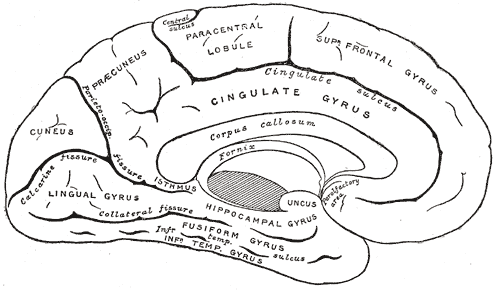
1 · One circuit: the brain thinks about others on the same hardware it uses for itself.Neuroscience● Established
If the hardware is shared, then what you say about others shouldn’t stay cleanly “about them” — and it doesn’t.
2 · What you say about others sticks to you — spontaneous trait transference.Neuroscience● Established
If single descriptions transfer, then your overall read on people should be a portrait of you — and it is, measurably.
3 · How you rate people in general is a readout of your own wellbeing — the perceiver effect.Neuroscience● Established
And underneath all three sits one appraisal system — the same one that decides whether a situation is a threat or a safety.
4 · Condemnation and mercy run on one dial — threat vs. soothe — and the dominant setting generalizes.Neuroscience◐ Model
One more piece ties it to mood directly: the machine that won’t stop judging is the same one linked to unhappiness.
Footnote · The judging-and-ruminating network is the restless Default Mode Network tied to low mood.Neuroscience◐ Model
A closed reciprocity loop can only hand back what’s already inside it — so if you’ve fed it severity, justice can only return severity. The one force that breaks it enters from outside the loop: grace. Received from God at the top of the chain, it runs down into self-forgiveness and out into mercy — and then the chain folds back up, because “as you did it to the least of these, you did it to me.”
This is why “just try harder to be kinder” fails and “receive how God actually deals with you” works. You cannot give down the chain what you have not received from up it.

Grace is the one input the loop cannot generate — and it runs the whole chain.Grace● Established