★ Special Study · Divine Dynamics · How God Treats Us & How to Pray
How God Deals With Us — and the Dynamic of Prayer
One connected argument in three parts, read top to bottom: how God treats a
person (Part I), the open line of prayer (Part II), and the dynamics that remake the inner life
(Part III). Each section leads with its one big point, then the chain that proves it.
GodExamined.com · ★ SPECIAL STUDY · three parts · fifteen linked movements · 25 figures · Scripture ESV unless noted
The whole study in one sentence
God is never random with us: he deals with everyone by a few consistent patterns that link into
a single story — you cannot pass the standard you yourself demand (Part I), so you need the grace
that breaks it and the prayer that reaches it (Part II), and the dynamics that remake you by it
(Part III).
How this reads. Start at §1 and let each step carry you to the next. Part I builds a
chain: the measure you use is used on you (§1) → it shows up in six everyday forms
(§2) → underneath them God mirrors the posture of your heart (§3) → that mirror reflects a
fixed character he named at Sinai (§4) → a character that inverts the world's
scoreboard (§5) → and then does the one thing the pattern can't predict: grace that refuses
to repay us as we deserve (§6). Part II follows grace into relationship — prayer:
what it is, how Jesus says to do it, its dynamic, its hard cases, its power, and the intimacy it is
really for (§7–§12). Part III is what that relationship does to you: the dynamics of
transformation, access, and increase (§13–§15). The thread never breaks — every section hands off
to the next.
Part I
How God Deals With Us
A six-link chain. One master rule (§1) unfolds into forms (§2), reveals an engine
(§3), which reflects a character (§4), which inverts the world (§5) — and finally breaks its own
pattern in grace (§6). Read them in order; each sets up the next.
§1The Measure You Use — the Master Rule
Big point
The single rule beneath everything else: the standard you measure others by is the standard
God measures you by.
It is one sentence from the Sermon on the Mount, and the rest of this study is its
echoes. Grasp it here and §2–§6 read as one unfolding argument — ending, surprisingly, at the one
place God refuses to apply it.
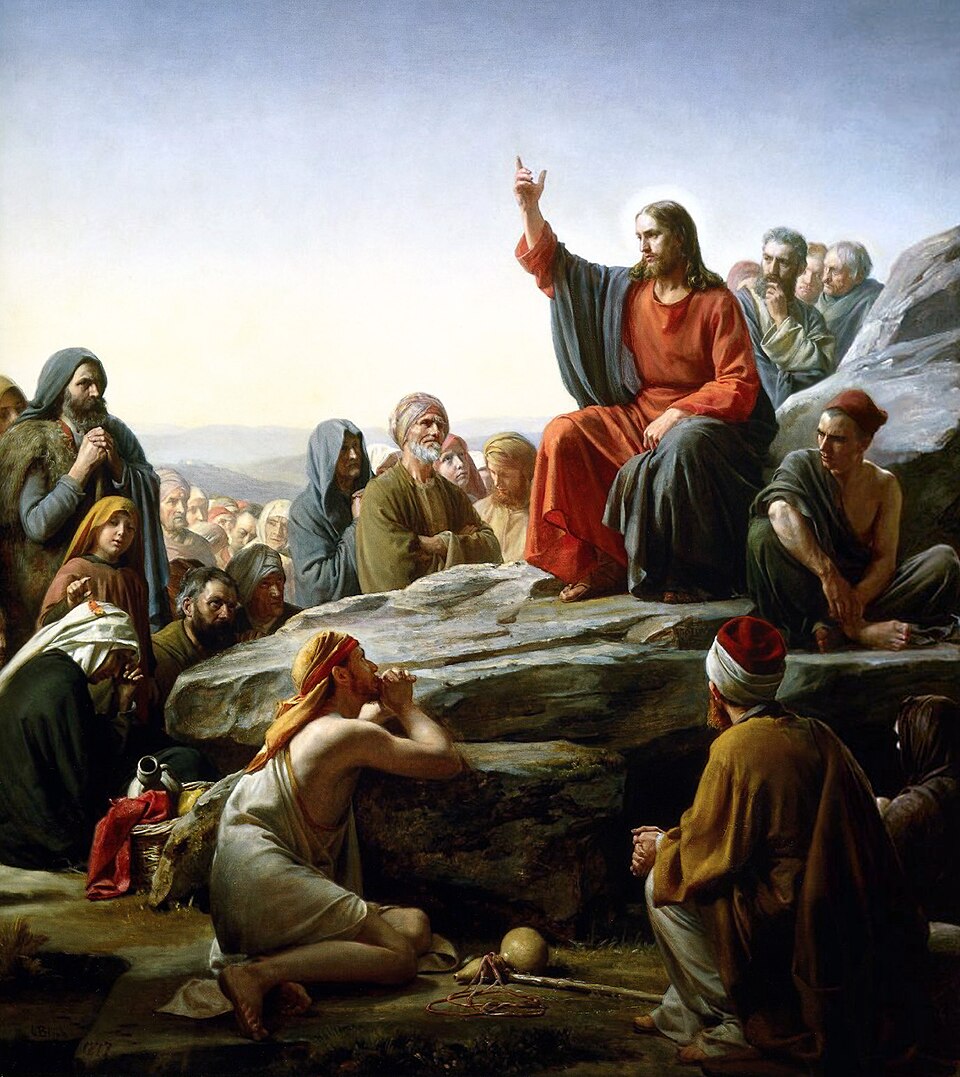
Fig. 1 — The hillside where the master rule is given.
Carl Bloch, "The Sermon on the Mount" (1877). Public domain, via Wikimedia Commons.
The yardstick you hand out is the yardstick handed back.Reciprocity
Pick the standard by which you assess others and you have, in the same motion, chosen the standard by which God and life assess you.
It is not vindictiveness — God simply takes you at your own word about what is fair.
Run a merciless, fault-finding ledger on everyone and you are quietly asking for that same ledger on yourself.
This is why the Sermon sets the bar impossibly high (anger = murder, lust = adultery) — to make you drop the measuring stick and ask for mercy instead of justice.
More Scripture"with the measure you use it will be measured to you."Matt 7:1–2 ·
"give, and it will be given to you… For with the measure you use it will be measured back."Luke 6:37–38 ·
"with the measure you use… still more will be added to you."Mark 4:24 ·
"As you have done, it shall be done to you; your deeds shall return on your own head."Obadiah 15 ·
"Whoever digs a pit will fall into it, and a stone will come back on him who starts it rolling."Prov 26:27 ·
"A man who is kind benefits himself, but a cruel man hurts himself."Prov 11:17
Real-life dynamicThe standard you enforce becomes the air you breathe. The manager who writes people up for
every late minute quietly trains the whole office — his own boss included — to read him by
that exact ruler the day his own project slips; he built the courtroom he now stands in. The law
runs the other way too: the parent who extends patience to a messy teenager is usually the one met
with patience when age makes him the difficult one to live with. You are never only judging
other people — you are publishing, in advance, the terms of your own trial.
→ §2 That master rule never stays abstract. Jesus
spells it out in six concrete, everyday forms — the reciprocity family.
§2The Six Forms It Takes — Reciprocity
Big point
The measure-principle, made concrete in six forms — mercy, forgiveness, giving, judging,
sowing, honoring — each an action toward others that returns to you from God.
Watch them build in a deliberate order: it starts in the heart you extend
(mercy, then its sharpest form, forgiveness), moves to the hand you open (giving), to the
eye you turn on others (judging), to the seed you plant over time (sowing), and
finally to the weight you give God himself (honoring).
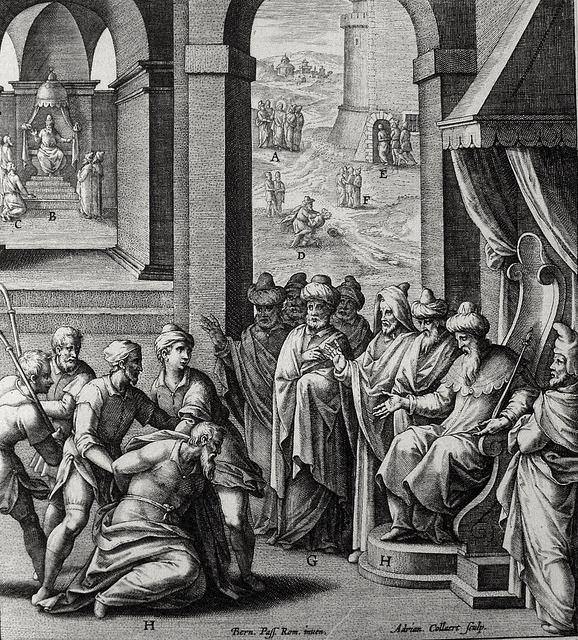
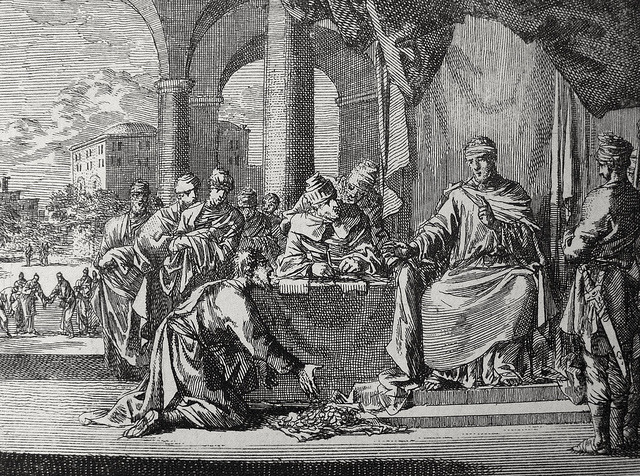
Fig. 2 — Forgiven a fortune, he seizes a man over pennies.
Engraving after Bernardino Passeri, "The Unforgiving Servant" (Matt 18), Bowyer Bible.
Via Wikimedia Commons.
1 · Mercy shown is mercy received.Reciprocity
Mercy extended is the visible proof mercy has already been received and understood.
A person who truly knows they were spared cannot stand over someone else demanding the pound of flesh — the two postures can't share one chest.
James turns it into a courtroom warning: the "justice-only" counter condemns everyone who picks it.
More Scripture"Blessed are the merciful, for they shall receive mercy."Matt 5:7 ·
"Be merciful, even as your Father is merciful."Luke 6:36 ·
"judgment is without mercy to one who has shown no mercy. Mercy triumphs over judgment."James 2:13 ·
"what does the LORD require of you but to do justice, and to love kindness [mercy]…"Micah 6:8 ·
"Blessed is the one who considers the poor! …the LORD delivers him in the day of trouble."Ps 41:1 ·
"Whoever closes his ear to the cry of the poor will himself call out and not be answered."Prov 21:13
Real-life dynamicMercy is the account you quietly fund for your own worst day. You absorb a friend's
unpayable debt instead of garnishing him — and months later, when you're the one who can't pay,
the people who extend you grace are almost always the ones you once extended it to. Watch it in a
family: the sibling who covered for everyone's bad years is the one the family rallies around when
his own crisis finally hits, while the scorekeeper discovers the ledger he kept is kept right back
at him. Mercy given is never spent — it is deposited.
Mercy's sharpest edge is forgiveness — the same reflex aimed at one specific wrong.
2 · Forgive, and you are forgiven; withhold it, and it is withheld.Reciprocity
The bluntest reciprocity saying — Jesus ties the Father's forgiveness of you to your forgiveness of others.
Best reading: not "earn pardon by pardoning," but an unforgiving heart exposes someone who never grasped the size of their own debt.
The unforgiving servant is forgiven an un-payable sum, then jails a man over small change — and the whole debt is re-imposed.
You can't clutch a grudge with one hand and the cross with the other; the cross is God cancelling a debt infinitely larger than any owed to you.
More Scripture"if you forgive others… your Father will also forgive you, but if you do not forgive…"Matt 6:14–15 ·
"forgive, and you will be forgiven."Luke 6:37 ·
"So also my heavenly Father will do… if you do not forgive your brother from your heart."Matt 18:35 ·
"And should not you have had mercy on your fellow servant, as I had mercy on you?"Matt 18:33 ·
"be kind to one another, tenderhearted, forgiving one another, as God in Christ forgave you."Eph 4:32 ·
"as the Lord has forgiven you, so you also must forgive."Col 3:13
Real-life dynamicA grudge is a weight only you carry while the other person sleeps fine. You stop speaking to
the brother who cheated you in the estate split, and the silence feels like justice — until you
notice the bitterness has quietly colonized your marriage, your sleep, and your prayers, and he
hasn't lost a night over it. Forgiveness isn't declaring the wrong didn't matter; it's handing the
ledger to God so you can set the weight down and be free. The person who can't release a small debt
is usually showing they never felt the size of the enormous one they were forgiven.
Move from the heart that releases a debt to the hand that opens with a gift.
3 · Give, and it is given back — pressed down and overflowing.Reciprocity
Open-handedness opens God's hand toward you; the generous move in a current of return they didn't engineer.
The return is often not identical coin but wider provision — relationships, protection, joy, God's attention.
Not a prosperity formula to manipulate God — a clenched fist simply can't receive while it's busy gripping.
More Scripture"give, and it will be given to you. Good measure, pressed down, shaken together, running over."Luke 6:38 ·
"One gives freely, yet grows all the richer; another withholds… and only suffers want."Prov 11:24–25 ·
"Whoever is generous to the poor lends to the LORD, and he will repay him for his deed."Prov 19:17 ·
"Whoever has a bountiful eye will be blessed, for he shares his bread with the poor."Prov 22:9 ·
"It is more blessed to give than to receive."Acts 20:35 ·
"whoever sows bountifully will also reap bountifully… God loves a cheerful giver."2 Cor 9:6–8
Real-life dynamicThe open hand is the only hand that can also receive. A couple of modest means kept an extra
seat at the table for students, strays, and the newly-divorced for thirty years and never got
"rich" — but when the husband fell ill, the meals, the rides, and the money quietly left in the
mailbox all came from the web of people they had once fed. A clenched fist guards what it holds and
can take in nothing new; the open hand empties and refills. Generosity isn't how you lose your
margin — it's how you build the one that shows up the day you need it.
That same openness, turned the wrong way, becomes its opposite — a critical eye.
4 · Judge others harshly, and you invite the same standard on yourself.Reciprocity
The log-and-speck image targets the censorious spirit — surgery on everyone's small faults with a beam in your own eye.
Not a ban on discernment — a ban on setting yourself up as the merciless critic, the one seat God judges harshly.
Condemn another for what you also do and you pronounce your own sentence (Paul).
The stone-ready crowd disperses the moment Jesus says "let the one without sin throw first" — the ruler turned around in their hands.
More Scripture"Judge not, and you will not be judged; condemn not, and you will not be condemned."Luke 6:37 ·
"Why do you see the speck… but not the log in your own eye?"Matt 7:3–5 ·
"in passing judgment on another you condemn yourself, because you… practice the very same things."Rom 2:1 ·
"Who are you to pass judgment on the servant of another?"Rom 14:4,10 ·
"There is only one lawgiver and judge… who are you to judge your neighbor?"James 4:11–12 ·
"Let him who is without sin among you be the first to throw a stone."John 8:7
Real-life dynamicThe harsh critic forges the very knife that is later turned on him. Someone gleefully joins
the online mob dragging a stranger for a stupid post — and a year later an old message of his
surfaces, stripped of context, and the same crowd, with the same ruler and the same glee, comes
for him. He taught people how to read others, and they learned. Discernment is commanded; contempt
is the trap — the instant you climb into the judge's seat over someone's whole worth, you've chosen
the one chair God promises to examine most closely.
Mercy, giving, and judging all pay out fast; the next form pays out slowly — across a whole harvest.
5 · You reap what you sow — the harvest matches the seed.Reciprocity
Reciprocity stretched across time — the gap between planting and harvest fools us into thinking they're unrelated.
Sow selfishness, resentment, corner-cutting and the crop grows while still invisible; sow patience and faithfulness and the same law works for you.
The one caution is for the sower who tires before autumn: "let us not grow weary… in due season we will reap."
The law is slow — which is mercy (time to change the seed) and warning (today's choices are tomorrow's crop).
More Scripture"whatever one sows, that will he also reap."Gal 6:7–9 ·
"the one who sows to his flesh will… reap corruption, but… to the Spirit will… reap eternal life."Gal 6:8 ·
"They sow the wind, and they shall reap the whirlwind."Hos 8:7 ·
"those who plow iniquity and sow trouble reap the same."Job 4:8 ·
"Whoever sows injustice will reap calamity."Prov 22:8 ·
"Sow for yourselves righteousness; reap steadfast love."Hos 10:12
Real-life dynamicCharacter is simply reaping on a long delay. Two coworkers start the same day; one shades
the truth and skims trust, the other keeps small promises nobody is tracking. For years they look
identical — then a crisis forces everyone to decide whom to believe, and a decade of invisible seed
stands up overnight as a visible harvest. The lag is the whole test: the gap between planting and
reaping is long enough to fool a fool into thinking there's no connection — and that same gap is
mercy to anyone still willing to change the seed while there's time.
And the highest thing you can sow is the weight you give God himself.
6 · Honor God, and he honors you; treat him lightly, and you are lightly esteemed.Reciprocity
Honor is weight — how much reality and priority you grant God in practice, not words.
Give him the firstfruits, first hour, first loyalty, and Scripture says he lends his own weight and favor to your life.
Treat him as an afterthought and you end up light, un-anchored, esteemed by nothing that lasts.
More Scripture"those who honor me I will honor, and those who despise me shall be lightly esteemed."1 Sam 2:30 ·
"If anyone serves me, he must follow me… the Father will honor him."John 12:26 ·
"Honor the LORD with your wealth and with the firstfruits… then your barns will be filled."Prov 3:9–10 ·
"Because he holds fast to me in love, I will deliver him; I will protect him, because he knows my name."Ps 91:14 ·
"A son honors his father… If then I am a father, where is my honor?"Mal 1:6 ·
"everyone who acknowledges me before men, I also will acknowledge before my Father."Matt 10:32
Real-life dynamicYou become as weighty — or as weightless — as the thing you treat as weighty. Two believers
both say God matters; one gives him the first and freshest hour of the day and the first cut of the
paycheck, the other gives whatever is left after everything else is spent. A decade on, the first
has a rooted, weighty life others instinctively lean on, and the second a faith as thin and flighty
as the scraps it was fed. Honor isn't flattery God needs — it's the direction your real priorities
point, and a life slowly takes the shape of whatever it actually puts first.
→ §3 Six forms, one rule — but why does God run
reality this way? Not vindictiveness. Something deeper is turning underneath all six: he is
mirroring the posture of your heart.
§3The Engine Underneath — God Mirrors Your Posture
Big point
Beneath reciprocity is the real engine: the same unchanging God is met as grace by the
humble and as resistance by the proud. He doesn't change — the posture you bring does.
This explains §2: God pays back your measure because he meets you in the
disposition you bring. Four angles on the one idea, each flowing into the next — the mirror
itself, then pride (lifted or lowered), then pursuit (draw near / he draws near), then allegiance
(confess / deny).
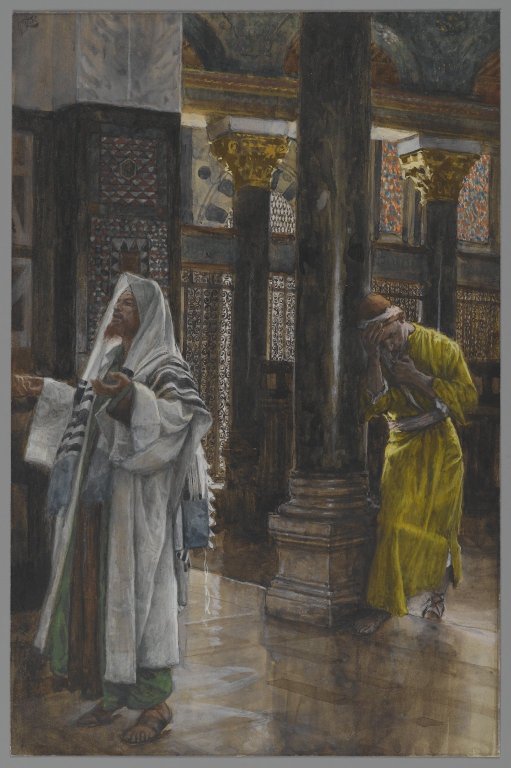
Fig. 4 — Two men, one temple, opposite postures — only one
goes home justified. James Tissot, "The Pharisee and the Publican" (c. 1886–94). Public
domain, via Wikimedia Commons.
The mirror itself: God appears to you as the thing your heart is.Mirror
David's purest form: "with the merciful you show yourself merciful… with the crooked you make yourself seem tortuous."
It sounds like God has moods — it's the opposite: God is the fixed point; the surface meeting him is what changes.
The same sun softens wax and bakes clay to brick; the same gospel is an "aroma from death to death" and "from life to life" (2 Cor 2).
So the proud man genuinely experiences God as cold and tyrannical; the humble man meets the same God as tender — the variable was never God.
Hence two people under the identical sermon: one melted to tears, the other walking out harder than he came.
More Scripture"With the merciful you show yourself merciful… with the crooked you make yourself seem tortuous."Ps 18:25–26 (= 2 Sam 22:26–27) ·
"Toward the scorners he is scornful, but to the humble he gives favor."Prov 3:34 ·
"the aroma of Christ… a fragrance from death to death… from life to life."2 Cor 2:15–16 ·
"To the pure, all things are pure, but to the defiled… nothing is pure."Titus 1:15 ·
"If you walk contrary to me… then I will walk contrary to you."Lev 26:23–24 ·
"with the purified you show yourself pure."Ps 18:26
Real-life dynamicYou largely meet the thing you bring. A boss gives two employees identical feedback in an
identical tone; one hears "she's helping me grow" and improves, the other hears "she's out to get
me" and sours — the feedback never changed, the mirror did. The same voice of a father reads as
safety to the trusting child and as threat to the guilty one; the same gospel softens the open
heart and hardens the closed one. What you carry into the encounter has already half-decided what
you will find there.
The clearest place the mirror shows is in pride and humility — so watch what it does to each.
Humble yourself and you are lifted; exalt yourself and you are lowered.Mirror
Stated almost as spiritual physics: "God opposes the proud but gives grace to the humble."
Picture grace as water — it runs downhill and pools in the low places, exactly where the lowly are standing.
Pride is self-sealing: it shuts the one door grace comes through, because grace is for those who admit they need it.
Two men pray: the Pharisee advertises his résumé and walks home unchanged; the tax collector beats his chest and goes home justified.
More Scripture"God opposes the proud but gives grace to the humble."James 4:6; 1 Pet 5:5–6 ·
"everyone who exalts himself will be humbled, and he who humbles himself will be exalted."Luke 14:11; 18:14 ·
"One's pride will bring him low, but the humble in spirit will obtain honor."Prov 29:23 ·
"When pride comes, then comes disgrace, but with the humble is wisdom."Prov 11:2 ·
"though the LORD is high, he regards the lowly, but the haughty he knows from afar."Ps 138:6 ·
"I dwell in the high and holy place, and also with him who is of a contrite and lowly spirit."Isa 57:15
Real-life dynamicGrace is water: it pools in the low places and runs off the high ones. Two candidates sit
in the same meeting — one spends it making sure everyone knows how good he is, the other spends it
making everyone else look good and asking real questions. The loud one is passed over so often he
grows bitter; the quiet one keeps getting handed responsibility, because people trust what doesn't
trumpet itself. Nobody rigged it: self-exaltation filled the only space grace could have occupied,
while lowliness left the room open for both grace and trust to flow in.
If the lowly are the ones grace reaches, the next move is obvious — turn and move toward him.
Draw near to God and he draws near to you — he is never the one who moved.Mirror
Reciprocal motion: "draw near to God, and he will draw near to you."
The quiet theology: God never withdrew — the distance was put there from our side, and the moment we turn back he's been standing there all along.
The prodigal's father: while the son is "still a long way off," the father is already running — one step home met by a sprint.
"Seek me with all your heart" is condition and promise — the whole-hearted search never comes back empty.
More Scripture"Draw near to God, and he will draw near to you."James 4:8 ·
"Return to me… and I will return to you, says the LORD of hosts."Zech 1:3; Mal 3:7 ·
"You will seek me and find me, when you seek me with all your heart."Jer 29:13 (cf. Deut 4:29) ·
"The LORD is with you while you are with him. If you seek him, he will be found by you."2 Chron 15:2 ·
"The LORD is good to those who wait for him, to the soul who seeks him."Lam 3:25 ·
"Seek, and you will find; knock, and it will be opened."Matt 7:7–8
Real-life dynamicThe distance in the relationship is almost always on your end — and it closes the moment you
turn. You assume an old friend stopped caring, so you stop calling, and the silence seems to
confirm it — then you finally reach out and hear, "I thought you were done with me."
With God the asymmetry is total: he never withdrew, so the half-step back toward him is met by a
Father already sprinting, like the prodigal's father who runs while the son is still "a long way
off." Seasons of dryness usually track our drift, not his departure — and a whole-hearted turn is
never left standing at the door.
That turning-toward becomes public in whether you own or disown him in front of others.
Confess him before people and he confesses you; deny him and you are denied.Mirror
The heart's posture goes public in how you own or disown Christ — and heaven mirrors that stance before the Father.
Not God being touchy about loyalty — your public alignment reveals and ratifies the real allegiance of the heart.
Peter's denial shows the mercy baked in: one failure under pressure is not a final verdict — he's restored at another fire.
The warning is against settled disowning; the comfort is that the one who owns him, however unsteadily, is owned in return.
More Scripture"everyone who acknowledges me before men, I also will acknowledge before my Father…"Matt 10:32–33 ·
"…before the angels of God."Luke 12:8–9 ·
"if you confess with your mouth that Jesus is Lord… you will be saved."Rom 10:9–10 ·
"whoever is ashamed of me… of him will the Son of Man be ashamed."Mark 8:38 ·
"I will confess his name before my Father and before his angels."Rev 3:5 ·
"if we deny him, he also will deny us; if we are faithless, he remains faithful."2 Tim 2:12–13
Real-life dynamicYour half-second reflexes are the honest readout of whose you are. A coworker mocks
Christians and turns to you — "you don't actually believe that, do you?" — and in that half-second
you either quietly own the name or laugh it off to save face. No one's faith is destroyed by a
single flinch (Peter denied Jesus three times and was restored), but the pattern of those
moments is the real allegiance of the heart, and it is that pattern God mirrors back before the
Father. Owning him when it costs something is also how the conviction itself grows roots.
"With the merciful you show yourself merciful… and with the crooked you make yourself seem tortuous."
Psalm 18:25–26 — the one verse behind this whole section
→ §4 If God meets us according to our posture, the
deepest question is what he's actually like — the fixed character the mirror reflects. He
answered it himself, by name, at Sinai.
§4The Character Behind It — Who He Is Toward Us
Big point
Every pattern so far flows from a character God disclosed by name: gracious, merciful,
faithful, patient, impartial, just, and jealous.
Exodus 34:6–7 is God's self-portrait, and the traits pair up in order: grace gives
the unearned and mercy withholds the deserved; faithfulness and patience hold you across time;
impartiality and justice make him safe; jealousy guards you. These are the source code of Parts I
and III.
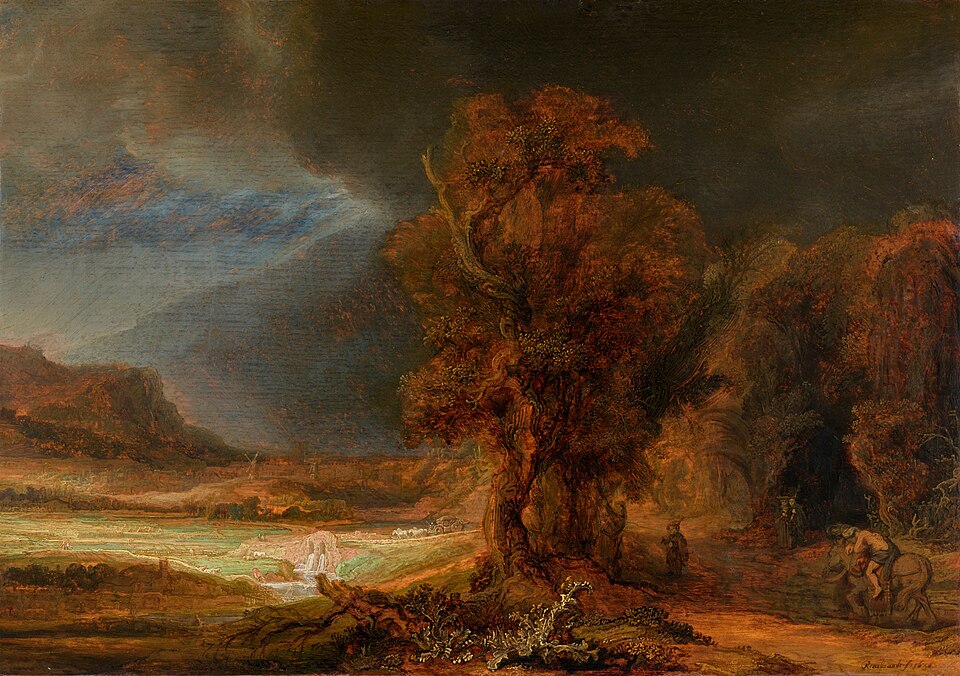
Fig. 6 — Mercy that crosses the road and pays the bill.
Rembrandt, "Landscape with the Good Samaritan" (1638). Public domain, via Wikimedia
Commons.
"The LORD, the LORD, a God merciful and gracious, slow to anger, and abounding in steadfast love
and faithfulness… forgiving iniquity… but who will by no means clear the guilty."
Exodus 34:6–7 — God's self-description, the source of §4
Gracious — he gives what you could never earn.Character
Grace = God giving good to people who haven't merited it and can't repay it — the plus side of his dealings.
Salvation is defined this way: "by grace… through faith… not a result of works, so that no one may boast."
Grace only flows to the open, empty hand — try to earn it and you turn it into wages and lose it.
Christ died "while we were still sinners" — the gift precedes the deserving, or it isn't a gift.
More Scripture"by grace you have been saved through faith… the gift of God, not a result of works."Eph 2:8–9 ·
"while we were still sinners, Christ died for us."Rom 5:8 ·
"he saved us, not because of works… but according to his own mercy."Titus 3:5 ·
"if it is by grace, it is no longer on the basis of works."Rom 11:6 ·
"though he was rich, yet for your sake he became poor, so that… you might become rich."2 Cor 8:9 ·
"The LORD is merciful and gracious, slow to anger and abounding in steadfast love."Ps 103:8
Real-life dynamicGrace only lands in an open, empty hand — the instant you try to pay, it turns into a loan.
You brace to beg for more time and are handed a statement stamped paid in full by a
stranger; the one move that would ruin the gift is insisting on repaying him. It's why the proud,
the "I don't need charity" person, so often can't receive help, while the one who simply says
"thank you — I could never have paid this" walks away free. Grace humbles before it heals, because
receiving it means admitting you couldn't earn it.
Grace has a twin that works the opposite direction — withholding instead of giving.
Merciful — he withholds what you do deserve.Character
Grace's twin: grace gives the unearned good; mercy withholds the deserved bad.
Located in each morning — "new every morning" — so each day is itself a judgment deferred.
Spatial and total: "as far as the east is from the west, so far does he remove our transgressions."
Not God ignoring sin — God choosing, at real cost, not to deal with us as the sin deserves.
More Scripture"his mercies never come to an end; they are new every morning; great is your faithfulness."Lam 3:22–23 ·
"he does not deal with us according to our sins, nor repay us according to our iniquities."Ps 103:10 ·
"as far as the east is from the west, so far does he remove our transgressions from us."Ps 103:12 ·
"You will cast all our sins into the depths of the sea."Micah 7:18–19 ·
"God, being rich in mercy… even when we were dead in our trespasses, made us alive."Eph 2:4–5 ·
"Be merciful, even as your Father is merciful."Luke 6:36
Real-life dynamicEvery ordinary morning you wake to is quietly a suspended sentence. You stand before the
judge expecting the maximum and hear instead, "time served — go home" — not a pretense that
nothing happened, but a deliberate refusal to impose what the record warrants. Mercy doesn't deny
the debt; it declines to collect it, at cost to the one who absorbs it. The person who has really
felt that verdict stops white-knuckling his guilt and starts each day as what it is — a gift he
did nothing to earn and can't use up, because "new every morning" means the supply never runs
low.
Grace and mercy describe a single moment; the next two traits describe him over the long haul.
Faithful — he keeps covenant even when you don't.Character
Faithfulness (ḥesed) means his dealings ride on his consistency, not yours.
The bracing version: "if we are faithless, he remains faithful — for he cannot deny himself."
To break his word he'd have to stop being God — the ground under all assurance.
Human loyalty is reciprocal ("I keep faith as long as you do"); God's is unilateral, so it holds a wavering person through seasons their grip couldn't.
More Scripture"if we are faithless, he remains faithful — for he cannot deny himself."2 Tim 2:13 ·
"the faithful God who keeps covenant and steadfast love… to a thousand generations."Deut 7:9 ·
"God is faithful, by whom you were called into the fellowship of his Son."1 Cor 1:9 ·
"God is faithful, and he will not let you be tempted beyond your ability."1 Cor 10:13 ·
"He who calls you is faithful; he will surely do it."1 Thess 5:24 ·
"he who began a good work in you will bring it to completion."Phil 1:6
Real-life dynamicHis reliability rides on his character, not your consistency — so it holds through your worst
stretch. A teenager pushes a good parent away for years, and the porch light stays on, the
plate stays in the fridge, the door stays unlocked; the faithfulness was never a response to being
deserved — it flowed from who the parent was. That's a thin shadow of a God who "cannot
deny himself," which means to break his word to you he would have to stop being God. It's the
ground under all assurance: the believer who wavers is still held, because the grip that matters
is his on you, not yours on him.
Faithfulness keeps the promise; patience keeps the door open long enough for you to turn.
Patient — slow to anger, giving room to turn.Character
Patience is time deliberately granted — the gap between offense and consequence held open on purpose.
Why judgment delays: "not wishing that any should perish, but that all should reach repentance."
Don't misread it as indifference — "God's kindness is meant to lead you to repentance."
Every extra day is an invitation — mercy to the one who uses it, a squandered gift to the one who mistakes it for permission.
More Scripture"patient toward you, not wishing that any should perish, but that all should reach repentance."2 Pet 3:9 ·
"God's kindness is meant to lead you to repentance."Rom 2:4 ·
"The LORD is slow to anger and abounding in steadfast love, forgiving iniquity."Num 14:18 ·
"you are a God ready to forgive, gracious and merciful, slow to anger."Neh 9:17 ·
"he is gracious and merciful, slow to anger… and he relents over disaster."Joel 2:13 ·
"Jesus Christ might display his perfect patience as an example."1 Tim 1:16
Real-life dynamicThe delay is a door held open — and you can walk through it or mistake it for the rules not
applying to you. You blow a deadline badly and brace for the axe, and instead get one more
clearly-unearned chance; what you do with that window decides everything. Treat it as grace and
you change; treat it as proof you're exempt and you squander the very mercy that was trying to
save you. God's "slowness to anger" is never Him not noticing — it is time deliberately granted,
and time granted is the most easily wasted gift there is.
That patience is offered to everyone equally — because he plays no favorites.
Impartial — no favorites, no bribes, one standard for all.Character
Blind to what humans rank by — wealth, status, ethnicity, reputation.
Peter's breakthrough: "God shows no partiality… in every nation anyone who fears him is acceptable."
He "takes no bribe" — you can't buy a better verdict or inherit a worse one.
Huge comfort for the overlooked: the one Judge who can't be lobbied or out-connected holds your case.
More Scripture"Truly I understand that God shows no partiality… in every nation anyone who fears him… is acceptable."Acts 10:34–35 ·
"God shows no partiality."Rom 2:11 ·
"the Great God… who is not partial and takes no bribe."Deut 10:17 ·
"the wrongdoer will be paid back… and there is no partiality."Col 3:25 ·
"show no partiality as you hold the faith in our Lord Jesus Christ."James 2:1,9 ·
"with the LORD our God there is no injustice or partiality or taking bribes."2 Chron 19:7
Real-life dynamicThe one Judge who can't be lobbied, flattered, or out-connected is the one holding your case.
Everywhere else the well-connected get the benefit of the doubt and the nobody gets the scrutiny;
before God the CEO and the janitor stand on exactly the same footing, judged by exactly the same
measure. For anyone who has ever been dismissed for lacking the right name, that isn't a threat —
it's the only justice they can finally count on. And it cuts the other way too: no pedigree,
donation, or title buys a softer verdict, so the playing field is dead level in both directions.
Impartiality is one half of what makes him safe; justice — and even his jealousy — is the other.
Just and jealous — he is fair, and won't share you with what destroys you.Character
Two hard-sounding traits that are actually protective.
Justice: never arbitrary or corrupt — "all his ways are justice" — which is exactly why the wronged can rest instead of avenging themselves.
Jealousy: not petty insecurity but the right jealousy of a faithful spouse — "the LORD, whose name is Jealous."
He refuses to calmly watch you give your heart to counterfeits that consume you — indifference, not jealousy, would be the absence of love.
More Scripture"The Rock, his work is perfect… all his ways are justice… just and upright is he."Deut 32:4 ·
"Shall not the Judge of all the earth do what is just?"Gen 18:25 ·
"Righteousness and justice are the foundation of your throne."Ps 89:14 ·
"Vengeance is mine, I will repay, says the Lord."Rom 12:19 ·
"the LORD, whose name is Jealous, is a jealous God."Ex 34:14; Deut 4:24 ·
"I feel a divine jealousy for you… to present you as a pure virgin to Christ."2 Cor 11:2
Real-life dynamicTwo traits that sound harsh are actually the proof he loves you. His justice means the
wronged can finally stop avenging themselves — "vengeance is mine" lets you put down the knife,
because a perfectly fair Judge has the case. And his jealousy is the right jealousy of a faithful
spouse: if your partner genuinely didn't care how many others you gave yourself to, you'd call it
indifference, not love, and the hurt of their jealousy is the exact measure of their commitment.
God's "jealousy" is that — aimed not at controlling you but at the idols and addictions quietly
eating you alive.
→ §5 A God with this character does something
the world never sees coming — he turns its scoreboard upside down.
§5What That Character Does — the Reversals
Big point
God deals with us by overturning the world's scoring: the path that looks like losing in the
world's accounting is often the one that wins in his.
Three inversions that cut progressively deeper — first he flips the order of
rank (first/last), then the logic of self-preservation (lose/find), then the source
of strength itself (weak/strong). Each follows from the last.
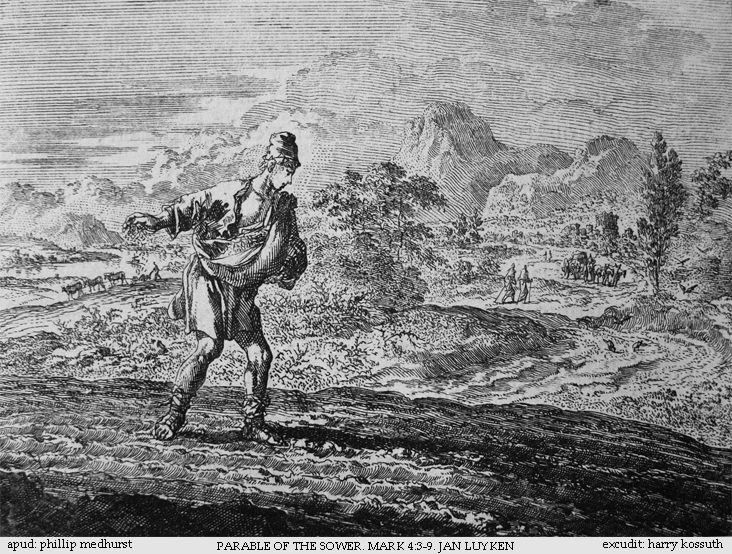
Fig. 7 — The kingdom's arithmetic hides in small, buried,
unlikely things. Jan Luyken etching, "The Parable of the Sower," Bowyer Bible. Via
Wikimedia Commons.
The first will be last, and the last first.Reversal
Stated four times across the Gospels — the finish-line order is not the starting-line order.
The last-hour vineyard workers get the same wage as the all-day crew: God's generosity won't be chained to human seniority.
Grab the front by self-promotion and you're quietly moved back; be content to be last and you're brought forward.
Position isn't seized — it's given, against the grain of how status works down here.
More Scripture"So the last will be first, and the first last."Matt 20:16; 19:30 ·
"many who are first will be last, and the last first."Mark 10:31; Luke 13:30 ·
"The LORD makes poor and makes rich; he brings low and he exalts."1 Sam 2:7–8 ·
"it is God who executes judgment, putting down one and lifting up another."Ps 75:6–7 ·
"He has brought down the mighty from their thrones and exalted those of humble estate."Luke 1:52 ·
"Humble yourselves before the Lord, and he will exalt you."James 4:10
Real-life dynamicThe starting order tells you almost nothing about the finish. The intern who began with
every advantage coasts on it and stalls; the one who started with nothing, serving quietly at the
back, is who people lean on a decade later. Nobody rigged it — God's economy simply won't chain
promotion to seniority or self-promotion. Grab the front of the line by advertising yourself and
you're quietly moved back; take the low place and you're the one brought forward, because in his
kingdom position is given, not seized.
Reverse the order of rank and the next thing to flip is self-preservation itself.
Lose your life to find it; cling to it and lose it.Reversal
The self-protective grip that tries to save your life is what forfeits it.
The open hand that spends itself for Christ and others is what finds life.
Rooted in nature: "unless a grain of wheat falls into the earth and dies… it bears much fruit."
The hoarded life shrinks to one dry kernel; the poured-out life multiplies.
More Scripture"Whoever would save his life will lose it, but whoever loses his life for my sake will find it."Matt 16:25; Mark 8:35; Luke 9:24 ·
"Whoever seeks to preserve his life will lose it, but whoever loses his life will keep it."Luke 17:33 ·
"unless a grain of wheat falls into the earth and dies… it bears much fruit."John 12:24–25 ·
"whatever gain I had, I counted as loss for the sake of Christ."Phil 3:7–8 ·
"I have been crucified with Christ. It is no longer I who live, but Christ who lives in me."Gal 2:20 ·
"they loved not their lives even unto death."Rev 12:11
Real-life dynamicThe grip that tries to save your life is exactly what forfeits it. Two retirements: one man
spends the last decades entirely on himself and ends isolated and oddly empty; the other pours them
into grandkids, students, and the church and ends surrounded, full, and strangely young. The one
who "spent" his life kept it; the one who "saved" it lost it. It scales down to a single day too —
the evening you give away to someone else's need often feeds you more than the one you hoarded for
yourself. A seed that refuses to be buried stays one dry kernel forever.
If losing your life is the way to find it, then weakness is the place strength actually lives.
The greatest is the servant; the strong place is weakness.Reversal
Greatness is measured downward: "whoever would be great among you must be your servant."
The model is Christ, who "came not to be served but to serve, and to give his life as a ransom."
Paul's thorn: "my power is made perfect in weakness" — so he boasts in the frailty the world hides.
God "chose what is weak… to shame the strong," keeping the treasure in "jars of clay" so the glory is obviously his.
More Scripture"whoever would be great among you must be your servant… even as the Son of Man came not to be served but to serve."Matt 20:26–28; Mark 10:43–45 ·
"he humbled himself… therefore God has highly exalted him."Phil 2:5–9 ·
"If I then… have washed your feet, you also ought to wash one another's feet."John 13:14–15 ·
"My grace is sufficient for you, for my power is made perfect in weakness."2 Cor 12:9 ·
"we have this treasure in jars of clay, to show that the surpassing power belongs to God."2 Cor 4:7 ·
"God chose what is weak in the world to shame the strong."1 Cor 1:27
Real-life dynamicThe place you call your disqualifying weakness is often where God's strength becomes visible.
The manager who carries the boxes, learns the names, and takes the blame earns a loyalty the
corner-office tyrant never can — greatness measured downward. And the public struggle you survived
— an illness, a failure, an addiction beaten — frequently becomes your single most useful
possession, the thing that reaches people polish never could. Paul begged for his thorn to be
removed and instead learned to boast in it, because the frailty the world hides turned out to be
the window the power shone through.
→ §6 The reversals and the measure together back us into
a corner: by every rule so far, we lose — no one survives strict justice. So God does the
one thing none of the patterns predict. He breaks his own.
§6The Pattern Broken — Grace
Big point
The one asymmetry: God refuses to repay us as our sins deserve, and lays the measure on Christ
instead. Reciprocity shows you need the exit; grace is the exit.
Three steps, in logical order: God declares he won't deal with us by our sins (the
claim) → the cross shows how that can be just and not mere leniency (the mechanism) → and
mercy is named the winner over judgment (the verdict).
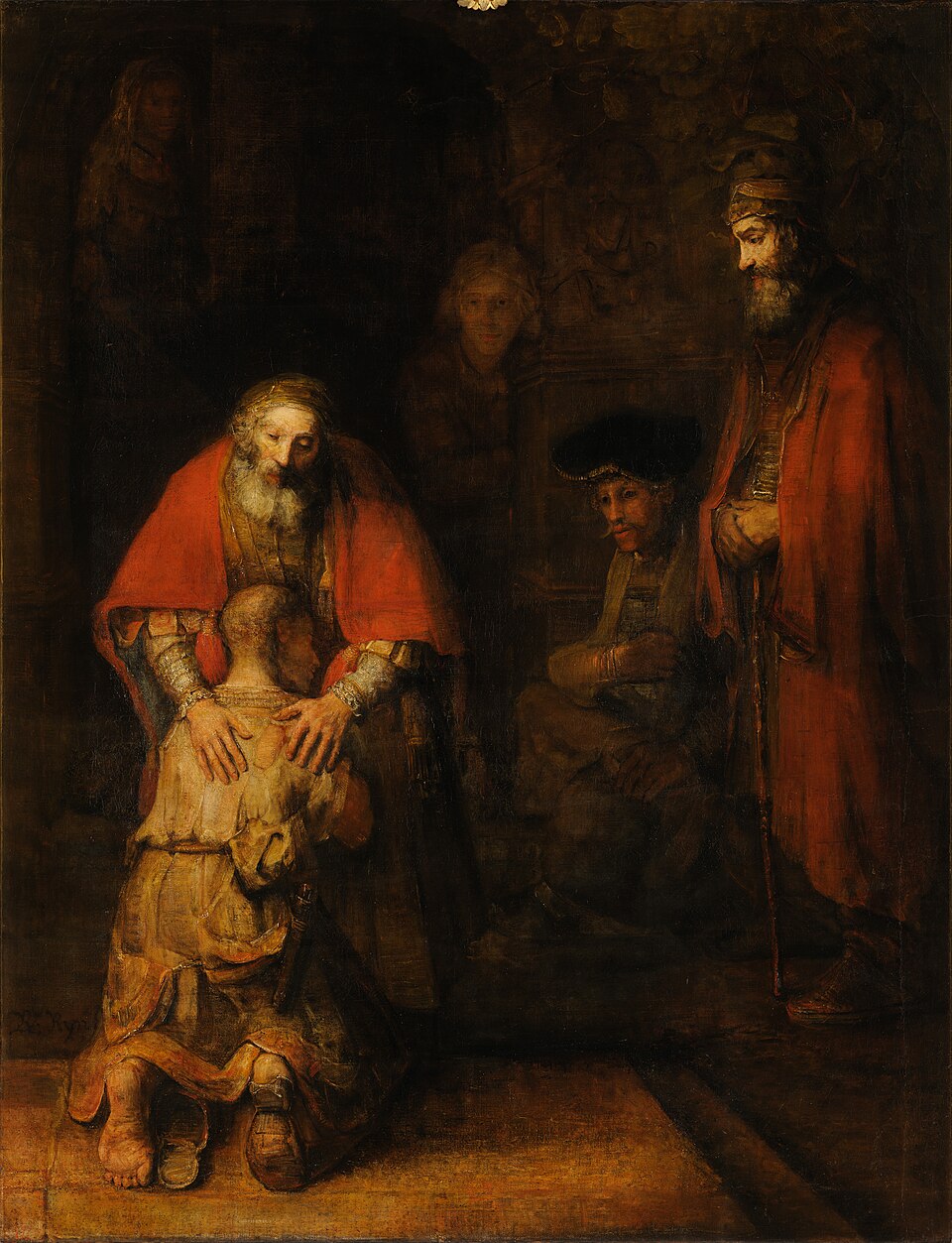
Fig. 8 — The father runs, robes, and feasts the son who
deserved a servant's wage. Rembrandt, "The Return of the Prodigal Son" (c. 1668). Public
domain, via Wikimedia Commons.
The claim: he does not deal with us according to our sins.Grace
The line that snaps the chain: "he does not deal with us according to our sins, nor repay us according to our iniquities."
By every rule in §1–§2 the measure we used should come back on us — and it would be fatal.
Ezra's astonishment: "you… have punished us less than our iniquities deserved."
Grace isn't lowering the standard or pretending the debt away — it's God meeting the standard himself so the debt is truly cancelled.
More Scripture"He does not deal with us according to our sins, nor repay us according to our iniquities."Ps 103:10 ·
"If you, O LORD, should mark iniquities… who could stand? But with you there is forgiveness."Ps 130:3–4 ·
"I, I am he who blots out your transgressions for my own sake, and I will not remember your sins."Isa 43:25 ·
"blessed is the man against whom the Lord will not count his sin."Rom 4:7–8 ·
"you… have punished us less than our iniquities deserved."Ezra 9:13 ·
"It is because of the LORD's great love we are not consumed."Lam 3:22
Real-life dynamicThe one place in the whole study where God refuses to give you what you've got coming. You
open the envelope braced for the figure that ends you — and it reads zero, not reduced, not
deferred, but paid in full at someone else's expense. By every rule in §1–§2 the measure you used
should come back on you, and it would be fatal, because no one survives strict justice. Grace isn't
God pretending the debt away or lowering the standard — it's God meeting the standard himself so
the debt can be truly cancelled, and the only sane response is not denial but gratitude.
But how can a just God simply not repay sin? Only if the bill is paid somewhere — and it is.
The mechanism: the cross is where the measure lands — on Christ instead of on us.Grace
Not God waving a hand and ignoring the ledger — the ledger paid at a specific place by a specific substitution.
"He was pierced for our transgressions… with his wounds we are healed" — the measure we had coming, measured onto him.
The exchange at its starkest: "he made him to be sin who knew no sin, so that in him we might become the righteousness of God."
So justice and mercy meet without either being cheated: sin really is paid for (§1 satisfied) and we don't pay it (grace given).
More Scripture"He was pierced for our transgressions… with his wounds we are healed."Isa 53:5 ·
"the LORD has laid on him the iniquity of us all."Isa 53:6 ·
"he made him to be sin who knew no sin, so that in him we might become the righteousness of God."2 Cor 5:21 ·
"he himself bore our sins in his body on the tree."1 Pet 2:24 ·
"Christ… suffered once for sins, the righteous for the unrighteous, that he might bring us to God."1 Pet 3:18 ·
"so that he might be just and the justifier of the one who has faith in Jesus."Rom 3:25–26
Real-life dynamicJustice is satisfied and you walk free — both at once. Imagine standing guilty and watching
an innocent person step forward to take the punishment so you can go — and it is not a loophole,
because the penalty genuinely was paid, just not by you. This is how God stays both "just
and the justifier": the strict reciprocity of §1 is fully honored (sin really is paid for) and the
grace of §6 is fully given (you don't pay it). Grace is never injustice swept under the rug;
it is a debt discharged somewhere real — on a cross — which is why it can be cancelled rather than
merely ignored.
With the debt paid, the final verdict can be announced — and it's the best news in the study.
The verdict: mercy triumphs over judgment.Grace
James sets the two in a contest and names the winner: "mercy triumphs over judgment."
Both are real — judgment is no bluff — but for those who've received it, mercy wins the collision.
Grounded entirely in God's initiative: "it depends not on human will or exertion, but on God, who has mercy."
Part I resolves here: §1–§2 prove you can't pass the measure; §6 opens the one door out. The reciprocity shows you need the exit; the grace is the exit.
More Scripture"Mercy triumphs over judgment."James 2:13 ·
"There is therefore now no condemnation for those who are in Christ Jesus."Rom 8:1 ·
"where sin increased, grace abounded all the more."Rom 5:20 ·
"it depends not on human will or exertion, but on God, who has mercy."Rom 9:16 ·
"God, being rich in mercy… made us alive together with Christ — by grace you have been saved."Eph 2:4–5 ·
"while he was still a long way off, his father… ran and embraced him."Luke 15:20
Real-life dynamicThe father is already running before the rehearsed speech is half out. The prodigal prepares
a careful request to be downgraded to hired help — the fair, reciprocal outcome his conduct earned —
and never gets to finish it, because the father is already sprinting down the road, calling for the
robe, the ring, and the feast. That run is the single best picture in Scripture of how God deals
with everyone who turns home: not by the measure they earned, but by the love he had already
decided to show. Both forces are real — judgment is no bluff — but for those who have received it,
mercy wins the collision.
An honest caveat before we go on.
These six are patterns of how a personal, righteous God consistently acts — not vending-machine formulas you operate to force a payout.
Job was upright and still suffered; Jesus was sinless and still went to the cross; faithful people still endure delay, loss, and silence.
The reciprocity is real, but it runs on God's timing and wisdom, and is always subordinate to the grace of §6.
→ Part II Grace doesn't just cancel a debt; it opens a
relationship. And every relationship has a language. That language is prayer — which is
where Part II begins.
Part II
The Dynamic of Prayer
Part I ended at grace, which opens a relationship. Part II is that relationship's
language. Six links: what prayer is (§7) → how to do it (§8) → its engine (§9) → its hard cases
(§10) → what it does (§11) → what it's all for (§12).
§7What Prayer IS to God — Its Nature
Big point
Prayer is not information handed to an uninformed God, nor a lever to bend his arm — it is a
child speaking to a Father who already knows, and treasures the asking anyway.
Get the nature right and every instruction in §8 becomes relationship instead of
technique. Three foundations in order: who you're talking to (a Father), why ask at
all if he already knows (the asking is for the relationship), and how he receives it (he
treasures it like incense).
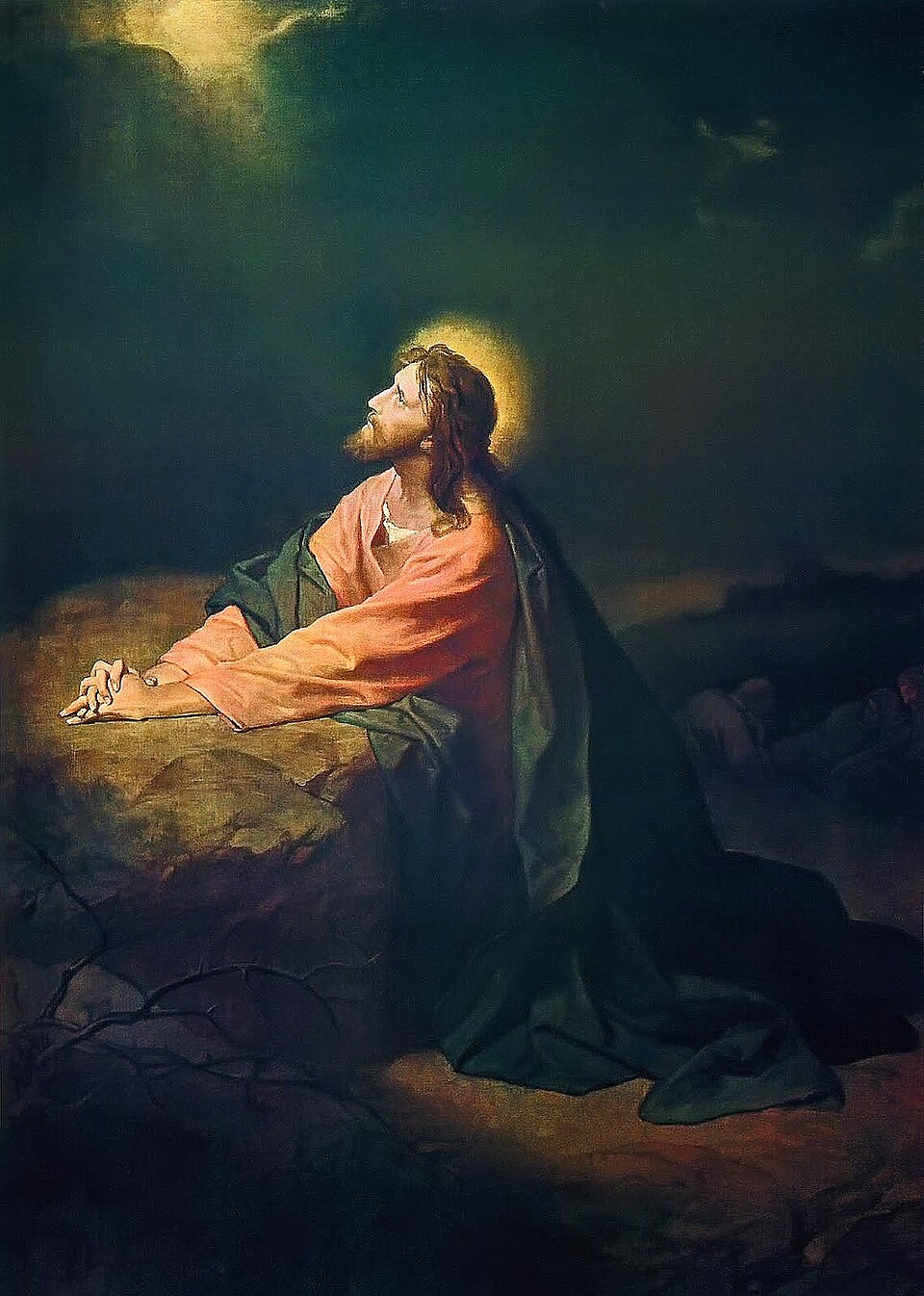
Fig. 9 — The model pray-er: the Son, in agony, still saying
"not my will, but yours." Heinrich Hofmann, "Christ in Gethsemane" (1890). Public domain,
via Wikimedia Commons.
Prayer is a child speaking to a Father, not a subject petitioning a tyrant.Nature
The first word Jesus puts on our lips is "Father" — and it reframes everything.
The Spirit teaches us to cry "Abba!" — the warm family word a child uses, not a formal title.
Baseline posture is belonging, not fear: you walk into a room where you're already wanted.
Everything else — boldness, persistence, honesty — grows out of that one relationship.
More Scripture"Our Father in heaven, hallowed be your name."Matt 6:9 ·
"the Spirit of adoption… by whom we cry, 'Abba! Father!'"Rom 8:15–16 ·
"the Spirit of his Son into our hearts, crying, 'Abba! Father!'"Gal 4:6 ·
"As a father shows compassion to his children, so the LORD shows compassion to those who fear him."Ps 103:13 ·
"If you then, who are evil, know how to give good gifts… how much more will your Father…"Matt 7:11 ·
"See what kind of love the Father has given us, that we should be called children of God."1 John 3:1
Real-life dynamicAccess was settled by the relationship, not earned by the performance. A stranger at the
CEO's door needs an appointment, a reason, and the right tone; the CEO's five-year-old walks
straight in, climbs on the lap, and talks about anything — and is never once turned away for
lacking an agenda. Prayer is the second scene, not the first. That single word "Father" resets the
whole posture: you are not trying to get through to someone who would rather not hear from you,
you are a child walking into a room where you are already wanted, which is why boldness, honesty,
and persistence are all appropriate rather than presumptuous.
If he's a Father, the obvious objection follows: why ask someone who already knows?
God already knows what you need — and still commands you to ask.Nature
"Your Father knows what you need before you ask him" — so prayer is not informing God.
Then why ask? Because the asking is for us: it keeps a dependent creature acknowledging its dependence and keeps the relationship live.
A father may know what his child wants and still want to be asked — the asking is part of the love.
Prayer is less a requisition form, more a conversation whose point is the conversation.
More Scripture"your Father knows what you need before you ask him."Matt 6:8 ·
"Even before a word is on my tongue, behold, O LORD, you know it altogether."Ps 139:4 ·
"Before they call I will answer; while they are yet speaking I will hear."Isa 65:24 ·
"You do not have, because you do not ask."James 4:2 ·
"in everything by prayer and supplication… let your requests be made known to God."Phil 4:6
Real-life dynamicA good father can see the trouble and still waits to be asked — because the asking is the
relationship, not the information. He could just fix it unasked, but often he waits, because
the moment the kid actually says it out loud is the moment the bond deepens and the kid grows.
Waiting isn't withholding; it's an invitation a silent rescue would have skipped. God's knowing
everything doesn't make prayer pointless — it makes it pure, since the asking can only be for the
sake of the conversation, never to update his files.
And far from being bothered by our asking, he treasures it.
God doesn't merely permit prayer — he treasures it, like incense in golden bowls.Nature
David asks that his prayer be "counted as incense" rising before God.
Revelation completes the picture: the prayers of the saints are kept in "golden bowls full of incense."
Prayer isn't shouted into a void or logged in an inbox — it's collected, valued, kept, given the worth of temple incense.
"The prayer of the upright is his delight" — God leans toward your prayers like a scent he loves.
More Scripture"Let my prayer be counted as incense before you, and the lifting up of my hands as the evening sacrifice."Ps 141:2 ·
"golden bowls full of incense, which are the prayers of the saints."Rev 5:8 ·
"the smoke of the incense, with the prayers of the saints, rose before God."Rev 8:3–4 ·
"You have kept count of my tossings; put my tears in your bottle. Are they not in your book?"Ps 56:8 ·
"a book of remembrance was written before him of those who feared the LORD."Mal 3:16 ·
"the prayer of the upright is his delight."Prov 15:8
Real-life dynamicYour clumsiest prayers are kept the way a parent keeps a shoebox of crayon scribbles.
Objectively crude, subjectively priceless, saved for decades — and the child never suspects the
offering was treasured that carefully. God's "golden bowls" and "bottle for your tears" say the
same of your halting, distracted, half-finished prayers: not shouted into a void or logged in an
inbox, but collected, valued, kept, given the fragrance of temple incense. You are never imposing
when you pray; you are handing over something he receives as precious.
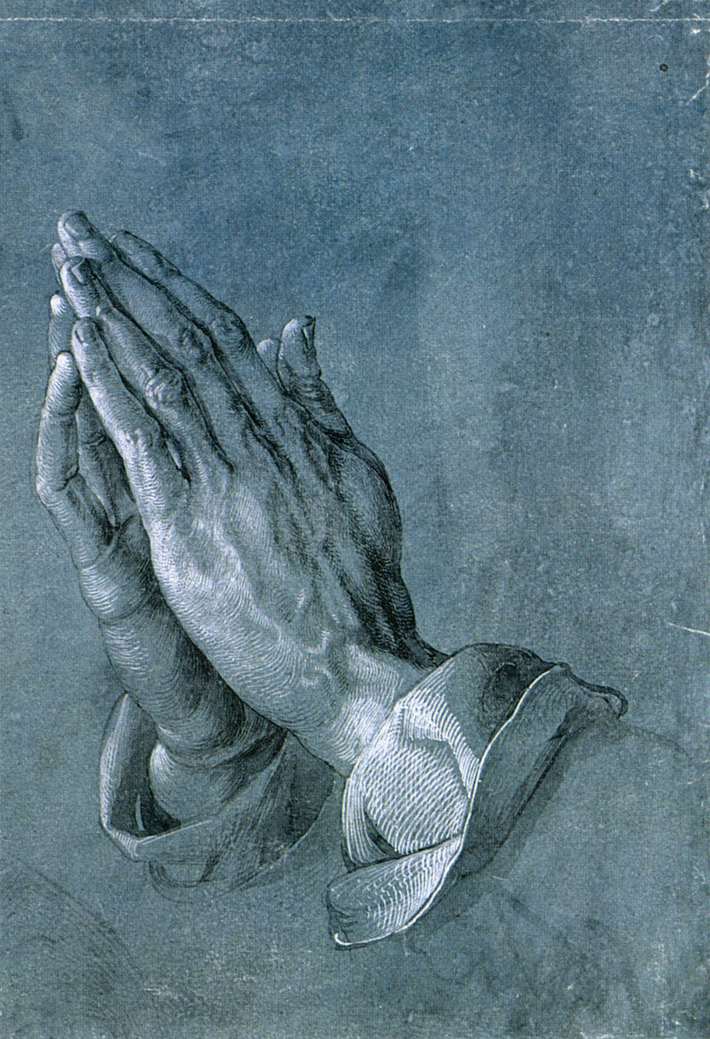
Fig. 10 — Prayer as the lifted, empty, open hand.
Albrecht Dürer, "Praying Hands" (c. 1508). Public domain, via Wikimedia Commons.
→ §8 If that's what prayer is, the next question
is how to do it — and Jesus is remarkably specific.
§8How Jesus Says to Pray — the Manner
Big point
Every instruction Jesus gives on prayer does one thing: strip away performance and deepen the
relationship §7 described.
He gives two negatives, then three positives, in a clean sequence: don't perform,
don't babble — then the Lord's-Prayer pattern, praying in his name, and praying in faith according
to the Father's will.
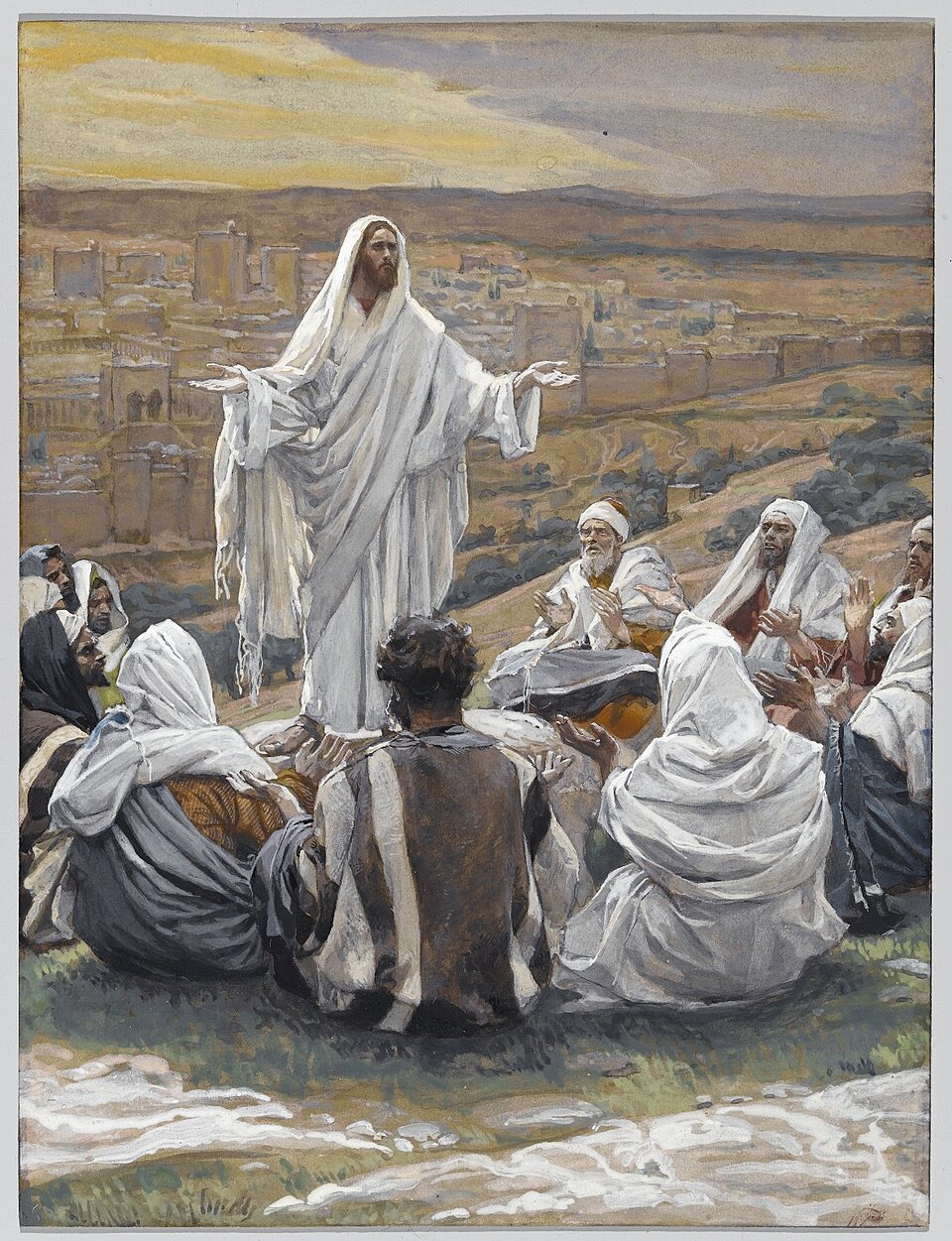
Fig. 11 — The pattern prayer, given when the disciples asked
"teach us to pray." James Tissot, "The Lord's Prayer" (c. 1886–94). Public domain, via
Wikimedia Commons.
Pray in secret, not as a performance for people.Manner
Jesus' first instruction: shut the door.
Prayer performed for an audience is really addressed to the audience — so it collects only the audience's applause ("they have received their reward").
Secret prayer proves the address is genuinely God — no one's watching to make it worth faking.
Not a ban on corporate prayer — a scalpel aimed at the motive of being admired.
More Scripture"go into your room and shut the door and pray to your Father who is in secret."Matt 6:6 ·
"they love to… pray that they may be seen by others. Truly… they have received their reward."Matt 6:5 ·
"Beware of practicing your righteousness before other people in order to be seen by them."Matt 6:1 ·
"The Pharisee, standing by himself, prayed thus… the tax collector… beat his breast."Luke 18:11–14 ·
"Hannah was speaking in her heart; only her lips moved, and her voice was not heard."1 Sam 1:13
Real-life dynamicPrayer aimed at an audience gets only the audience's applause — and nothing from heaven. One
man prays a long, eloquent table blessing with an eye on who's impressed; another mutters three
honest words with his eyes actually shut. The polished one received exactly what he was really
asking for — a little admiration — and, Jesus says pointedly, not one thing more. Secret prayer
proves the address is genuinely God, because no one is watching to make it worth faking. This
isn't a ban on public prayer; it's a scalpel aimed at the motive of being seen.
Having removed the audience, he removes the other crutch — the magic of many words.
Don't babble empty words — prayer isn't about volume or formula.Manner
The pagan mistake: "heaping up empty phrases," thinking you're heard for "many words."
Prayer is not a spell or slot machine — say it enough / right / long and trigger the result. No.
You're not wearing down a reluctant deity or hitting a word-count — you're talking to a Father who already knows (§7).
This forbids the magical use of words, not persistence or honest repetition (Jesus prayed "the same words" three times in Gethsemane).
More Scripture"do not heap up empty phrases… they think they will be heard for their many words."Matt 6:7 ·
"let your words be few… God is in heaven and you are on earth."Eccl 5:2 ·
"this people draw near with their mouth… but their heart is far from me."Isa 29:13; Matt 15:8 ·
"they called… from morning until noon, 'O Baal, answer us!' But there was no voice."1 Kgs 18:26–29 ·
"he… prayed for the third time, saying the same words again."Matt 26:44
Real-life dynamicGod is not a vending machine that pays out on the right incantation at the right length. A
telemarketer reads a script, betting that the right words in the right order will trigger the sale;
a spouse says "I love you" in three plain words that carry everything. God listens for the second
voice, not the first. This frees prayer from anxiety about phrasing — it doesn't forbid persistence
or honest repetition (Jesus prayed "the same words" three times in Gethsemane), only the magical
idea that volume, polish, or sheer word-count can move a Father who already knows and already
loves you.
With the false methods cleared away, he hands over the true pattern.
The Lord's Prayer is the pattern — adoration, kingdom, provision, pardon, protection.Manner
Its order is a lesson: it opens with God (name hallowed, kingdom, will) before it ever reaches our needs.
Then the human petitions in sequence: daily bread (provision), forgiveness of debts (pardon), deliverance (protection).
Strikingly short — the model for prayer is compact, not sprawling.
The forgiveness clause hooks straight back to Part I §2: "forgive us… as we also have forgiven" — an unforgiving heart can't pray it honestly.
More Scripture"Our Father… hallowed be your name. Your kingdom come… Give us this day our daily bread, and forgive us our debts, as we also have forgiven our debtors."Matt 6:9–13 (cf. Luke 11:2–4) ·
"seek first the kingdom of God and his righteousness, and all these things will be added."Matt 6:33 ·
"For if you forgive others their trespasses, your heavenly Father will also forgive you."Matt 6:14–15 ·
"whenever you stand praying, forgive, if you have anything against anyone."Mark 11:25
Real-life dynamicThe order of the prayer is itself the lesson — God first, then needs, honestly. The employee
who opens a meeting by asking "what matters most here?" frames his own requests completely
differently from the one who leads with demands. The Lord's Prayer trains the first instinct: it
begins with God's name, kingdom, and will before it ever reaches bread, pardon, and protection —
and it's strikingly short, a model that is compact, not sprawling. Its one barbed clause ties
straight back to §2: "forgive us… as we also have forgiven," so that an unforgiving heart
literally cannot pray the prayer honestly.
That pattern is prayed on an authority that isn't our own.
Pray in Jesus' name — on his authority and in line with his character.Manner
"In Jesus' name" isn't a magic signature tacked on the end.
It means praying on the basis of who he is and what he's done — approaching the Father through the Son.
And praying for the kind of thing consistent with his name and will — which is why the lavish promise isn't a blank check.
Confidence anchored in his worthiness, not ours.
More Scripture"Whatever you ask in my name, this I will do, that the Father may be glorified in the Son."John 14:13–14 ·
"if you ask anything of the Father in my name, he will give it to you… that your joy may be full."John 16:23–24 ·
"I chose you… so that whatever you ask the Father in my name, he may give it to you."John 15:16 ·
"let us then with confidence draw near to the throne of grace."Heb 4:16 ·
"in whom we have boldness and access with confidence through our faith in him."Eph 3:12 ·
"there is one mediator between God and men, the man Christ Jesus."1 Tim 2:5
Real-life dynamic"In Jesus' name" is a granted authority — real and powerful, and bounded by his purposes, which
is exactly what makes it safe. When someone gives you power of attorney you can act in their
name, but only within what they actually authorized; you cannot sign their name to drain their
account for yourself. Praying "in his name" isn't a magic signature on the end of a prayer — it's
approaching the Father through the Son who opened the way, and asking for the kind of thing
consistent with who he is. That's why the promise is lavish yet not a blank check: the name itself
filters out what contradicts his character, and anchors your confidence in his worthiness instead
of yours.
And two conditions keep prayer from both timidity and presumption.
Pray in faith and according to God's will — and keep abiding.Manner
Faith: not mustering certainty about a specific outcome, but settled trust in the Father's goodness and power.
According to his will: presented not as a limit but as the ground that makes prayer confident — a good Father's will is the safest thing to align with.
Abiding: "if you abide in me… ask whatever you wish" — staying close gradually shapes our wishes into ones heaven can safely grant.
More Scripture"whatever you ask in prayer, believe that you have received it, and it will be yours."Mark 11:24 ·
"let him ask in faith, with no doubting, for the one who doubts is like a wave of the sea."James 1:6–7 ·
"without faith it is impossible to please him, for whoever would draw near… must believe that he exists and rewards those who seek him."Heb 11:6 ·
"if we ask anything according to his will he hears us… we know that we have the requests."1 John 5:14–15 ·
"If you abide in me, and my words abide in you, ask whatever you wish, and it will be done."John 15:7
Real-life dynamicYour prayers mature as the relationship does — the closer you abide, the more your asks match
his heart. A brand-new acquaintance asks you for favors that reveal how little they know you; a
lifelong friend asks for things that actually fit who you are, because years of closeness shaped
their sense of what to request. Abiding does that to prayer. "According to his will" isn't a limit
that weakens prayer — it's the ground that makes it confident, since a good Father's will is
the safest thing you could ever align your asking with, and faith here is less a technique for
forcing a specific outcome than settled trust in his goodness and power.
→ §9 Manner set, what's the actual engine that
drives prayer forward? Three escalating verbs, and a Father eager to answer them.
§9The Engine of Prayer — Ask, Seek, Knock
Big point
Ask, seek, knock — an escalating pursuit met by a Father eager to give, where even persistence
works not because he's reluctant but because he's the opposite of reluctant.
Three beats that build: the open invitation (ask/seek/knock), the shameless
persistence Jesus commends, and the reason a delay is never the same as a "no."
Fig. 12 — "Behold, I stand at the door and knock" — the latch
is on the inside. William Holman Hunt, "The Light of the World" (1853–54). Public domain,
via Wikimedia Commons.
Ask, seek, knock — and a Father who gives good gifts, never stones.Dynamic
Three escalating verbs, each with a promise: it will be given, you will find, it will be opened.
Grounded in fatherhood by a lesser-to-greater argument: you don't hand your child a stone for bread.
"How much more will your Father in heaven give good things" — God's goodness is infinitely beyond a decent parent's.
Luke names the best gift: the Father gives "the Holy Spirit to those who ask" — his presence, not just his packages.
More Scripture"Ask, and it will be given… seek, and you will find… knock, and it will be opened."Matt 7:7 ·
"If you then, who are evil, know how to give good gifts… how much more will your Father…"Matt 7:11 ·
"how much more will the heavenly Father give the Holy Spirit to those who ask him!"Luke 11:13 ·
"those who seek the LORD lack no good thing."Ps 34:10 ·
"If any of you lacks wisdom, let him ask God, who gives generously to all without reproach."James 1:5 ·
"Call to me and I will answer you, and will tell you great and hidden things."Jer 33:3
Real-life dynamicJesus is retraining frightened children into trusting ones — ask, because of who is listening.
A child raised by a harsh parent learns not to ask for anything, braced for a "no" or worse; a child
raised by a good one asks freely, because experience taught them the answer is usually a warm yes
and never cruelty. The whole force of the "how much more" is that God's goodness isn't merely equal
to a decent parent's but infinitely beyond it — you don't hand your hungry child a stone. And the
best gift named is not a package but a Person: the Father gives "the Holy Spirit to those who ask."
The invitation comes with a posture — keep coming.
Persist shamelessly — because God is the opposite of the reluctant giver.Dynamic
Two parables easy to misread: the friend at midnight, and the widow who wears down an unjust judge.
Read flatly they make God the annoyed sleeper / corrupt judge — but Jesus argues by contrast.
If even a selfish neighbor and a godless judge yield to persistence, how much more a loving Father who is nothing like them?
Persistence isn't to change God's mind — it keeps us in the posture of dependence and trains a faith that doesn't quit.
More Scripture"because of his impudence he will rise and give him whatever he needs."Luke 11:8 ·
"they ought always to pray and not lose heart."Luke 18:1 ·
"will not God give justice to his elect, who cry to him day and night?"Luke 18:7–8 ·
"Continue steadfastly in prayer, being watchful in it with thanksgiving."Col 4:2 ·
"pray without ceasing."1 Thess 5:17 ·
"I will not let you go unless you bless me."Gen 32:26
Real-life dynamicKeep knocking — not because God needs nagging, but because he is the opposite of the reluctant
giver. A family prays for a sick parent for months with no visible change, and the pull is to
read the silence as refusal and quit. Jesus' parables aim exactly here: if even a selfish neighbor
and a corrupt judge finally yield to persistence, how much more will a loving Father who is
nothing like them answer children who cry to him day and night? The persistence isn't to wear God
down — it keeps you in the posture of dependence long enough to receive, and trains a faith
that refuses to let go, like Jacob wrestling until dawn.
Which raises the obvious worry: what about the long wait with no answer?
When God delays, it isn't reluctance — the answer may be in motion unseen.Dynamic
Daniel prays, waits twenty-one days with no reply, and might easily conclude he's unheard.
The messenger's astonishing word: "from the first day… your words were heard, and I have come because of your words."
The response had been delayed by a conflict in the unseen realm — not by God's indifference.
Delay in God's hands is doing something — ripening timing, forming the pray-er — and is never the same as "no." He heard on day one.
More Scripture"from the first day that you set your heart to understand… your words have been heard, and I have come because of your words."Dan 10:12 ·
"I waited patiently for the LORD; he inclined to me and heard my cry."Ps 40:1 ·
"the LORD waits to be gracious to you… blessed are all those who wait for him."Isa 30:18 ·
"It is good that one should wait quietly for the salvation of the LORD."Lam 3:25–26 ·
"If it seems slow, wait for it; it will surely come."Hab 2:3
Real-life dynamicMany a prayer that feels ignored was answered the first hour and is simply still in transit.
You order something, hear nothing for days, and start to suspect the order failed — when in fact it
was confirmed immediately and has been on the way the whole time. Daniel waited twenty-one days
certain he was unheard, and was told his words were heard "from the first day"; the delay was a
battle in the unseen realm, not God's indifference. Delay in his hands is doing something — ripening
the timing, forming the one who prays — and is never the same thing as "no." (Even Jesus waited two
days before raising Lazarus, so the greater glory could come.)
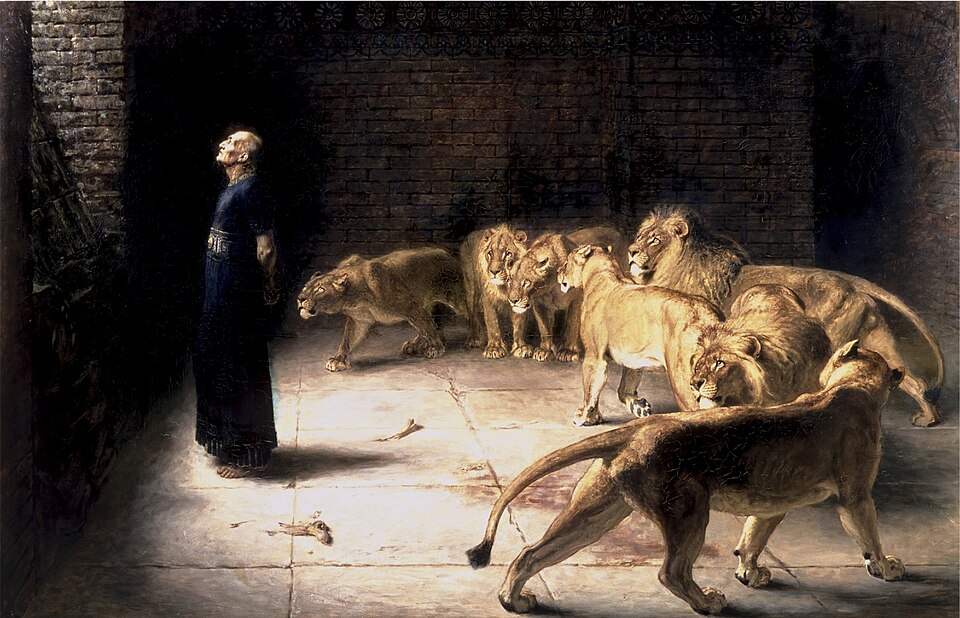
Fig. 13 — Daniel, whose prayers were heard "from the first
day" even when the answer was delayed. Briton Rivière, "Daniel's Answer to the King" (1890).
Public domain, via Wikimedia Commons.
→ §10 That long wait leads straight to the hardest
question of all: what about the prayers that seem to get no answer at all?
§10When Prayer Is Hard — "No," "Wait," and Silence
Big point
The prayers that seem to bounce off the ceiling come from the same good Father — "no,"
"wait," and even his silence are dealings of love, not its absence.
Three honest realities, building from God's side to ours: a good Father's refusals and
delays are themselves answers → the highest prayer is surrender, not getting your way → and some
obstructions are on our side and can be cleared.
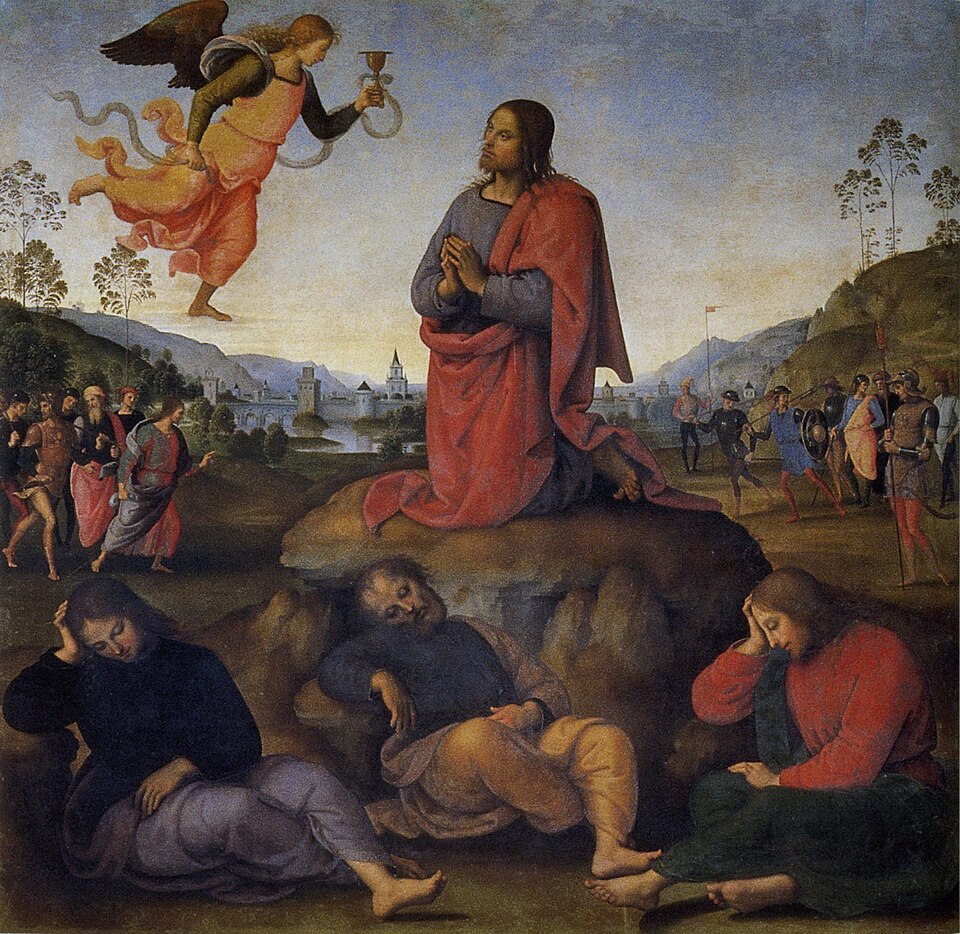
Fig. 14 — The prayer that received a "no" so we could receive
a "yes." Pietro Perugino, "The Agony in the Garden" (c. 1483–95). Public domain, via
Wikimedia Commons.
"No" and "wait" are real answers from a good Father, not the absence of one.When it's hard
Paul prayed three times for the thorn to go — God said no, but wrapped it in something better: "My grace is sufficient for you."
The refusal was a Father declining to give a good son something that would harm him.
A parent who gave a child everything they asked for would be negligent — kids ask for sweets and knives with equal confidence.
God's "no" is the loving edit of one who sees the whole board; his "wait" is the timing of one never late but rarely early.
More Scripture"Three times I pleaded… But he said, 'My grace is sufficient for you, for my power is made perfect in weakness.'"2 Cor 12:8–9 ·
"for those who love God all things work together for good."Rom 8:28 ·
"my thoughts are not your thoughts, neither are your ways my ways, declares the LORD."Isa 55:8–9 ·
"The secret things belong to the LORD our God."Deut 29:29 ·
"No good thing does he withhold from those who walk uprightly."Ps 84:11
Real-life dynamicA parent who granted every request a child made would not be loving but negligent. Children
ask for sweets and knives with equal confidence; a kid begs for the thing that would have ruined
him and is furious when refused — then, twenty years on, sees it was the best "no" of his life. God's
refusal is the loving edit of a Father who can see the whole board, and his "wait" is the timing of
one who is never late but rarely early. "No good thing does he withhold," which means whatever he
did withhold was, in the end, not the good thing you thought it was.
If "no" can be love, the model for receiving it is the Son in the garden.
The highest prayer is Gethsemane's — "not my will, but yours be done."When it's hard
The summit is not getting your request granted but surrendering it.
Jesus prays with total honesty — "let this cup pass" — sweating blood, holding nothing back.
Then, without cancelling the honesty: "nevertheless, not as I will, but as you will."
His own agonized request got a "no" — a "yes" to removing the cup meant a "no" to our salvation. The world was saved by an unanswered prayer.
More Scripture"let this cup pass from me; nevertheless, not as I will, but as you will."Matt 26:39 ·
"not my will, but yours, be done."Luke 22:42 ·
"I have come down from heaven, not to do my own will but the will of him who sent me."John 6:38 ·
"I delight to do your will, O my God; your law is within my heart."Ps 40:8 ·
"Your will be done, on earth as it is in heaven."Matt 6:10 ·
"he offered up prayers… with loud cries and tears… and he was heard because of his reverence."Heb 5:7
Real-life dynamicReal trust says exactly what it wants — and then "but you know best, your call." You beg the
surgeon to avoid the hard procedure, and she gently says the harder road is the only one that heals;
trust is naming your preference and then deferring to the one who can see what you can't. Gethsemane
sanctifies both halves — Jesus asked with raw honesty, sweating blood, holding nothing back, then
surrendered: "nevertheless, not as I will." The staggering part is that his own agonized request got
a "no," because a "yes" to removing the cup would have meant a "no" to our salvation — the whole
world was saved by an unanswered prayer prayed in surrender.
Some unanswered prayer, though, is on our side — and can be cleared.
Some things genuinely hinder prayer — cherished sin, wrong motives, broken relationships.When it's hard
Not all prayer is equally open to God — and Scripture names the blockages to remove them, not to make us anxious.
Cherished sin: "if I had cherished iniquity in my heart, the Lord would not have listened" — a harbored, protected sin, not a struggle.
Wrong motive: "you ask… to spend it on your passions" — prayer bent into a tool for self-indulgence.
Broken relationship: mistreating a spouse can "hinder" prayers. The repair isn't perfection but honesty — confession reopens the muffled line.
More Scripture"If I had cherished iniquity in my heart, the Lord would not have listened."Ps 66:18 ·
"your iniquities have made a separation between you and your God… so that he does not hear."Isa 59:1–2 ·
"If one turns away his ear from hearing the law, even his prayer is an abomination."Prov 28:9 ·
"you ask and do not receive, because you ask wrongly, to spend it on your passions."James 4:3 ·
"Who shall ascend the hill of the LORD?… He who has clean hands and a pure heart."Ps 24:3–4 ·
"live with your wives in an understanding way… so that your prayers may not be hindered."1 Pet 3:7
Real-life dynamicYou can't have a warm, open conversation with someone you're actively wronging and refusing to
make right. The unaddressed thing sits between every word, muffling it. Scripture names the
fixable blockages — a cherished sin (not a struggle, but one you're protecting), a motive
bent toward self-indulgence, a relationship you're mistreating — not to make you anxious but to
remove them. The repair isn't perfection; it's honesty. Confession simply clears what was sitting
between you and a Father already disposed to listen, and the line opens again at once.
→ §11 Even through the no's and the waits, prayer is
never inert. It does real things — which is §11.
§11What Prayer Does — Its Real Power
Big point
Prayer genuinely does things — it moves events, guards the heart with peace, and is never
prayed alone.
Three effects moving outward → inward → upward: real power in the world (Elijah), real
peace in you (Phil 4), and the real help of the Spirit and the Son who pray with and for you.
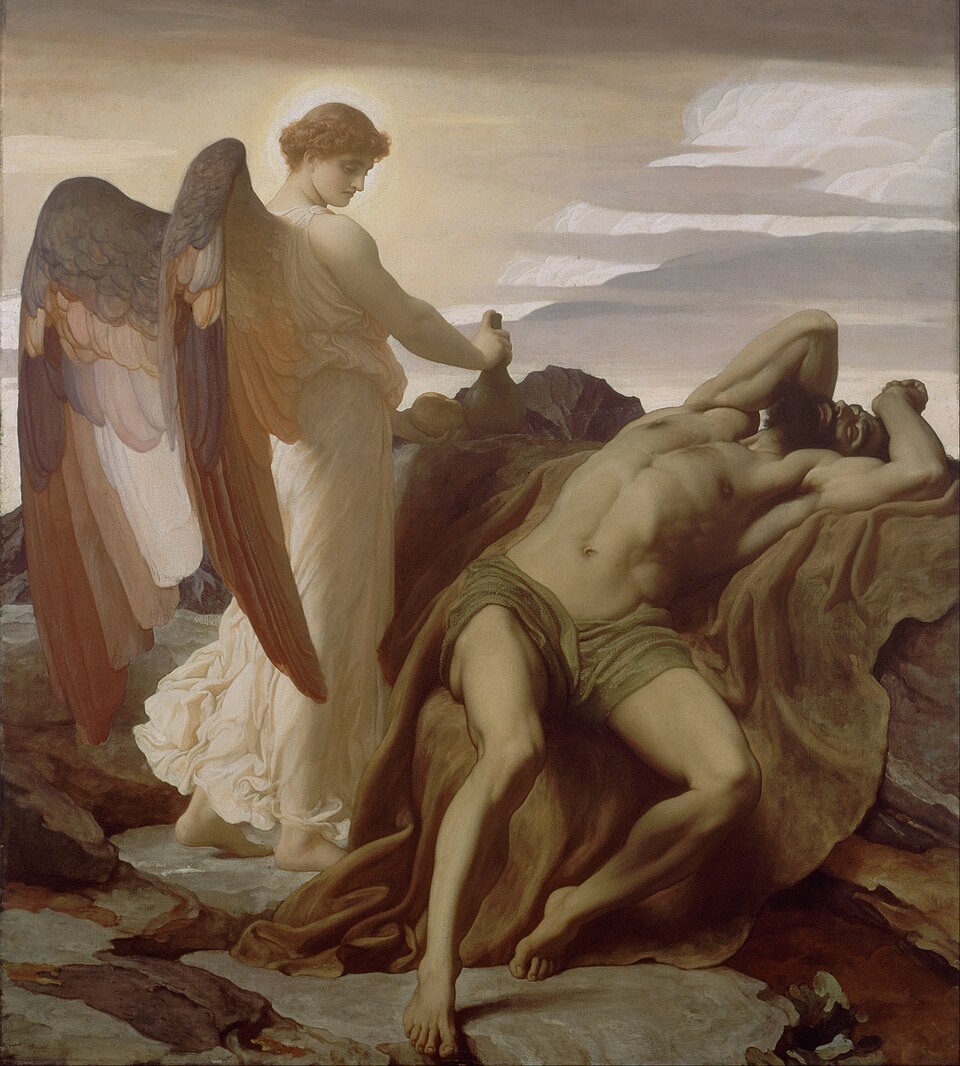
Fig. 15 — Elijah — "a man with a nature like ours" — whose
prayers stopped and started the rain. Frederic, Lord Leighton, "Elijah in the Wilderness"
(c. 1878). Public domain, via Wikimedia Commons.
The prayer of a righteous person has real, working power.Power
James: "the prayer of a righteous person has great power as it is working."
His example deflates excuses — Elijah "was a man with a nature like ours," not a superhuman.
So this power isn't for spiritual celebrities — it's available to ordinary people who pray.
The power is God's response, not magic in the words — but Scripture refuses to reduce prayer to a psychological exercise ("you have not because you ask not").
More Scripture"The prayer of a righteous person has great power as it is working."James 5:16 ·
"Elijah was a man with a nature like ours, and he prayed fervently that it might not rain."James 5:17–18 ·
"if two of you agree on earth about anything they ask, it will be done for them."Matt 18:19 ·
"earnest prayer for him was made to God by the church" (and the angel freed Peter).Acts 12:5–7 ·
"if my people… humble themselves, and pray… then I will hear from heaven."2 Chron 7:14 ·
"Call to me and I will answer you, and will tell you great and hidden things."Jer 33:3
Real-life dynamicOrdinary people's prayers really are one of the ways God chooses to act in the world. A small
group prays for weeks over a situation everyone had written off — a marriage, a diagnosis, a
prodigal — and the thing turns in a way the participants cannot reduce to coincidence. James
deliberately deflates every excuse: Elijah, whose prayers shut and opened the sky, "was a man with
a nature like ours," not a spiritual superhuman. The power is God's response, not magic in the
words — but Scripture flatly refuses to shrink prayer to a private mood-management exercise;
"you have not because you ask not" is a rebuke precisely because asking changes outcomes.
Its most testable effect, though, is inward.
Prayer guards you with a peace that outruns understanding.Power
Refuse anxiety, turn every worry into a specific request "with thanksgiving."
The result: "the peace of God, which surpasses all understanding, will guard your hearts and minds."
The verb is military — a garrison posted around your inner life.
It doesn't promise the circumstance changes on command — it promises a peace that stands sentry regardless, beyond what the facts warrant.
More Scripture"do not be anxious… by prayer with thanksgiving… and the peace of God… will guard your hearts and minds."Phil 4:6–7 ·
"You keep him in perfect peace whose mind is stayed on you, because he trusts in you."Isa 26:3 ·
"Peace I leave with you; my peace I give to you. Not as the world gives do I give to you."John 14:27 ·
"Cast your burden on the LORD, and he will sustain you."Ps 55:22 ·
"When the cares of my heart are many, your consolations cheer my soul."Ps 94:19 ·
"Cast all your anxieties on him, because he cares for you."1 Pet 5:7
Real-life dynamicPrayer posts a guard over your inner life — whether or not the circumstance changes. Waiting
on a biopsy or a verdict, the mind spins worst cases at 3 a.m.; the one who actually prays it
through — naming each fear, handing it over, thanking God in advance — often finds, not that the
fear was silly, but that a garrison has been set around the heart and sleep finally comes. Paul's
verb is military: the peace of God will "guard" you. It doesn't promise the outcome bends on command
— it promises a peace that "surpasses understanding," steadier than the facts warrant, standing
sentry regardless. The act of handing the worry over, item by item, measurably changes the one
praying before it changes anything else.
And you were never carrying any of it alone.
You never pray alone — the Spirit and the Son are praying with and for you.Power
When "we do not know what to pray for," the Spirit "intercedes… with groanings too deep for words" — translating our confused longing into perfect prayer.
At the same time the risen Christ "always lives to make intercession" for us.
So prayer's effectiveness doesn't rest on your eloquence, clarity, or strength of faith.
Weak prayer, prayed, is infinitely stronger than eloquent prayer withheld — because of who carries it the rest of the way.
More Scripture"the Spirit helps us in our weakness… intercedes for us with groanings too deep for words."Rom 8:26–27 ·
"Christ Jesus… is at the right hand of God… interceding for us."Rom 8:34 ·
"he always lives to make intercession for them."Heb 7:25 ·
"we have a high priest… able to sympathize with our weaknesses."Heb 4:15–16 ·
"if anyone does sin, we have an advocate with the Father, Jesus Christ the righteous."1 John 2:1
Real-life dynamicAt the worst moments people can't pray at all — only groan — and that groan is caught and
perfected before it reaches heaven. A death, a collapse, a loss so deep words fail: Scripture's
exact comfort is that the wordless groan is heard as prayer, because the Spirit is turning
it into flawless intercession and the risen Son is carrying it to the Father. So prayer's power
never finally rests on your eloquence, clarity, or strength of faith — your stumbling prayer is
joined to the perfect, ongoing prayer of the Son. Weak prayer, prayed, is infinitely stronger than
eloquent prayer withheld, because of who carries it the rest of the way.
→ §12 Behind every effect of prayer is the thing prayer
is really for — the relationship itself.
§12What It's All For — Intimacy
Big point
Pull the threads together and a face appears: not a reluctant official processing requests, but a
near, attentive Father who counts the one who prays as close.
Two notes close Part II and reveal its point: God is near and listening to all who
call, and being heard binds the heart to him — which was the goal of all the asking from the start.
Fig. 16 — Hannah, who "poured out her soul before the LORD"
and was heard. Jan Victors, "Hannah giving her son Samuel to the priest Eli" (c. 1645).
Public domain, via Wikimedia Commons.
God is near to everyone who calls — he hears, and he is listening for it.Intimacy
The dominant image is nearness, not distance: "the LORD is near to all who call on him."
His attention is pictured bodily — "his ears toward their cry" — turned on purpose in your direction.
John states the confidence flatly: "if we ask anything according to his will he hears us."
Prayer is speech to Someone already facing you, already attentive, already near.
More Scripture"The LORD is near to all who call on him, to all who call on him in truth."Ps 145:18 ·
"The LORD is near to the brokenhearted and saves the crushed in spirit."Ps 34:17–18 ·
"what great nation is there that has a god so near to it as the LORD our God is to us?"Deut 4:7 ·
"he is actually not far from each one of us."Acts 17:27 ·
"The eyes of the LORD are toward the righteous and his ears toward their cry."Ps 34:15 ·
"if we ask anything according to his will he hears us."1 John 5:14
Real-life dynamicGod's ear toward you is not a distant switchboard but a listener deliberately leaning in. A
parent sleeps with the baby monitor inches from the pillow, tuned to the faintest cry, already half
up at the first sound — that is Scripture's picture of God's attention, pictured in bodily terms,
"his ears toward their cry." He is nearest, it says, exactly where you'd expect him farthest: "near
to the brokenhearted." The whole posture of the praying life changes when you stop believing the
listener is far and reluctant and start believing he is close and already facing you.
And being heard does something deeper than solving the problem.
Answered prayer binds the heart to God — the point was never only the gift.Intimacy
The Psalmist after being heard: "I love the LORD, because he has heard my voice… therefore I will call on him as long as I live."
The answer didn't just solve a problem — it deepened a love and created a lifelong habit of calling.
Hannah, weeping and wordless, "poured out her soul," was heard, and her story becomes worship, not just relief.
The deepest thing God does through your prayers — answered, delayed, or redirected — is draw you into himself.
More Scripture"I love the LORD, because he has heard my voice… I will call on him as long as I live."Ps 116:1–2 ·
"But for me it is good to be near God; I have made the Lord GOD my refuge."Ps 73:28 ·
"One thing have I asked… that I may dwell in the house of the LORD all the days of my life."Ps 27:4 ·
"I count everything as loss because of the surpassing worth of knowing Christ Jesus."Phil 3:8 ·
"I have been pouring out my soul before the LORD."1 Sam 1:15 ·
"Draw near to God, and he will draw near to you."James 4:8
Real-life dynamicYears later you forget the exact problem someone solved for you, but you never forget that they
showed up — and you love them for it. Every answered prayer is quietly doing that between you
and God: building a history of being-shown-up-for that teaches the heart to trust and love the One
who keeps answering. Listen to the Psalmist after being heard — "I love the LORD, because he
has heard my voice… therefore I will call on him as long as I live"; the answer didn't just fix a
problem, it deepened a love and created a lifelong habit of calling. This is the quiet goal under
all the asking: prayer, answered or delayed or redirected, is God drawing you into himself.
An honest caveat.
None of this makes prayer a vending machine or a name-it-and-claim-it technique.
The same Scriptures that promise "ask and receive" show Paul's thorn un-removed, Jesus' cup un-passed, and saints praying through long silence (Ps 13: "How long, O LORD?"; Ps 88 ends in darkness).
Sometimes the truest answer is God himself rather than the thing requested — which is the whole point of §12.
→ Part III If prayer draws you into him, then being
near him changes you. Part III is that change — the machinery of the remade inner life.
Part III
Deeper Dynamics of the Spiritual Life
Part II ended in intimacy — and nearness remakes you. Part III is that remaking, in
three links: how God changes you (§13) → how you access the strength to be changed
(§14) → how he multiplies what you then bring him (§15).
§13How God Changes You — Transformation
Big point
God doesn't change you mainly by willpower but by four deeper dynamics: you become what you
behold, life comes through a death, pressure refines, and emptiness gets filled.
They escalate: first what you gaze at shapes you → then what must die to
grow → then what pressure does to the growing thing → and finally the empty posture
that receives the filling.
Fig. 17 — We are changed into the image of the glory we
behold. Raphael, "The Transfiguration" (1516–20). Public-domain artwork; photograph via
Wikimedia Commons.
Beholding → Becoming: you are slowly remade into whatever you gaze at.Transform
"Beholding the glory of the Lord, [we] are being transformed into the same image from one degree of glory to another" — change comes by looking, not mainly by striving.
Contemplation reshapes the heart over time; attention is formative.
The dark version is just as real: idol-makers "become like" the dead things they worship (Ps 115:8).
So whatever captures your daily attention is quietly deciding who you become.
More Scripture"beholding the glory of the Lord, [we] are being transformed into the same image from one degree of glory to another."2 Cor 3:18 ·
"we shall be like him, because we shall see him as he is."1 John 3:2 ·
"be transformed by the renewal of your mind."Rom 12:2 ·
"set your minds on things that are above, not on things that are on earth."Col 3:1–2 ·
"Those who look to him are radiant, and their faces shall never be ashamed."Ps 34:5 ·
"Those who make them [idols] become like them."Ps 115:8
Real-life dynamicWhatever holds your attention is quietly deciding who you become. Couples married fifty years
start to share expressions and even phrasing; we drift toward what we behold daily. Gaze at an
outrage feed for hours and you become anxious, cynical, and quick to contempt — you take the shape
of what you stare at. Gaze at Christ — in Scripture, in worship, in the quiet — and you slowly take
his shape instead. This is why transformation is less about gritting your teeth to behave and
more about managing your gaze: change the object of your attention and the character follows it.
Beholding changes you slowly; the next dynamic changes you by a sharper route — a burial.
Death → Life: God's road to new life runs through a burial.Transform
"Unless a grain of wheat falls into the earth and dies… it bears much fruit" — the burial is the mechanism, not the end.
Union with Christ is dying and rising with him — baptism pictured as death and resurrection.
Paul: "always carrying in the body the death of Jesus, so that the life of Jesus may be manifested."
So the "deaths" God allows — endings, losses, the stripping of a false self — are often the planting, not the destroying.
More Scripture"unless a grain of wheat falls into the earth and dies… it bears much fruit."John 12:24 ·
"we were buried therefore with him… that we too might walk in newness of life."Rom 6:4–5 ·
"our old self was crucified with him… so that we would no longer be enslaved to sin."Rom 6:6 ·
"I have been crucified with Christ. It is no longer I who live, but Christ who lives in me."Gal 2:20 ·
"that I may know him… and may share his sufferings, becoming like him in his death."Phil 3:10 ·
"carrying in the body the death of Jesus, so that the life of Jesus may also be manifested."2 Cor 4:10–11
Real-life dynamicThe thing that feels like losing is usually the planting. Every real growth has a death in it:
the comfortable job left for the calling, the addiction surrendered, the resentment put down, the
old self-image laid aside. A seed that refuses to be buried stays a single dry kernel; the one that
lets itself go into the ground multiplies. The pattern is written into the gospel itself — the cross
before the crown, the grave before the resurrection — so the losses God allows are rarely the end of
the story and often the exact mechanism of the next chapter.
Fig. 18 — New life on the far side of the grave — the pattern
God works into a person. Piero della Francesca, "The Resurrection" (c. 1463–65). Public
domain, via Wikimedia Commons.
And what is planted gets pressed — on purpose.
Pressure → Glory: God grows his best work through the fire and the pruning knife.Transform
Faith is "tested by fire" like gold — the heat is purification, not punishment.
A chain reaction: "suffering produces endurance, and endurance character, and character hope."
Jesus' startling horticulture: "every branch that bears fruit he prunes, that it may bear more" — you get cut back because you're fruitful.
The scale is reversed: "this light momentary affliction is preparing… an eternal weight of glory beyond all comparison."
More Scripture"the tested genuineness of your faith… more precious than gold… though tested by fire."1 Pet 1:6–7 ·
"suffering produces endurance, and endurance character, and character hope."Rom 5:3–5 ·
"Count it all joy… the testing of your faith produces steadfastness."James 1:2–4 ·
"when he has tried me, I shall come out as gold."Job 23:10 ·
"he will sit as a refiner and purifier of silver."Mal 3:3 ·
"every branch that does bear fruit he prunes, that it may bear more fruit."John 15:2 ·
"discipline… yields the peaceful fruit of righteousness."Heb 12:11
Real-life dynamicThe load that hurts is the load that builds — pressure is formation, not punishment. The
athlete grows only under resistance; the muscle must tear to rebuild stronger; the diamond forms
under crushing weight. The seasons that broke you open are usually the ones that made you deep,
able to comfort others precisely where you were once comforted. The hardest verse to swallow is the
pruning one — "every branch that bears fruit he prunes" — because it means the cutting back often
comes because you're fruitful, not as a sign you've failed. Nothing in God's hands is wasted
suffering; it's all being turned into an "eternal weight of glory beyond all comparison."
Fig. 19 — Job on the ash heap — refined, not discarded, by
the fire. Léon Bonnat, "Job" (1880). Public domain, via Wikimedia Commons.
Fire and pruning leave you empty — which, it turns out, is the condition for being filled.
Emptied → Filled: God fills the empty and sends the full away empty.Transform
"Blessed are those who hunger and thirst for righteousness, for they shall be filled" — the hunger is the qualification.
Mary's song: "he has filled the hungry with good things, and the rich he has sent away empty."
Self-sufficiency is the one state grace can't fill — it brings no empty cup.
Five loaves surrendered feed five thousand and overflow twelve baskets — little given to God is multiplied.
More Scripture"Blessed are those who hunger and thirst for righteousness, for they shall be satisfied."Matt 5:6 ·
"he has filled the hungry with good things, and the rich he has sent away empty."Luke 1:53 ·
"he satisfies the longing soul, and the hungry soul he fills with good things."Ps 107:9 ·
"Open your mouth wide, and I will fill it."Ps 81:10 ·
"you say, I am rich… not realizing that you are wretched, pitiable, poor, blind, and naked."Rev 3:17–18 ·
"they all ate and were satisfied… twelve baskets of broken pieces."Luke 9:16–17
Real-life dynamicThe emptiness you resent may be the very opening God is waiting to fill. A cup already full of
your own plans and self-sufficiency has no room — which is why the person who "has it all together"
so rarely finds God, while the one at the end of themselves finally does. Hunger isn't the thing
keeping you from being filled; it's the qualification for it. And watch the loaves: five, actually
surrendered, feed five thousand and overflow twelve baskets — in God's hands a little, given, is
multiplied, while much, clutched, stays exactly what it was.
Fig. 20 — Five loaves surrendered, five thousand fed — the
little, given, is multiplied. Abraham Bloemaert, "The Miracle of the Loaves" (c. 1600s).
Public domain, via Wikimedia Commons.
→ §14 All four of these require drawing on a strength
that isn't your own. So how do you actually access him?
§14How You Draw on Him — Access
Big point
The ways you draw on God are all counterintuitive — doors most people push when they should
pull: obey to understand, rest to work, confess to be clean, bow to grow wise.
Four doors in sequence: you obey your way into light (obedience→revelation) → you work
from rest, not for it (rest) → you get clean by confessing, not hiding (confession) → and you grow
wise by reverence, not cleverness (fear→wisdom).
Fig. 21 — Their eyes were opened in the act of table
fellowship — revelation met them as they walked and welcomed. Hans Rottenhammer & Paul
Brill, "Supper at Emmaus." Public-domain artwork; photograph via Wikimedia Commons.
Obedience → Revelation: you obey your way into understanding.Access
Jesus' stunning order: "if anyone's will is to do God's will, he will know whether the teaching is from God" — doing comes before knowing.
Revelation isn't withheld to frustrate you; it's given as you walk — "the one who does what is true comes to the light."
The reverse is a warning: light refused goes dark — "claiming to be wise, they became fools… their foolish hearts were darkened."
You rarely get the whole staircase — just the next step; take it and the next appears.
More Scripture"If anyone's will is to do God's will, he will know whether the teaching is from God."John 7:17 ·
"If you abide in my word… you will know the truth, and the truth will set you free."John 8:31–32 ·
"blessed rather are those who hear the word of God and keep it."Luke 11:28 ·
"be doers of the word, and not hearers only, deceiving yourselves."James 1:22 ·
"I understand more than the aged, for I keep your precepts."Ps 119:100 ·
"claiming to be wise, they became fools… their foolish hearts were darkened."Rom 1:21–22
Real-life dynamicThe cure for doubt is often not more argument but one act of obedience. You don't understand
swimming by studying it on the shore — you understand it the instant you get in the water; whole
truths of God are learned only in the doing, never from the bleachers. Revelation isn't withheld to
frustrate you; it's handed to you as you walk, one step at a time, and you rarely get the whole
staircase — just the next stair, which you have to actually climb before the next appears. The
reverse is a real warning: light refused doesn't stay neutral, it goes dark, so a heart that keeps
saying no slowly loses its ability to see.
Obedience sounds like effort; the next door is the opposite — stop striving.
Rest, not striving: you work from God's acceptance, never for it.Access
"Come to me, all who labor and are heavy laden, and I will give you rest… my yoke is easy."
Every other system says perform to be accepted; grace says accepted — now live (straight out of Part I §6).
"Whoever has entered God's rest has also rested from his works."
Striving to earn what you already have is exhausting and endless; resting in it is the engine of real, un-anxious work.
More Scripture"Come to me, all who labor… and I will give you rest… my yoke is easy, and my burden is light."Matt 11:28–30 ·
"whoever has entered God's rest has also rested from his works as God did from his."Heb 4:9–10 ·
"My presence will go with you, and I will give you rest."Ex 33:14 ·
"In quietness and in trust shall be your strength."Isa 30:15 ·
"apart from me you can do nothing."John 15:5 ·
"Be still, and know that I am God."Ps 46:10
Real-life dynamicYou will work completely differently depending on whether you're trying to earn acceptance or
already have it. The employee who knows he's valued works freely, creatively, and without panic;
the one terrified of being fired works frantically, defensively, and badly — same desk, opposite
engines. Every religion and self-help system says perform to be accepted; the gospel uniquely
says accepted — now live, so you labor from rest, not for it. Striving to earn
what you already possess is exhausting and endless; resting in it is, paradoxically, the source of
the most productive and un-anxious work you'll ever do.
Resting in acceptance frees you to do the thing pride most resists — come clean.
Confession → Cleansing: light dissolves what hiding keeps alive.Access
"If we confess our sins, he is faithful and just to forgive us… and to cleanse us" — confession opens the valve.
Proverbs' law: "whoever conceals his transgressions will not prosper, but he who confesses and forsakes them will obtain mercy."
Hidden things grow in the dark; exposed to light they lose their power.
This isn't groveling — it's honesty with a Father already disposed to forgive; the shame was the lie keeping you from the cure.
More Scripture"If we confess our sins, he is faithful and just to forgive us… and to cleanse us from all unrighteousness."1 John 1:9 ·
"When I kept silent, my bones wasted away… I acknowledged my sin to you… and you forgave."Ps 32:3–5 ·
"a broken and contrite heart, O God, you will not despise."Ps 51:17 ·
"though your sins are like scarlet, they shall be as white as snow."Isa 1:18 ·
"whoever conceals his transgressions will not prosper, but he who confesses and forsakes them will obtain mercy."Prov 28:13 ·
"confess your sins to one another… that you may be healed."James 5:16
Real-life dynamicHiding sin keeps it alive; dragging it into the light is what dissolves it. An infection
bandaged tight and kept in the dark festers and spreads; the wound opened to the air heals. David
describes the body-and-soul toll of concealment — "my bones wasted away" — and the instant relief of
finally naming it: "I acknowledged my sin… and you forgave." This isn't groveling; it's honesty with
a Father already disposed to forgive, and the shame you felt was largely the lie that kept you from
the cure. The hard part is the admission; the forgiveness, Scripture insists, is the easy and certain
part.
Fig. 22 — The penitent in candlelight — sin brought out of
the dark and into the flame. Georges de La Tour, "The Penitent Magdalen" (c. 1640). Public
domain (CC0), via Wikimedia Commons / The Met.
And the whole posture of access has a single name: reverence.
Fear of the Lord → Wisdom: reverence is the doorway, and it comes first.Access
"The fear of the LORD is the beginning of wisdom" — awe is the foundation the whole house of understanding stands on.
Not cringing terror, but right-sized awe that puts everything else in proportion.
Intimacy is tied to it: "the friendship of the LORD is for those who fear him, and he makes known to them his covenant."
Lose the awe and you lose the wisdom — a casual, over-familiar heart stops being taught. So the way into deeper knowing is a deeper bowing.
More Scripture"The fear of the LORD is the beginning of wisdom, and the knowledge of the Holy One is insight."Prov 9:10 ·
"The fear of the LORD is the beginning of knowledge; fools despise wisdom and instruction."Prov 1:7 ·
"if you… call out for insight… then you will understand the fear of the LORD and find the knowledge of God."Prov 2:3–5 ·
"The fear of the LORD is instruction in wisdom, and humility comes before honor."Prov 15:33 ·
"The friendship of the LORD is for those who fear him, and he makes known to them his covenant."Ps 25:14 ·
"the fear of the Lord, that is wisdom; and to turn away from evil is understanding."Job 28:28
Real-life dynamicThe way into deeper knowing is a deeper bowing. The student who holds a master in genuine awe
is the one the master pours into; the cocky one who assumes he already knows gets nothing, because
reverence is simply what keeps a heart teachable. Awe isn't cringing terror — it's right-sized
respect that puts everything else in proportion, and it's the foundation the whole house of
understanding stands on. Lose the awe and you slowly lose the wisdom: a casual, over-familiar heart
stops being instructed, while the one who trembles a little before God is handed even his secrets —
"the friendship of the LORD is for those who fear him."
Fig. 23 — "Take off your sandals… this is holy ground" —
reverence as the entryway to revelation. Sébastien Bourdon, "Moses and the Burning Bush"
(17th c.). Public domain, via Wikimedia Commons.
→ §15 As you access him, he does something with what you
bring: he multiplies it.
§15How He Multiplies — Increase
Big point
In God's economy the starting amount never decides the outcome — stewardship and order do: use
it or lose it, seek first, seek the hidden.
Three laws of multiplication: what you use grows and what you bury is lost →
what you put first gets everything else added → and what you search for is worth more
than what's handed to you.
Fig. 24 — The servants reckon with their master: what was used
multiplied; what was buried was lost. Jan Luyken etching, "The Parable of the Talents" (Bowyer
Bible). Via Wikimedia Commons.
Use it or lose it: capacity grows with use and atrophies with neglect.Increase
The jarring rule, repeated across the Gospels: "to everyone who has, more will be given… but from the one who has not, even what he has will be taken."
The talents: the two who invest are doubled and promoted; the one who buries his out of fear loses even that.
Faithfulness compounds: "one who is faithful in very little is also faithful in much."
Hoarding doesn't keep a gift safe — using it is the only way to keep and grow it.
More Scripture"to everyone who has, more will be given… but from the one who has not, even what he has will be taken."Matt 25:29; Luke 19:26 ·
"Well done, good and faithful servant… I will set you over much."Matt 25:21–23 ·
"One who is faithful in a very little is also faithful in much."Luke 16:10 ·
"As each has received a gift, use it to serve one another, as good stewards of God's varied grace."1 Pet 4:10 ·
"Do not neglect the gift you have."1 Tim 4:14 ·
"fan into flame the gift of God, which is in you."2 Tim 1:6
Real-life dynamicGifts and faith behave like muscles — exercised, they grow; buried, they're taken. A language
you stop speaking fades; a skill you keep using sharpens; the courage, generosity, or faith you
actually exercise this week is the only kind that will still be there next year. In the parable the
two servants who put their talents to work are doubled and promoted, while the one who buries his out
of fear loses even what he had — because hoarding never keeps a gift safe, only using it does. God's
economy never asks "how much did you start with?" but "what did you do with it?" — which is why the
small, faithfully-used gift always outruns the large, buried one.
If capacity grows by use, the next question is what to spend it on first.
Seek first: put God first in the order of your wants and the rest is added.Increase
"Seek first the kingdom of God… and all these things will be added to you" — the other things come as a by-product of right priority.
An order-of-operations law: chase the secondary things first and they shrink; chase the first thing and the rest follow.
The firstfruits principle: honor God with the first and best, not the leftovers (straight back to §2's honor).
It is the one command where God invites a test: "put me to the test… if I will not open the windows of heaven."
More Scripture"seek first the kingdom of God and his righteousness, and all these things will be added to you."Matt 6:33 ·
"Honor the LORD with your wealth and with the firstfruits… then your barns will be filled."Prov 3:9–10 ·
"where your treasure is, there your heart will be also."Matt 6:21 ·
"make me a little cake of it first, and afterward make something for yourself" (and her jar never ran dry).1 Kgs 17:13–16 ·
"You have sown much, and harvested little… because of my house that lies in ruins."Hag 1:5–9 ·
"put me to the test, says the LORD… if I will not open the windows of heaven."Mal 3:10
Real-life dynamicThe order of your priorities is itself an act of faith — and it sets what you actually trust.
Budget your giving and your time to God first and the rest mysteriously stretches; do it last,
from whatever happens to be left over, and there is never quite enough. It's an order-of-operations
law: chase the secondary things first and they shrink in your hands, chase the first thing and the
rest arrive as a by-product. Strikingly, tithing is the one command where God openly invites a test —
"put me to the test… if I will not open the windows of heaven" — because what you put first reveals,
and then slowly becomes, where your whole heart lives.
And the best things are placed just out of easy reach — on purpose.
Seek the hidden: God conceals treasure so the searching forms you.Increase
"It is the glory of God to conceal a thing, but the glory of kings is to search it out" — hiddenness is an invitation, not a wall.
The kingdom is "like treasure hidden in a field" and "a pearl of great price" — found by those who look, worth everything when found.
The promise is to the whole-hearted searcher: "you will seek me and find me, when you seek me with all your heart" (the same line that opened §3's draw-near).
A God found with no seeking would be a trinket — the search is how the heart grows able to hold what it finds.
More Scripture"It is the glory of God to conceal things, but the glory of kings is to search things out."Prov 25:2 ·
"if you seek it like silver and search for it as for hidden treasures, then you will… find the knowledge of God."Prov 2:4–5 ·
"the kingdom of heaven is like treasure hidden in a field… like a merchant in search of fine pearls."Matt 13:44–46 ·
"You will seek me and find me, when you seek me with all your heart."Jer 29:13 ·
"without faith it is impossible to please him… he rewards those who seek him."Heb 11:6 ·
"Seek, and you will find; knock, and it will be opened to you."Luke 11:9–10
Real-life dynamicGod hides the best things in plain sight — for seekers — because the search is part of the reward.
The answer handed to you free is usually gone by Friday; the one you had to dig for, wrestle with, and
turn over for weeks you never forget. Hiddenness is an invitation, not a wall — "the glory of kings is
to search things out" — and the kingdom is pictured as treasure buried in a field, found by the one who
was actually looking and worth everything he owned when found. A God you could have with no seeking
would be a trinket; the seeking is how a heart grows large enough to hold what it finds, which is why
seasons of apparent silence are often a summons to look harder, not evidence that no one is there.
Fig. 25 — The field bought for the treasure buried in it — the
seeker who gave everything for what he found. Circle of Rembrandt / Gerrit Dou, "The Hidden
Treasure." Public domain, via Wikimedia Commons.
Where it all lands.
Fifteen patterns, one Person. Part I showed you can't pass the measure you yourself set — so you need grace. Part II showed grace opens a relationship with a language — prayer. Part III showed that relationship remakes you.
Every dynamic here is relational, not mechanical — none is a switch to force God's hand, and all run on his timing and wisdom.
The point of all fifteen is the same destination: to move you from managing a ledger to trusting, and resembling, the Person behind every pattern.
 GOD EXAMINEDBible← Back to The Proof