 GOD EXAMINED
What Jesus Says You Are
The Bible’s map of consciousness — spirit, soul, heart, and mind — read first in the Hebrew and Aramaic words Jesus actually used and the Greek that renders them, then laid point-by-point over modern brain science, with the GodExamined self-model as a secondary study. Graded, cited, and honest about where the two maps can and cannot meet.
Scripture does not treat a human being as one undifferentiated lump of “self.” It names an ordered, layered inner person: a God-facing spirit (rûaḥ / pneuma), a whole living soul (nepeš / psychē), a governing heart (lēḇ / kardia), a reasoning mind (nous / dianoia), plus will, conscience, affections, memory, and body — and Jesus Himself lists four of these in one breath (Mark 12:30). Crucially, He lists them not in the abstract but in Hebrew: the Greatest Commandment is a verbatim quotation of the Shema (Deut 6:5), so the words behind Jesus’ Greek are the Semitic terms lēḇāḇ (heart), nepeš (soul), and mĕʾōd (might) — with “mind” added only because one Hebrew word, lēḇ, already held both “heart” and “mind” at once. This study therefore begins in the lexicon — defining each faculty from the Hebrew/Aramaic Jesus spoke and the way He Himself uses it in the Gospels — before placing it beside its closest modern neuroscience and asking, honestly, how well the two maps fit.
The convergences are real and, in places, striking: the heart as the governing valuation-centre meets the ventromedial prefrontal cortex and a literal “little brain” of ~40,000 neurons in the heart;8,9 the command to be “transformed by the renewing of your mind” meets neuroplasticity;11,12 the soul as an integrated whole meets integrated-information and global-workspace theories of consciousness;2,3 and the Bible’s claim that consciousness rises with complexity (Seed claim 10) meets the 86.1 billion-neuron human cortex.1 But the limits are just as real: the “hard problem” is unsolved,5 no scanner locates a “spirit,” and the free-will data (Libet, Soon) complicate the will without settling it.16,17,18 Verdict: consonance at Model level — Scripture’s layered inner-man and neuroscience’s layered, integrated, complexity-graded self describe the same creature from two directions; they do not reduce to one another, and this paper refuses to pretend otherwise.
Contents
- 1The layered self — question & method
- 2Jesus’ own anatomy & the ordering of the self
- 3The lexicon of the inner man — the four words Jesus used
- 4Spirit — capacity for God
- 5Soul — the integrated living person
- 6Heart — the governing throne (& neurocardiology)
- 7Mind — renewal & neuroplasticity
- 8Conscience — the inward witness
- 9Will — freedom & the Libet problem
- 10Affections, emotions & memory
- 11Body & the image of God
- 12★ Secondary study — the self-model
- 13Synthesis & the graded ledger
- 14What to do with this
- 15Brutal honesty: limits
- RReferences & related reading
Evidence Grades
1The layered self — question & method
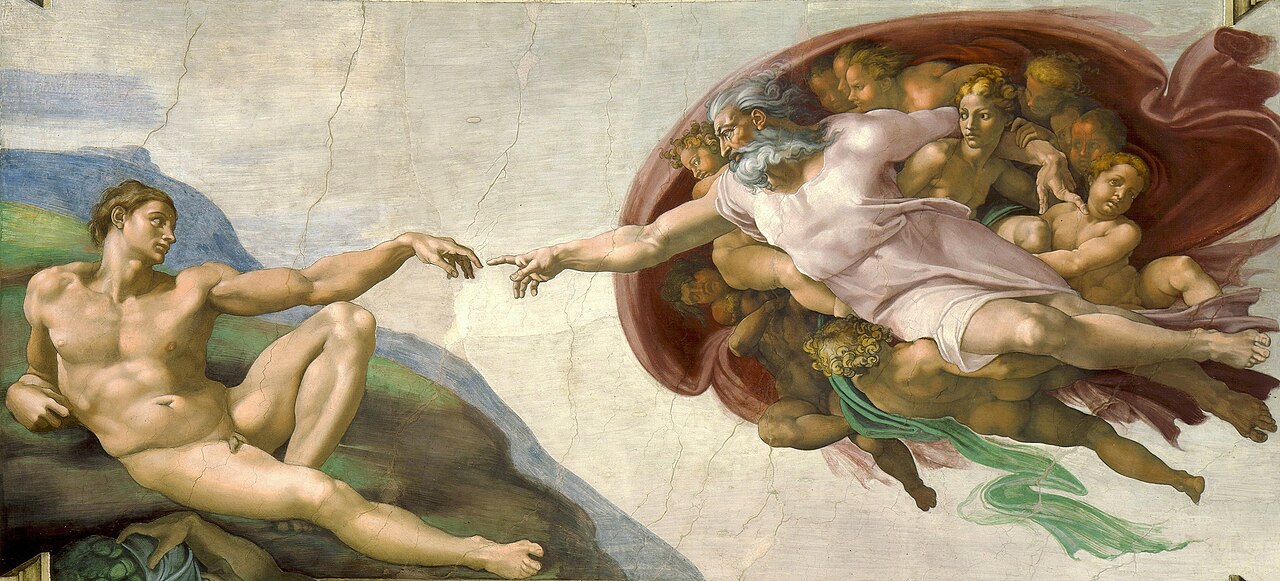
Ask a neuroscientist “what is the self?” and ask the Bible the same question, and you get two maps of one territory. This study lays them over each other — faculty by faculty, in the exact words Jesus used — and grades the fit.
- Scripture already carries a working theory of consciousness, and it is layered, not flat. Long before cognitive science existed, the biblical writers distinguished a God-facing spirit, a whole living soul, a governing heart, a reasoning mind, plus will, conscience, affection, memory, and body. These are not idle poetry: the terms carry settled, catalogued meanings (§3), they are used with technical consistency across a thousand years of text, and Jesus deploys four of them in a single sentence as though His hearers knew exactly what each named (Mark 12:30). A modern neuroscientist drawing a block-diagram of perception, valuation, executive control, affect, and self-modelling is, remarkably, re-drawing the same partition from the other side.
- The method is fixed up front: read the text first, bring the neuroscience second. Scripture’s account of the inner man carries doctrinal weight on its own terms; brain science is an illumination of shape, never a proof of doctrine, and wherever it merely rhymes we say so in plain words. Every claim in this paper wears a grade — from Replicated (many labs, robust) down to Speculative (open question, wrong to build doctrine on). This ordering matters because the opposite move — letting the latest fMRI result dictate what a verse “really” means — is exactly the error that has discredited a century of pop-neurotheology, and we refuse it deliberately.
- The two maps are worth overlaying because they agree on a non-obvious premise: consciousness rises with complexity. The Bible’s implicit gradient — inert dust, then living creatures, then the image-bearing human “a little lower than the angels” — tracks the very gradient neuroscience charts from a few hundred neurons in a nematode to the 86.1 billion of the human cortex.1,2 Neither map claims the richer system is a different kind of thing; both claim it lets more of the same light through. That shared premise is the hinge on which the whole comparison turns, and it is why an ancient Near-Eastern text and a twenty-first-century laboratory can be laid over each other without category violence.
- Honesty is the governing constraint, not a closing disclaimer. Where the fit is real we will say “convergence”; where it only rhymes, “consonance”; and where one map reaches past the other, “category gap” — and we will never let a striking correlation masquerade as proof. The hard problem of consciousness is unsolved; no scanner images a spirit; the free-will data are genuinely contested. Naming those limits in advance is what earns the reader’s trust when, elsewhere, the convergences turn out to be strong.
Scripture is the architect’s blueprint of a cathedral; neuroscience is the engineer’s survey of the standing stones. Same building — one says what it is for, the other how it is built.
If an ancient text independently names an ordered, layered inner life, and modern imaging finds an ordered, layered, integrated brain, the correspondence is evidence of a real structure both are perceiving — not proof that one caused the other.
The Bible and brain science are describing the same person from different angles. This paper checks, point by point, where they agree — and is honest where they can’t.
- Convergence — both describe the same feature (e.g. the heart as the control-centre of life).
- Consonance — they rhyme without being identical (the soul ≈ integrated consciousness).
- Category gap — one reaches where the other can’t (no scan images a “spirit”; no verse maps a synapse).
2Jesus’ own anatomy: the Greatest Commandment
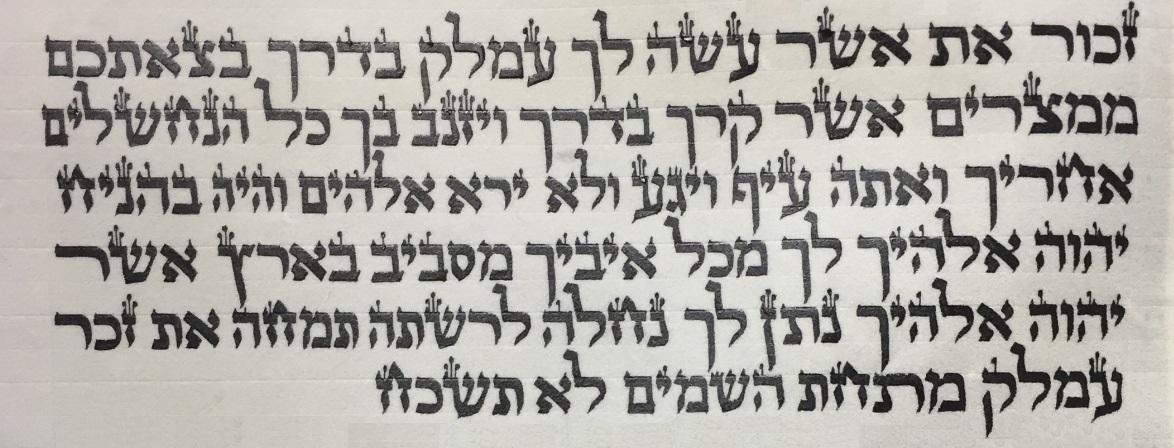
When asked for the greatest commandment, Jesus does not give a feeling — He gives an anatomy: “Love the Lord your God with all your heart and with all your soul and with all your mind and with all your strength” (Mark 12:30; cf. Matt 22:37; Luke 10:27; quoting Deut 6:5).
- The Greatest Commandment is a quotation, and that fixes its vocabulary to Hebrew. Jesus is not coining a psychology; He is reciting the Shema, Israel’s twice-daily confession (Deut 6:4–5), which every hearer had said since childhood. This means the words behind His Greek are the Hebrew faculties lēḇāḇ (heart), nepeš (soul), and mĕʾōd (might) — a three-part totality formula, not a Greek faculty-psychology imported into the Gospel. The whole of this study rests on that fact: to ask “what does Jesus say you are?” is first to ask “what did these Hebrew words mean to the One reciting them?” — which is why §3 is a lexicon before it is anything else.
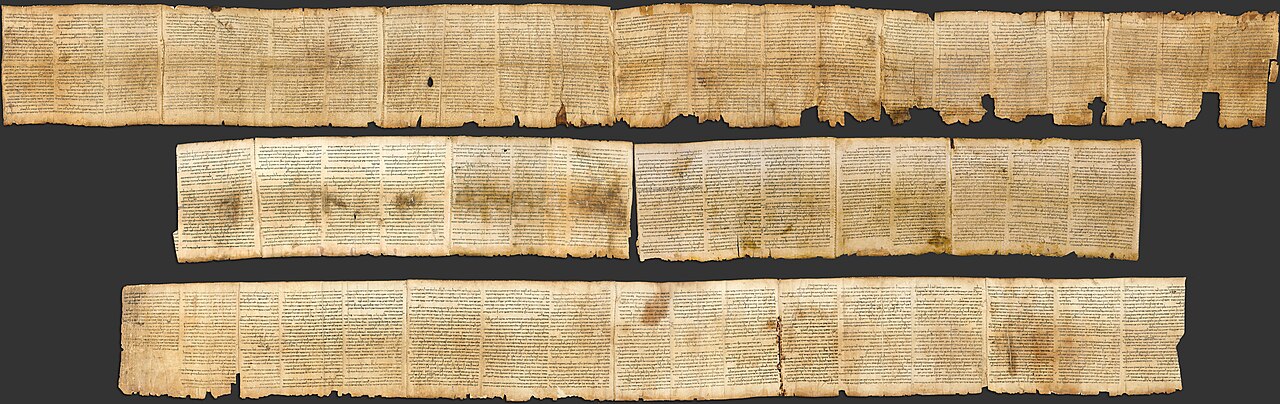
- Jesus’ everyday speech was Aramaic, and the Gospels keep the fingerprints. The Galilean carpenter’s working language was Aramaic, and Mark preserves his very syllables un-translated — Talitha koum (5:41), Ephphatha (7:34), Abba (14:36), and the cry from the cross Eloi, Eloi, lema sabachthani (15:34), an Aramaic form of Psalm 22:1.50,51 In Aramaic the inner-man words are cognate to the Hebrew — heart libbā, soul naphshā, spirit rûḥā — so the Semitic sense carries straight through His mouth into the Evangelists’ Greek. He also read the Hebrew Scriptures aloud in synagogue (Luke 4:16–20), so the lexicon below is not reconstructed around Him; it is the language He prayed, quoted, and taught in.
- “Heart · soul · mind · strength” names the whole person by naming its poles — a Hebrew merism, not a parts-list. The repeated “with all your…” is the engine of the sentence: it piles up representative faculties precisely to mean the entire self, leaving nothing out, the way “flesh and blood” or “heaven and earth” name a whole by its extremes.33,47 That is why the four Gospel/Deuteronomy listings disagree on the count (three terms, or four) and on the order (strength before mind in Luke) without anyone noticing a contradiction — a merism is indifferent to its exact inventory. Jesus is not asking for four separate loves allocated to four organs; He is asking for one undivided love that reaches every layer at once.
- Neuroscience’s “self” is the same refusal to locate a person in one spot. There is no anatomical “soul organ”: the self is an integration across 86.1 billion neurons,1 bound into a single experience by large-scale networks,2,3 while the felt sense of “me” tracks to a specific midline system, the default mode network.22 So the command’s grammar and the connectome agree structurally: a human being is many specialised subsystems welded into one irreducible whole. Jesus’ four-fold “all of you” and neuroscience’s “distributed, integrated self” are two descriptions of the same creature, and that convergence — architecture, not mechanism — is Established.
“Heart, soul, mind, strength” is like saying “love God with your engine, your fuel, your navigation, and your wheels” — every subsystem, not one dial.
If the command addresses four faculties at once, Scripture presupposes they are distinguishable yet unified — exactly the picture of a brain with specialised regions bound into one conscious field.
Jesus says love God with all of you — feelings, life, thinking, and body. Brain science agrees the “self” is all of you working together, not one piece.
- Mark 12:30 — heart · soul · mind · strength (four).
- Luke 10:27 — heart · soul · strength · mind (same four, re-ordered).
- Matt 22:37 — heart · soul · mind (three) — the Gospels vary the list, treating it as the whole, not a fixed partition.
2.1 — The ordering of the self, in four languages
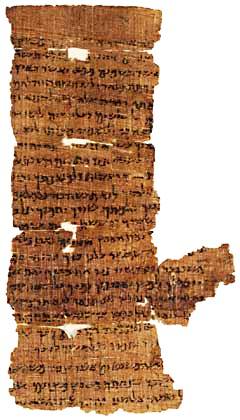
Jesus is quoting Deuteronomy 6:5, and the Hebrew gives a triad, not an inventory of organs: bĕ-ḵol-lĕḇāḇ-ḵā (“with all your heart”), û-ḇ-ḵol-nap̄š-ḵā (“and all your soul”), û-ḇ-ḵol-mĕʾōḏe-ḵā (“and all your might”). The repeated “with all your…” is the engine of the sentence: this is a Hebrew merism of totality — naming representative faculties to mean “the entire self,” the way “flesh and blood” or “heaven and earth” name a whole by its poles.33,47 The ordering is about completeness, not a catalogue of separable parts.
| Source | Lang. | The ordering, as written | Terms |
|---|---|---|---|
| Deut 6:5 (Masoretic) | Hebrew | lēḇāḇ · nepeš · mĕʾōd — heart · soul · might | 3 |
| Deut 6:5 (Septuagint) | Greek | kardia / dianoia · psychē · dynamis — heart or mind · soul · power | 3* |
| Mark 12:30 | Greek | kardia · psychē · dianoia · ischys — heart · soul · mind · strength | 4 |
| Matt 22:37 | Greek | kardia · psychē · dianoia — heart · soul · mind | 3 |
| Luke 10:27 | Greek | kardia · psychē · ischys · dianoia — heart · soul · strength · mind | 4 |
* The Septuagint renders the single Hebrew lēḇāḇ two ways across its manuscripts: Codex Vaticanus reads dianoia (“mind”), Codex Alexandrinus kardia (“heart”).
Why does a fourth word — “mind” — surface in the Gospels when the Hebrew has three? Because the translators got there first. One Hebrew term, lēḇāḇ, legitimately covers both “heart” and “mind” (see §3), so the Septuagint had to choose — and its great codices chose differently, dianoia in Vaticanus, kardia in Alexandrinus. Writing for Greek readers, the Evangelists preserved both streams, setting kardia and dianoia side by side; Mark and Luke also keep mĕʾōd as ischys (“strength”), yielding four, and Luke even re-orders strength before mind. The variation is not loose quotation — it is a translator’s fingerprint, and it confirms the list was always a totality formula, never a fixed psychology.47
The three-into-four expansion looks like a discrepancy only until you see the Greek. Because lēḇāḇ spans “heart” and “mind,” rendering Deuteronomy into Greek forced a distinction the Hebrew never had to make — and the Gospels, honestly, keep both halves rather than pick one. The Nash Papyrus (c. 150–100 BC) and the fourth-century codices let every link in that chain be checked against physical manuscripts. Established (the texts) · Model (the harmonisation).
- The Hebrew is a triad — heart · soul · might (Deut 6:5): a totality merism, not an anatomy.
- The LXX split “heart” — lēḇāḇ → dianoia (Vaticanus) / kardia (Alexandrinus): the source of the Gospels’ fourth term.
- Every Gospel re-orders freely — Mark, Matthew, and Luke list one command in three different sequences, treating it as “the whole self,” not a fixed partition.
3The lexicon of the inner man
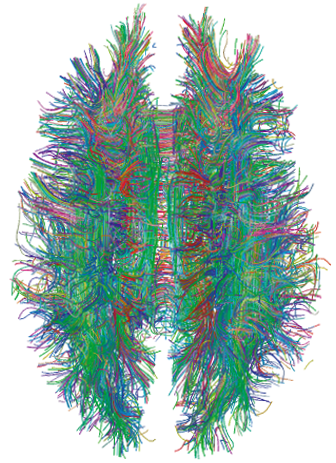
Before the mapping, the vocabulary. Scripture’s inner-man terms are not loose synonyms; each has a settled semantic range in Hebrew and Greek. The table below is the GodExamined self-model’s ten faculties, each with its lexicon, one-line essence, a defining verse, and an honesty grade — the backbone this study maps onto the brain.
| Faculty | Hebrew / Greek | Essence | Defining verse | Grade |
|---|---|---|---|---|
| Spirit | rûaḥ / pneuma | Capacity for God | “God is spirit…” John 4:24 | Established+ |
| Soul | nepeš / psychē | The living person | “…became a living creature” Gen 2:7 | Established |
| Heart | lēḇ / kardia | Governing inner throne | “Keep your heart… from it flow the springs of life” Prov 4:23 | Established |
| Mind | nous / dianoia | Reason renewed Godward | “…renewal of your mind” Rom 12:2 | Established |
| Will | thelēma / voluntas | Choosing the good | “…to will and to work” Phil 2:13 | Model |
| Conscience | syneidēsis | God’s inward witness | “…the law written on their hearts” Rom 2:15 | Established |
| Affections | the loves | Rightly-ordered loves | “As a deer pants…” Ps 42:1 | Established |
| Memory & imagination | memoria / phantasia | Storehouse & forge | “Do this in remembrance of me” Luke 22:19 | Model |
| Body | bāśār / sōma | Dust · temple · glory | “…your body is a temple” 1 Cor 6:19 | Established |
| Image of God | tselem / eikōn | Reflecting God’s glory | “…in the image of God” Gen 1:27 | Established± |
Two cautions carried from the corpus. First, these terms overlap — nepeš (soul) and lēḇ (heart) are not sealed compartments, and the trichotomy-vs-dichotomy debate (is “spirit” truly separable from “soul”?) is genuinely open (Speculative). Second, “heart” in Scripture is almost never mere emotion — it is the governing centre of will, thought, and love at once.
3.1 — The four words Jesus used: heart, soul, spirit, mind
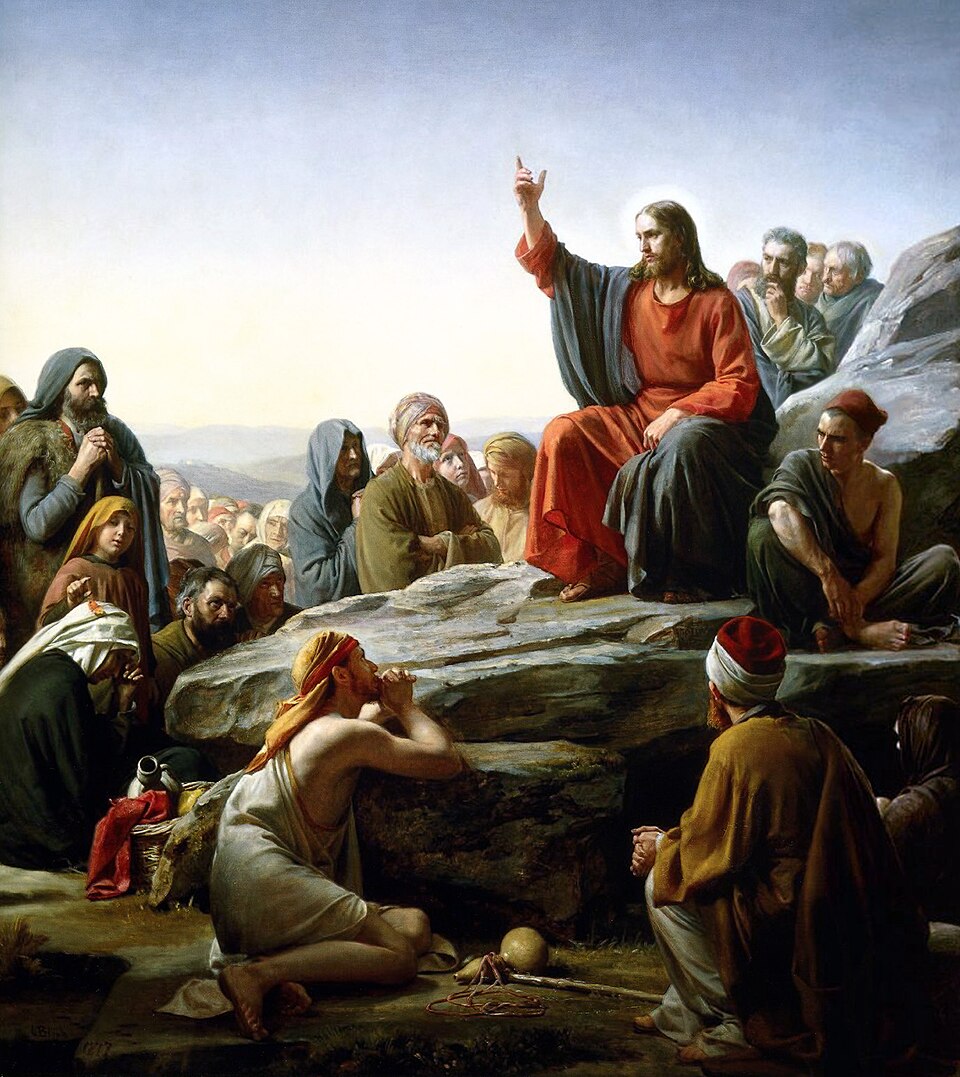
Before any brain scan, the vocabulary must be fixed from the mouth that used it. The Shema gives Jesus three Hebrew words — lēḇāḇ, nepeš, mĕʾōd — and the Gospel Greek adds a fourth, dianoia, to carry a sense the first word already held. Here is each term defined from the critical lexicons and, decisively, from how Jesus Himself uses it.
| Faculty | Hebrew (His Scripture) | Aramaic (His speech) | Greek (the Gospels) | Root / literal sense | How Jesus Himself uses it |
|---|---|---|---|---|---|
| Heart | lēḇ / lēḇāḇ · לֵב | libbā · לִבָּא | kardia · καρδία | the inner organ → the inner command-centre: thought, will, intention | the source of conduct — “out of the heart come evil thoughts” Mt 15:19; “where your treasure is…” Mt 6:21 |
| Soul | nepeš · נֶפֶשׁ | naphshā · נַפְשָׁא | psychē · ψυχή | throat → breath → appetite → life → the whole living self | the self that outlasts the body — “cannot kill the soul” Mt 10:28; “my soul is very sorrowful” Mt 26:38 |
| Spirit | rûaḥ · רוּחַ | rûḥā · רוּחָא | pneuma · πνεῦμα | wind → breath → the God-shared, God-facing breath-life | the Godward faculty — “God is spirit” Jn 4:24; “the spirit is willing” Mt 26:41 |
| Mind | — (carried by lēḇ) | — (carried by libbā) | dianoia / nous · διάνοια | Hebrew has no separate word; cognition lives in the lēḇ | “love… with all your mind” Mt 22:37; “why do you reason in your hearts?” Mk 2:8 |
| Might | mĕʾōd · מְאֹד | — | ischys · ἰσχύς | “muchness, very” → your whole capacity, resources, intensity | kept as “strength” — the body and its powers spent for God Mk 12:30 |
- Heart — lēḇ / lēḇāḇ — is the inner command-centre of thinking and willing, and Jesus treats it exactly so. In Hebrew the lēḇ is the single most common inner-man word (~858 uses) and its primary sense is not emotion but cognition and resolve: “to set the heart” on a thing means to pay attention; “to say in one’s heart” means to think; a person “wise of heart” is intelligent, and God alone “weighs the hearts.”33,34,38 Jesus inherits this precisely: He calls the heart the source from which all conduct flows — “out of the heart come evil thoughts, murder, adultery…” (Matt 15:19), “out of the abundance of the heart the mouth speaks” (Matt 12:34) — and He locates reasoning there, asking “why do you think evil in your hearts?” (Matt 9:4; cf. Mark 2:8, “reasoning in your hearts”). He even describes His own heart by its disposition, not its feeling: “I am gentle and lowly in heart” (Matt 11:29). For Jesus the heart is the throne where treasure, thought, and will sit together (Matt 6:21; 5:8) — the governing centre, which is why §6 maps it onto the brain’s valuation hub rather than its emotion circuits.
- Soul — nepeš — is the whole living self, the life that can be lost or saved, and Jesus uses it for exactly that. The Hebrew nepeš begins concretely — the throat that breathes and craves — and widens to mean breath, appetite, life, and finally the entire living person (~755 uses); Genesis does not say man received a soul but became one (nepeš ḥayyâ, Gen 2:7).33,35,41 Jesus uses psychē — the Greek that renders nepeš — for the self whose worth exceeds the world and whose life outlasts the body: “do not fear those who kill the body but cannot kill the soul” (Matt 10:28); “what does it profit a man to gain the whole world and forfeit his soul?” (Mark 8:36–37). He also uses it for the felt depth of His own anguish — “my soul is very sorrowful, even to death” (Matt 26:38; echoing Ps 42:5–6) — and promises it rest: “you will find rest for your souls” (Matt 11:29, quoting Jer 6:16). So the nepeš Jesus names is not a ghost in a shell but the living “you” yourself — the reading §5 sets beside integrated-consciousness theory.
- Spirit — rûaḥ — is the God-breathed, God-facing breath-life, and Jesus plays on its double meaning of “wind” and “spirit.” The Hebrew rûaḥ (~389 uses) runs from “wind” to “breath” to the inner disposition to the very Spirit of God — the same word hovers over the waters in Gen 1:2 and animates the dry bones in Ezek 37.33,38 Jesus exploits the whole range: to Nicodemus He says “the wind blows where it wishes… so is everyone born of the Spirit” (John 3:8) — one word, pneuma / rûaḥ, meaning both at once; He declares “God is spirit, and those who worship him must worship in spirit and truth” (John 4:24); He diagnoses the divided self with “the spirit indeed is willing, but the flesh is weak” (Matt 26:41); and He dies returning it to its source — “Father, into your hands I commit my spirit” (Luke 23:46, quoting the Hebrew rûaḥ of Ps 31:5). The Beatitudes open on it: “blessed are the poor in spirit” (Matt 5:3). This is the faculty §4 calls the antenna to God — real, and the one no scanner can image.
- Mind has no Hebrew word of its own — and that absence is the most revealing datum of all. Biblical Hebrew never names the brain as the organ of thought; the work we assign to “the mind” — reasoning, understanding, memory, intention — is done by the lēḇ (and, for the innermost stirrings, the kidneys, kilyâ).33,34 So when Jesus’ Greek adds a fourth word, dianoia (“love… with all your mind,” Matt 22:37), it is not a new faculty bolted on; it is the translators unfolding one half of what the single Hebrew lēḇāḇ already carried — the reason the Septuagint’s great codices render that one word two different ways (§2.2). This is why Jesus can speak of “reasoning in the heart” (Mark 2:8) without contradiction: in His idiom the heart is the mind. The lesson for §7 is sharp — the biblical “renewal of the mind” is the renewal of the whole thinking-willing lēḇ, not of a detached intellect, which is exactly why it shows up in the brain as structural change, not mere opinion-change.
The one Shema word that is not a faculty is mĕʾōd — literally “muchness, very-ness.” It means “love God with all your capacity,” and the rabbis read it concretely: the Mishnah glosses “with all your mĕʾōd” as “with all your means, and with whatever measure He metes out to you” (m. Berakhot 9:5).52 Mark and Luke render it ischys, “strength” — the body and its powers — which is why §11 reads the fourth term as the embodied self poured out. One command, then, reaches from the innermost heart to the outermost muscle. Established
3.2 — What the standard lexicons actually say
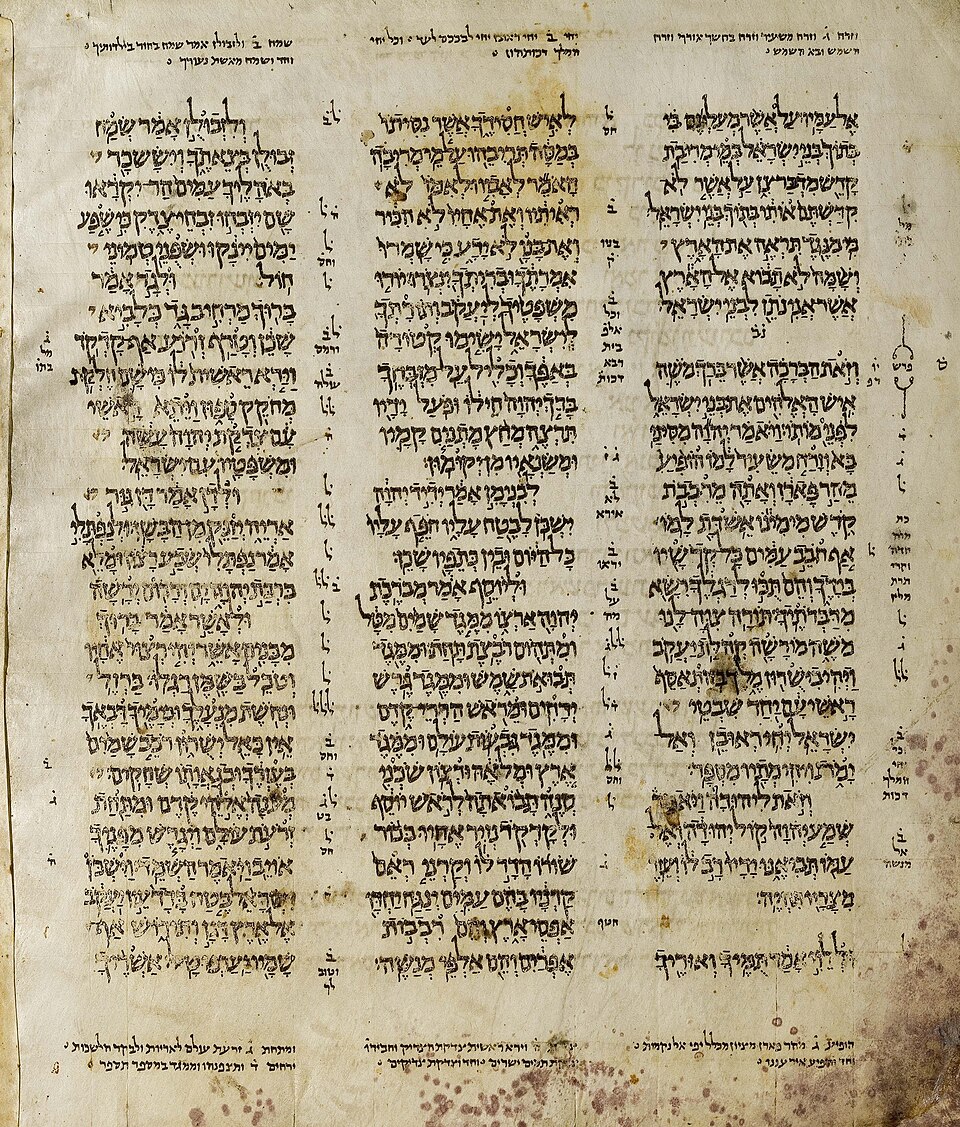
These glosses are not devotional guesses; they are the consensus of the critical lexicons that govern academic translation. The Hebrew side is anchored by BDB (Brown–Driver–Briggs, 1906)34 and HALOT (Koehler–Baumgartner, 1994–2000)35; the Greek by BDAG (Bauer–Danker, 3rd ed. 2000)36; and the theological ranges by the multi-volume TDNT (Kittel–Friedrich)37, TDOT (Botterweck–Ringgren)38, and NIDOTTE (VanGemeren, 1997)39. That these independent works — compiled across a century, by scholars of every confessional stripe — converge on the same semantic ranges is what lets us say the inner-man vocabulary has a settled, public, checkable meaning.
| Term | Lang. | Occur. | Lexicon-attested range | What the data show |
|---|---|---|---|---|
| nepeš · נֶפֶשׁ | Heb | ~755 | throat, breath, life, living being, self, person, appetite, desire | the whole animated life — not a detachable soul |
| lēḇ / lēḇāḇ · לֵב | Heb | ~858 | inner man, mind, will, intention, resolve, “heart” | the commonest term — chiefly intellect & will, rarely mere feeling |
| rûaḥ · רוּחַ | Heb | ~389 | wind, breath, spirit, disposition, the Spirit of God | shared between God and man; the empowering breath |
| bāśār · בָּשָׂר | Heb | ~273 | flesh, body, kin, “all flesh,” creatureliness | humanity in its weakness and mortality |
| psychē · ψυχή | Grk | ~103 | life, soul, self, person, the seat of life | the LXX’s standard rendering of nepeš |
| kardia · καρδία | Grk | ~156 | heart = centre of thought, will and feeling | inherits lēḇ’s full breadth, not just emotion |
| pneuma · πνεῦμα | Grk | ~379 | wind, breath, spirit, the Holy Spirit | renders rûaḥ; the Godward faculty |
| nous / dianoia · νοῦς | Grk | ~24 / ~12 | mind, understanding, way of thinking | Paul’s reason-word — 21 of 24 uses are his |
| syneidēsis · συνείδησις | Grk | ~30 | conscience, moral self-awareness (“knowing-with”) | almost entirely Pauline; the inward witness |
| sōma · σῶμα | Grk | ~142 | body (physical), the person as embodied | Gundry: the physical body, not “the whole self” |
3.3 — A century of word-study scholarship
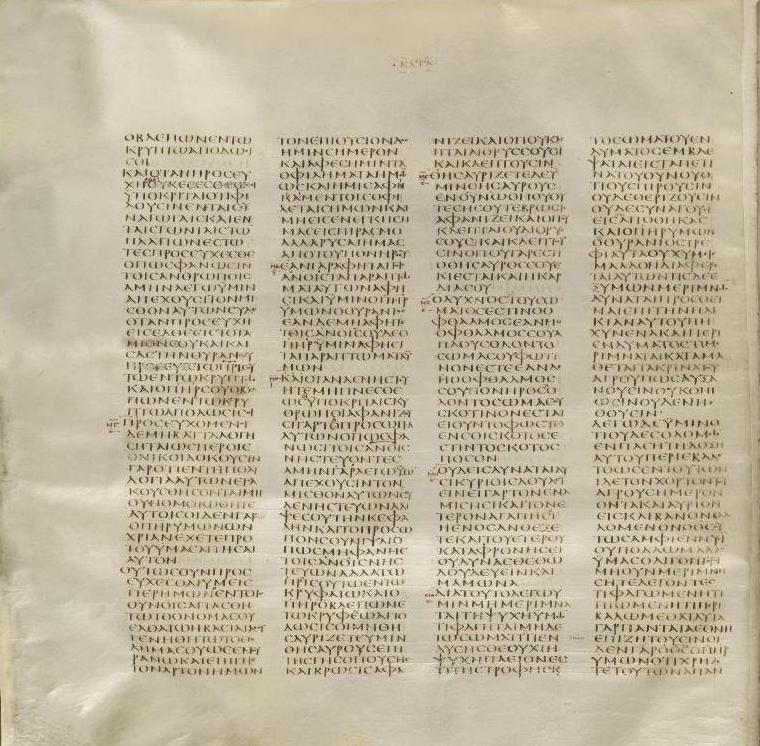
The ranges in Table 3 are not new. (i) Hans Walter Wolff’s Anthropology of the Old Testament (1974) remains the standard synthesis, organising Hebrew anthropology around nepeš (“needy man”), lēḇ (“reasonable man”), rûaḥ (“man as empowered”), and bāśār (“man in his transience”), and supplying the frequency counts above.33 (ii) Aubrey Johnson’s The Vitality of the Individual in the Thought of Ancient Israel (1949) and Daniel Lys’s monographs Nèphèsh (1959) and Rûach (1962) traced each term across the whole canon, establishing that the Hebrew self is a psychical whole diffused through the body, not a ghost housed in a machine.42,43 (iii) On the Greek side, Robert Gundry’s Sōma in Biblical Theology (1976) showed, against Bultmann, that sōma denotes the physical body rather than “the whole person,” and Robert Jewett’s Paul’s Anthropological Terms (1971) mapped Paul’s pneuma / psychē / sōma / sarx / kardia / nous in their polemical settings.45,46 (iv) And Richard Steiner’s Disembodied Souls (SBL Press, 2015) qualifies the consensus: in some biblical and wider Near-Eastern texts the nepeš can depart and survive — so even the “no separable soul” reading is itself contested, not a settled dogma.41
James Barr’s The Semantics of Biblical Language (1961) is the discipline’s conscience, and we hold our own work to it.40 It exposed two errors a devotional word-study is prone to: illegitimate totality transfer (importing every possible sense of a word into a single occurrence) and over-reliance on etymology. So we do not claim nepeš “really means throat” everywhere, nor that Israel carried a tidy three-part psychology the Greeks later systematised. The lexicons give a range; context selects the sense. The ordering of the self is a theological and rhetorical structure Scripture wields with freedom (see §2), not a fixed anatomical chart. Established (the method) · Speculative (any rigid partition).
3.4 — The ordering: how the layers stack (and where scholarship divides)
Scripture orders the self in at least three ways, and the differences are precisely the live scholarly question. (i) Generative order — Gen 2:7: dust (body) + the breath of life (nĕšāmâ / rûaḥ) → a living nepeš. The soul is the result of body-plus-breath, not a third ingredient poured in — the textual ground of the holistic reading. (ii) Tripartite listing — 1 Thess 5:23: “your whole pneuma and psychē and sōma”; Heb 4:12, “dividing soul and spirit.” (iii) Dichotomy / holism — most of Scripture pairs only inner and outer (“body and soul,” Matt 10:28).
The debate is genuinely open, and honestly graded here. John Cooper’s Body, Soul, and Life Everlasting (2000) defends holistic dualism — a unified person who can nonetheless survive death in an intermediate state;32 Joel Green’s Body, Soul, and Human Life (2008) argues a monist / physicalist reading with no separable soul;44 Moreland & Rae’s Body & Soul (2000) defend classical substance dualism;49 and Robert Di Vito (CBQ, 1999) adds that the Old-Testament self is more relational and “dyadic” than the bounded modern individual.48 We do not pretend to settle which model wins — the spirit/soul partition stays Speculative. What every side grants is the ordered, layered structure the vocabulary describes. Established (the structure) · Speculative (the metaphysical partition).
A lexicon is a surveyor’s record of where a word has actually been used — a river’s whole floodplain mapped over centuries. You read the sense from where you stand in the sentence, not by claiming the river covers the entire plain at once.
If three independent critical lexicons, compiled across a century, converge on the same range for nepeš or kardia, that range is public, checkable data — so the biblical ordering built on it rests on evidence, not etymological fancy.
Scholars have spent 100+ years cataloguing exactly how the Bible’s “soul,” “heart,” “spirit,” and “mind” words are used. The meanings here are theirs, not ours — and where the experts still argue (is the soul separable?), we say so.
- Generative — body + breath → a living soul (Gen 2:7).
- Tripartite — spirit · soul · body (1 Thess 5:23).
- Totality formula — heart · soul · mind · strength (Mark 12:30 / Deut 6:5).
4Spirit — capacity for God (rûaḥ / pneuma)
What Scripture says. The spirit (rûaḥ / pneuma) is the innermost, God-facing capacity — the breath by which a person is open to, addressed by, and able to worship God.
- The Hebrew rûaḥ ties a person’s spirit to the breath of God in one word. The term means “wind,” “breath,” and “spirit” indivisibly, so Scripture can say in a single stroke that the same rûaḥ hovered over creation (Gen 1:2), was breathed into Adam’s nostrils (Gen 2:7), and is begged back in David’s “renew a right rûaḥ within me” (Ps 51:10).33,38 This is why the human spirit is never presented as self-generated: it is the lent breath of God, and Proverbs calls it God’s instrument of inward sight — Prov 20:27, “the rûaḥ of man is the lamp of the LORD, searching all his innermost parts.” Jesus takes the word at full stretch, punning on wind-and-spirit to Nicodemus (“the wind blows where it wishes… so is everyone born of the Spirit,” John 3:8) and defining worship by it (“God is spirit… worship in spirit and truth,” John 4:24). The spirit, in His usage, is the organ of contact with a God who is Himself spirit — like calling to like.
- Scripture treats the spirit as the faculty that can die and be reborn — a state-change, not an organ. Paul says the unregenerate are “dead in trespasses” (Eph 2:1) yet made alive in Christ, and Jesus insists a person “must be born again” of the Spirit (John 3:3–7). Note what this is not: it is not the claim that an unbeliever lacks a brain region, but that the Godward capacity is dormant until quickened. That is precisely the kind of claim no scanner can adjudicate — which sets up the honest division that follows: neuroscience can watch the receiver, never the signal.
- Imaging shows prayer is a whole-brain act, not a “God spot” — which fits the spirit as orientation of the whole self. Andrew Newberg’s SPECT studies of Franciscan nuns and Tibetan monks in deep prayer found a consistent signature: frontal attention regions up, the parietal “orientation” area that draws the self/world boundary turned down — the measurable correlate of the felt loss of self in union.6 There was no single module for the sacred. This matters theologically: if worship lit one dedicated spot, that would suggest a mere brain gadget; that it recruits a distributed network fits Scripture’s claim that the spirit turns the entire person Godward, not one organ.
- A second, independent study found the same distribution for mystical union. Mario Beauregard and Vincent Paquette scanned fifteen Carmelite nuns recalling their most intense experience of communion with God; the state recruited more than a dozen regions across frontal, parietal, temporal, and limbic cortex.7 Two labs, two traditions, one result — the sacred experience is irreducibly whole-brain. This is consonance at Model level: the neural breadth rhymes with the biblical breadth, without proving the Object of the worship is real (that is not what a scanner measures).
- The “hard problem” marks the permanent ceiling — and it falls exactly where Scripture locates the spirit. David Chalmers’ distinction is decisive: science can, in principle, map every neural correlate of worship and still not explain why there is something it is like to be a worshipping self at all.5 The that-it-is-like-anything of inner experience is untouched by the full mechanism. So the spirit is not a gap in current knowledge to be filled by future scans; it is a different kind of question from the one imaging asks. Model on the neural breadth · Speculative on any clean partition of spirit from soul.
A radio can be measured down to every circuit, yet the broadcast comes from outside it. Scripture treats the spirit as the brain’s antenna to God — science can study the receiver, not the signal.
If worship lit one “God spot,” that would suggest a mere brain module. That it lights a distributed, whole-person pattern fits Scripture’s claim that the spirit orients the entire self Godward — not one organ.
Brain scans show prayer uses lots of the brain at once, and lowers the sense of self-boundaries. They can’t prove God is on the line — that’s not what a scanner measures.
- Worship — “worship in spirit and truth” (John 4:24).
- Inner witness — “the Spirit bears witness with our spirit” (Rom 8:16).
- Illumination — “the spirit of man is the lamp of the LORD” (Prov 20:27).
5Soul — the integrated living person (nepeš / psychē)
What Scripture says. The soul (nepeš / psychē) is, most often, not a detachable part but the whole living person — the life itself.
- The Hebrew nepeš is concrete before it is spiritual — and it means the whole living you. Its root sense is the throat, the organ that breathes and swallows, and from there it fans out to breath, appetite, desire, life, and finally the entire animated person (~755 uses); the thirsty “nepeš faints” and the hungry “nepeš craves.”33,35 Genesis is exact about the grammar: God forms the dust, breathes in the rûaḥ, and “the man became a living nepeš” (Gen 2:7) — you do not have a soul so much as you are one. This is why the Psalmist addresses himself in the vocative, “bless the LORD, O my nepeš” (Ps 103:1): the soul is not a compartment he owns but the living self he exhorts.
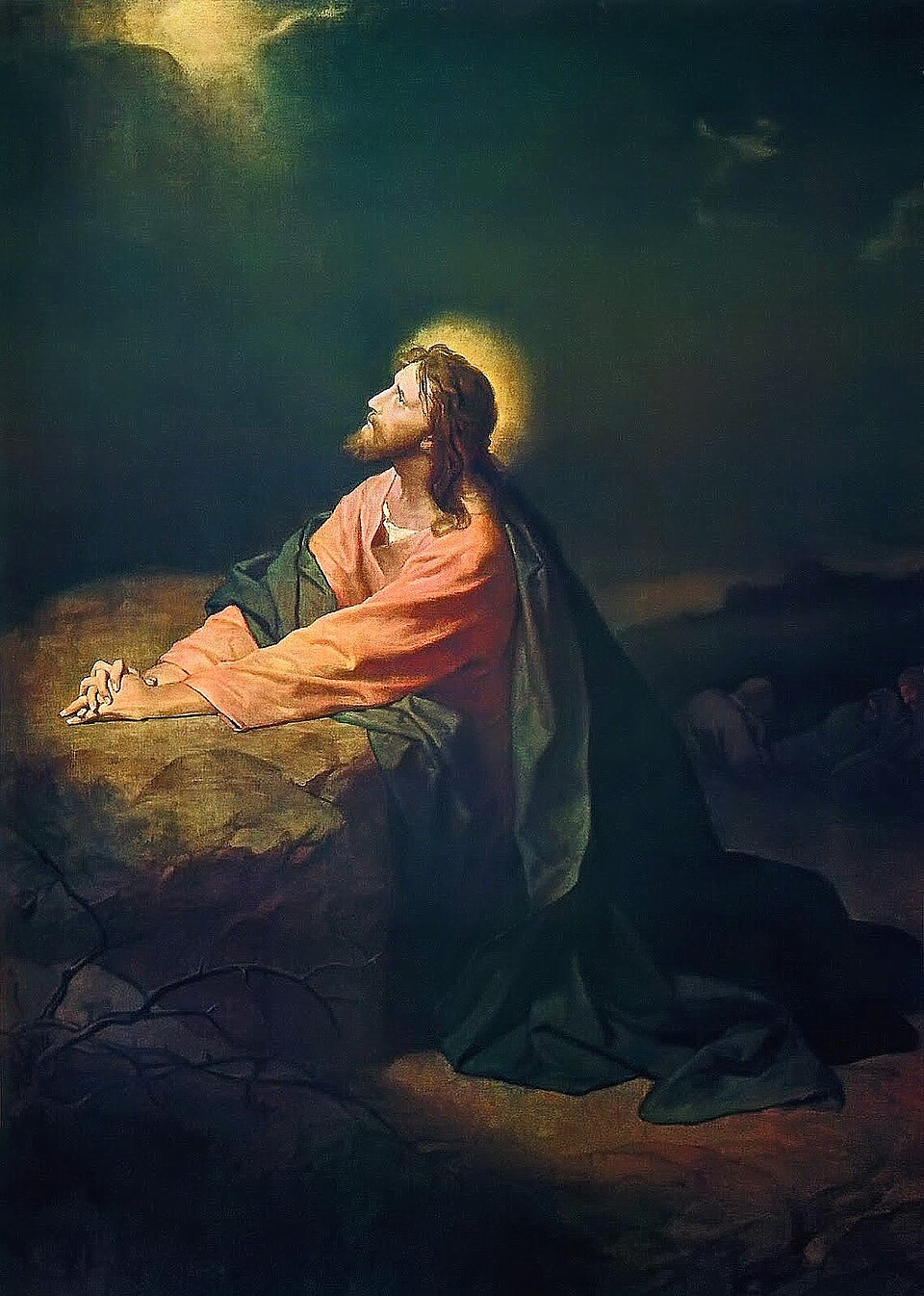
- Jesus uses psychē for the self that outweighs the world and outlasts the body. He sets the soul against the whole cosmos and declares it heavier: “what does it profit a man to gain the whole world and forfeit his soul? For what can a man give in return for his soul?” (Mark 8:36–37). He distinguishes it from the body precisely at the point of death — “do not fear those who kill the body but cannot kill the soul” (Matt 10:28) — and He voices its depths as His own in Gethsemane, “my soul is very sorrowful, even to death” (Matt 26:38), quoting the refrain of Psalm 42–43. Yet the same word is the life He lays down (“the good shepherd lays down his psychē,” John 10:11) and the rest He gives (“rest for your souls,” Matt 11:29). For Jesus the soul is the irreducible “you” — valuable, vulnerable, and in His hands.
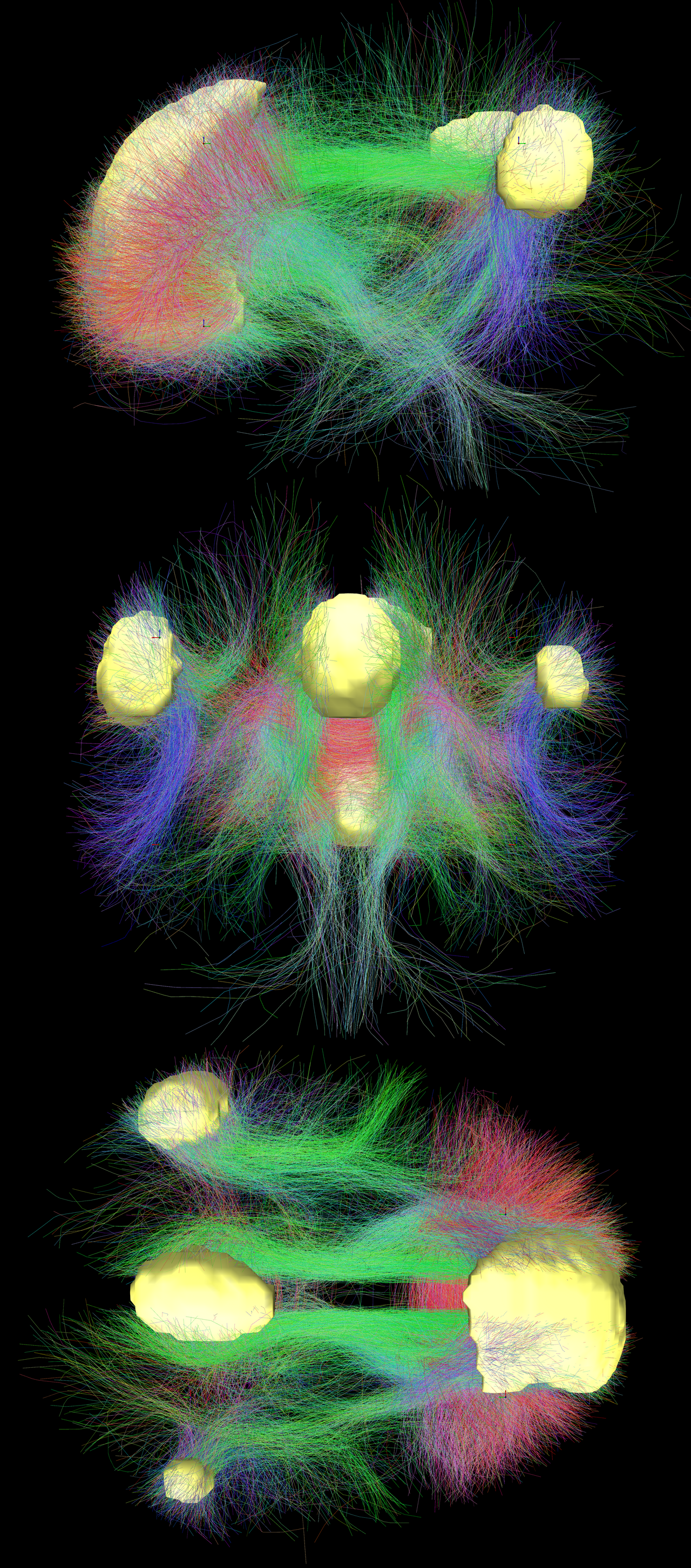
- Consciousness science abandoned the search for a soul-organ in favour of integration — the exact shape of nepeš. Giulio Tononi’s Integrated Information Theory proposes that consciousness simply is the degree to which a system’s information is unified and irreducible — its Φ — a whole that by definition cannot be decomposed into independent parts without destroying it.2 Notice the structural parallel: Scripture says you are a living whole (not a soul riding a body), and the leading theory of consciousness says awareness is irreducible wholeness (not a module firing). The vocabularies differ; the claim — that the conscious self is a unity that resists being split into pieces — is the same.
- A second major theory agrees from a different angle: the self is a global broadcast. The Global Neuronal Workspace model of Dehaene, Changeux, and Baars locates awareness not in any one region but in the moment information is broadcast widely across the cortex and becomes available to the whole system.3 On this view, too, “the conscious person” is an integration event, not a place — precisely the holistic reading of nepeš that Genesis 2:7 forces. Two rival theories of consciousness, converging on wholeness, both rhyme with the biblical soul.
- Split-brain surgery supplies the hard evidence that the self is a bound whole. Roger Sperry and Michael Gazzaniga showed that severing the corpus callosum — the cable integrating the two hemispheres — can leave one person behaving, in certain tasks, like two centres of awareness, each hemisphere handling information the other cannot report.4 The lesson is the biblical one in reverse: unity of the living person is not metaphysically free, it is achieved by integration, and when the integration is cut the unity frays. This is nepeš in the operating theatre — the living self as an integrated totality, demonstrated by what happens when you divide it. Model
A symphony is not in any one instrument; it exists only in the integration of all of them. The soul is the symphony, not a chair in the orchestra.
Scripture says you are a soul (a whole), not that you have one (a part). Integration theories say consciousness is irreducible wholeness. Same claim, two vocabularies.
Your “soul” in the Bible means the whole living you. Brain science can’t find a soul-spot either — it says the conscious self is everything working as one.
- Life itself — “the man became a living creature” (Gen 2:7).
- The deepest self — “my soul thirsts for God” (Ps 42:2).
- The surviving person — “into your hands I commit my spirit” (Luke 23:46).
6Heart — the governing throne (lēḇ / kardia)
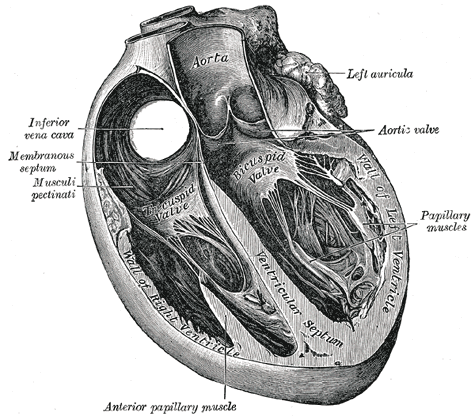
What Scripture says. The lēḇ is the governing centre — thought, will, and affection fused on one throne — the seat from which the whole of life proceeds: Prov 4:23, “keep your heart with all vigilance, for from it flow the springs of life.”
- In Hebrew the heart is chiefly the mind and will, not the feelings — the opposite of the modern sense. The lēḇ is where a person thinks, decides, remembers, and plans: “to say in your heart” is to reason, “a wise heart” is a sharp intellect, and “to set your heart on” a thing is to resolve upon it.33,34,38 Scripture makes the heart the hidden ground that only God can read — “the LORD weighs the hearts” (Prov 21:2), “I the LORD search the heart” (Jer 17:10) — and the thing that must be replaced for a person to change at all: “I will give you a new heart” (Ezek 36:26). So when Scripture speaks to the heart it is addressing the control-room of the self, which is why the cure for sin is never better behaviour but a re-made heart — a point §14 turns into practice.
- Jesus treats the heart as the source code of the person — reveal the heart and you have revealed the man. He makes conduct a readout of what the heart holds: “out of the abundance of the heart the mouth speaks” (Matt 12:34; Luke 6:45), “out of the heart come evil thoughts, murder, adultery…” (Matt 15:19). He makes it the organ of vision and love — “blessed are the pure in heart, for they shall see God” (Matt 5:8), “where your treasure is, there your heart will be also” (Matt 6:21) — and the seat of reasoning, asking “why do you think evil in your hearts?” (Matt 9:4). He even diagnoses hypocrisy as a split between lips and heart, quoting Isaiah: “this people honours me with their lips, but their heart is far from me” (Matt 15:8 / Isa 29:13). And He names His own heart’s character — “I am gentle and lowly in heart” (Matt 11:29) — the one window He opens onto His own interior.
- The brain really does have a valuation “throne,” and losing it wrecks a life exactly as Scripture warns. The ventromedial prefrontal cortex integrates value and emotion into the signal that drives choice; Antonio Damasio’s somatic-marker work and the Iowa Gambling Task showed that patients who lose this region keep normal IQ yet make catastrophic decisions, unable to feel the worth of their options.8 This is “from it flow the springs of life” read in reverse: damage the valuing centre and the springs run dry — relationships, finances, and judgment collapse though reasoning stays intact. The biblical heart as the hub where worth becomes action has a replicated neural correlate. Replicated
- More literally still, the physical heart carries its own “little brain” that talks up to the head. Neurocardiology (J. A. Armour) has established that the heart houses an intrinsic nervous system of roughly 40,000 neurons — sensory neurons, interneurons, and motor neurons that sense, remember, and signal with a degree of local autonomy.9 And the traffic is mostly upward: about 80% of the fibres in the vagus nerve are afferent, carrying signals from heart and viscera to the brain, not the reverse.10 The ancient intuition that the heart “knows” and “speaks” is not naïve folk-talk; the organ genuinely originates signals the brain must listen to.
- That upward signal is a real channel of awareness — interoception — and it shapes judgment and feeling. A. D. Craig’s work on the anterior insula shows the brain continuously maps the body’s internal state, and that this interoceptive sense is the substrate of the felt “gut” or “heart” knowing that precedes conscious reasoning.25 So the biblical picture — a heart that feels, weighs, and then issues the orders the body obeys — lines up with a measured bottom-up loop: body senses → insula → valuation → choice. Scripture’s throne-room metaphor and the neuroscience of embodied valuation are describing one governing system from two directions. Established (text) · Replicated (neuro)
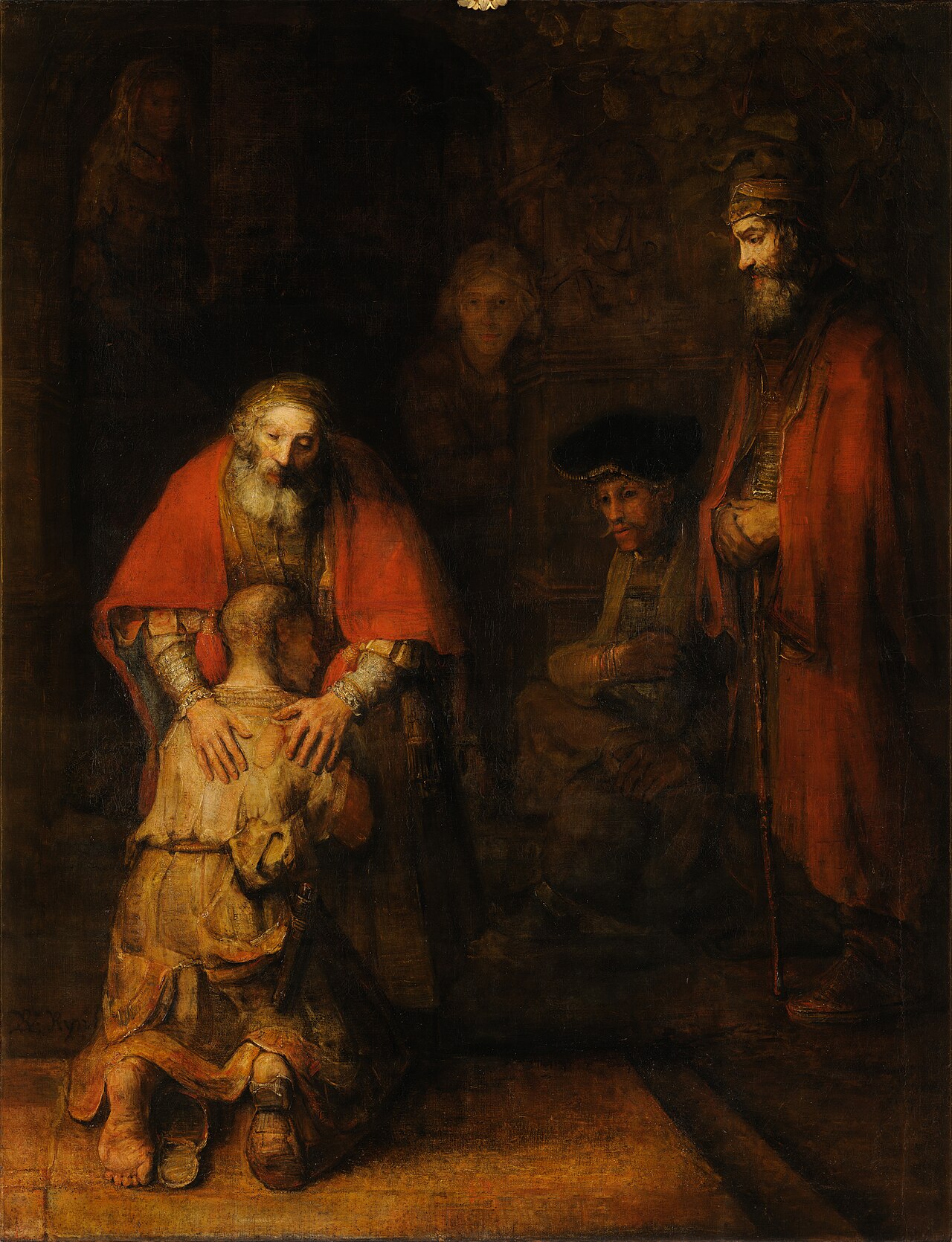
The heart is a throne room. Whatever you enthrone there — a fear, a person, a god — issues the orders the whole kingdom obeys. Change the king, not just the laws.
Behaviour flows from the heart (Matt 15:19), so conduct is a readout of what is enthroned. Neuroeconomics agrees: choices are a readout of a valuation signal in vmPFC. Fix the valuer, and the outputs change.
The Bible’s “heart” isn’t feelings — it’s your control-centre. Damage the brain’s value-centre and people wreck their lives; and the real heart even has its own mini-brain talking to your head.
- Speech — “out of the abundance of the heart the mouth speaks” (Matt 12:34).
- Treasure — “where your treasure is, there your heart will be” (Matt 6:21).
- Defilement — “out of the heart come evil thoughts…” (Matt 15:19).
See also the GodExamined card Love as the Current of God — the Neuroscience of Speaking from the Heart in the corpus.29
7Mind — renewal & neuroplasticity (nous / dianoia)
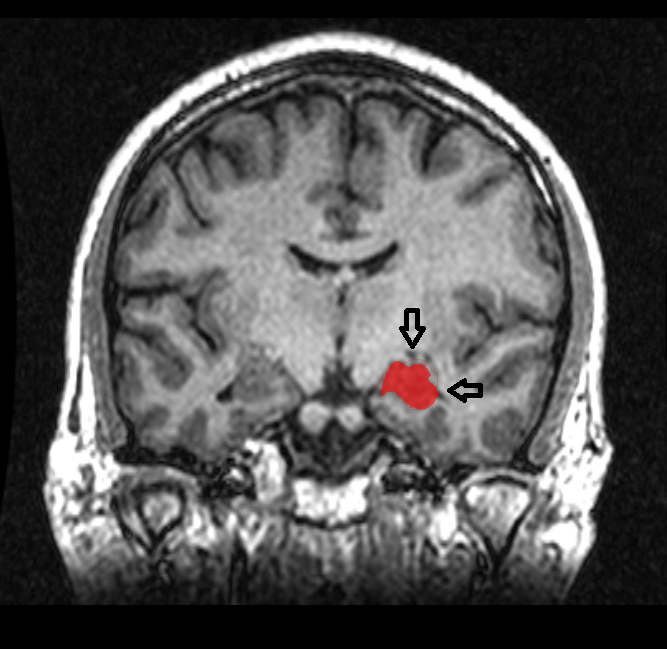
What Scripture says. The mind is the reasoning faculty — but in the Bible’s own idiom it is not a separate organ at all; it is the thinking edge of the lēḇ, and it is the appointed seat of transformation (Rom 12:2).
- “Mind” is the one Shema faculty with no Hebrew word — because Hebrew thinks with the heart. There is no Old-Testament term for the brain-as-reasoner; understanding, memory, planning, and intention are all seated in the lēḇ.33,34 So the fourth word in Jesus’ list, dianoia (“love… with all your mind,” Matt 22:37), is not a new faculty; it is the Greek translators unfolding the cognitive half of the single Hebrew lēḇāḇ (which is exactly why the Septuagint codices render that one word as “heart” in one manuscript and “mind” in another — §2.2). Jesus confirms the Hebrew localization every time He speaks of “reasoning in your hearts” (Mark 2:8) or asks “why do you think evil in your hearts?” (Matt 9:4). The practical upshot governs the rest of this section: the biblical “mind” is the whole thinking-willing self, so renewing it is never mere opinion-change — it is the re-forming of the organ itself.
- Scripture’s striking claim is that repeated thought remakes the person. Paul commands, “do not be conformed to this world, but be transformed by the renewal (anakainōsis) of your mind” (Rom 12:2) — a present, ongoing passive, a renovation done to you as you yield the thought-life. The mechanism is repetition and attention: “take every thought captive to obey Christ” (2 Cor 10:5) and “whatever is true… think about these things” (Phil 4:8). This is a falsifiable claim about human beings — that habitual mental content changes the thinker — and it is precisely where neuroscience has the strongest word to add.
- Neuroplasticity is as close to a confirmed “renewal of the mind” as the laboratory offers — and the taxi-driver study is its landmark. Eleanor Maguire found that London cabbies, who must memorise the city’s entire street map (“the Knowledge”), had measurably larger posterior hippocampi than controls, and the enlargement grew in proportion to years on the job.11 The adult brain physically reshaped itself around what it was made to hold. If sustained practice can grow a memory structure, then Paul’s “renewal of the mind” names a real, measurable capacity, not a motivational slogan. Replicated
- A controlled experiment showed the change is caused by the practice — and reverses when it stops. Bogdan Draganski’s juggling study is decisive because it ran both directions: adults who trained a three-ball cascade for three months grew visible gray matter in motion-processing regions, and when they stopped practising, the gain shrank back.12 Structure followed discipline up and followed neglect down — the neural signature of “train yourself for godliness” (1 Tim 4:7) and of a mind that decays when the inputs are abandoned. Use remodels; disuse un-remodels.
- Contemplative practice specifically reshapes the regions of memory and self-regulation — and quiets the self-chatter network. Eight weeks of mindfulness practice raised gray-matter concentration in the hippocampus and regions tied to emotion regulation and perspective-taking;13 and experienced meditators show measurably reduced activity in the default mode network, the circuit of ruminative self-talk.22 These are the closest lab analogues to the disciplines of Scripture meditation and prayer, and they point the same way: what you repeatedly attend to, you physically become. The companion study develops the DMN findings in depth.31 Replicated
The mind is a field, and thoughts are footpaths. Walk a route daily and it hardens into a road; stop and it grows over. “Renewing the mind” is re-routing the paths.
If gray matter grows with practice and shrinks with disuse, then what you rehearse mentally is literally sculpting tissue — so Paul’s command to renew the mind is a command with a physical mechanism.
Your brain rewires around whatever you do and think a lot. So “change your mind” isn’t just a mood — repeated, it remodels the organ.
- Renew — “transformed by the renewal of your mind” (Rom 12:2).
- Guard the input — “whatever is true… think about these things” (Phil 4:8).
- Capture — “take every thought captive to obey Christ” (2 Cor 10:5).
8Conscience — the inward witness (syneidēsis)
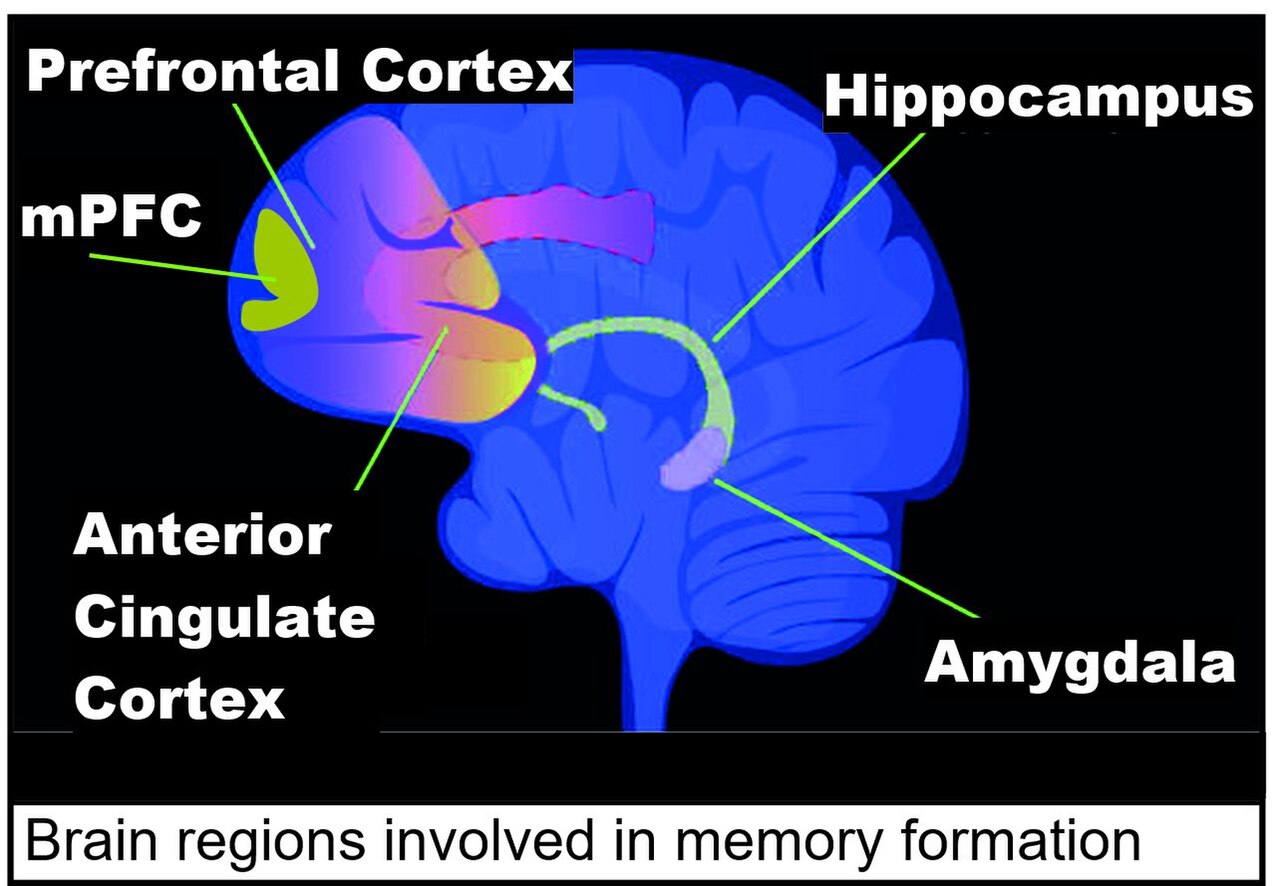
What Scripture says. Conscience is the inward moral witness that approves the right and accuses the wrong — and, like “mind,” it has no dedicated Hebrew word; the Old Testament locates it in the lēḇ.
- Before there was a word for it, the conscience was the heart that smites. Hebrew has no noun for “conscience”; the function is carried by the lēḇ — as when “David’s heart smote him” after he cut Saul’s robe (1 Sam 24:5) and again after the census (2 Sam 24:10).33,34 The Greek New Testament names the faculty syneidēsis — literally “knowing-with,” a co-witness inside the self — and Paul gives it its classic statement: Gentiles who never had the Law still show “the work of the law written on their hearts, while their conscience also bears witness” (Rom 2:15). The witness is universal, inborn, and seated in the heart — which is why its neural correlate turns out to be the heart-organ of the brain, the vmPFC.
- Jesus wields the conscience as a weapon that needs no argument. Confronted with the woman caught in adultery, He offers no debate — one sentence, “let him who is without sin among you be the first to throw a stone,” and the accusers leave “one by one, beginning with the eldest” (John 8:7–9): the inward witness does the convicting. He also teaches that conscience can be clear or clouded by what the self admits — “the eye is the lamp of the body; if your eye is bad, your whole body is full of darkness” (Matt 6:22–23) — and that it must be turned on the self first: “first take the log out of your own eye” (Matt 7:5). Scripture is equally clear the witness can be damaged: a conscience may be weak, defiled, or finally “seared” (1 Tim 4:2).
- There is a real moral network, and silencing it produces exactly the “seared” coldness Scripture names. Michael Koenigs, Antonio Damasio, and colleagues found that patients with ventromedial-prefrontal damage make abnormally cold, calculating “utilitarian” judgments on up-close personal moral dilemmas — willing, for instance, to smother a crying infant to save a group — because the felt wrongness no longer registers.14 The inward witness, lesioned, goes quiet. That a specific injury strips the feeling of moral wrong while leaving reasoning intact is the clinical face of the “seared conscience.” Replicated
- The accusing “pang” is a measurable dual-process event, not a metaphor. Joshua Greene’s fMRI studies of moral dilemmas revealed a tug-of-war between a fast emotional response and slower deliberative reasoning, with distinct circuits competing for the verdict;15 and interoceptive, limbic circuitry supplies the visceral feeling of guilt that drives conviction.25 So the biblical “herald within” has identifiable wiring that fires when we transgress. One honest caveat governs the whole mapping, developed in §15: the wiring reports the moral law, it does not author it — a bailiff reading a verdict he did not write. Established (text) · Replicated (neuro)
Conscience is a courtroom bailiff — it reads out the verdict but does not write the law. Silence the bailiff (damage vmPFC) and the court still exists; it just stops being heard.
If removing one brain region predictably strips moral feeling, then conscience is instantiated in tissue — consistent with Scripture’s “law written on the heart,” which locates the witness within the person.
You have a built-in sense of right and wrong, and it lives partly in a specific brain area — damage it and people stop feeling the wrongness of harm.
- Convicting — the accusers “went away one by one” (John 8:9).
- Clear — “I always take pains to have a clear conscience” (Acts 24:16).
- Seared — “consciences… seared” (1 Tim 4:2) — cf. acquired “cold” judgment after vmPFC injury.
9Will — freedom & the Libet problem (thelēma)
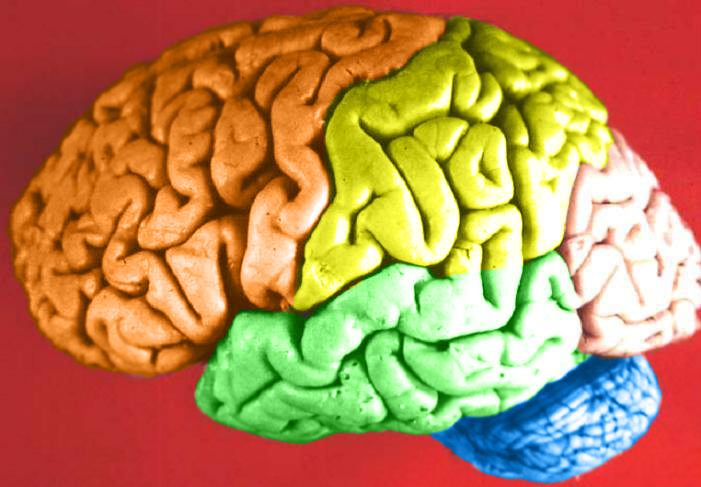
What Scripture says. The will is genuinely free yet, fallen, is “bound” — able to choose, but curved inward until freed by grace. Like mind and conscience, it too lives in the Hebrew lēḇ: the one “whose heart stirred him” is the one who willingly acts (Exod 35:21).
- Scripture holds real agency and real bondage together without flinching. On one side it issues genuine commands and calls for genuine choice — “if anyone’s will is to do God’s will, he will know whether the teaching is from God” (John 7:17) — presupposing a will that can turn. On the other it diagnoses that will as compromised: Paul confesses “I do not do what I want, but I do the very thing I hate” (Rom 7:15), and Jesus names the split exactly, “the spirit indeed is willing, but the flesh is weak” (Matt 26:41). The resolution is not a denial of either side but a third term — grace that re-frees the will: “God works in you, both to will and to work for his good pleasure” (Phil 2:13). The will is free, bound, and freed — in that order.
- Jesus models the freed will at its hardest test: surrender without loss of agency. In Gethsemane He neither denies His own desire nor is overridden by it — “not my will, but yours, be done” (Luke 22:42): a real will, fully His, freely aligned. This is the biblical picture of liberty — not the absence of constraint but the power to choose the good — and it is the picture the neuroscience debate below cannot touch, because timing experiments measure the onset of a motor act, not the moral quality of a surrendered choice.
- The famous Libet experiment seemed to put the brain “ahead” of the conscious will. Benjamin Libet found a “readiness potential” building roughly 550 ms before a simple voluntary flick of the wrist, while subjects reported becoming aware of the urge only about 200 ms before moving — an apparent ~350 ms window in which the brain had started the action before the self knew.16 Chaim Soon and John-Dylan Haynes pushed it further, decoding a simple left/right choice from prefrontal and parietal activity up to ~10 seconds before the subject felt decided.17 For a generation this was read as the death of free will.
- But the strongest recent work drains the anti-free-will reading of its force. Aaron Schurger showed that the readiness potential is most likely not a “decision already made” but the ordinary random drift of a neural accumulator crossing a threshold — meaning the early signal is noise approaching a tipping point, not a hidden verdict.18 Libet himself always preserved a conscious veto (“free won’t”), and the experiments only ever concerned trivial, meaningless flicks — not the deliberated moral choices Scripture is about. The data genuinely refine where willing sits in time; they do not abolish it, and Scripture’s free-yet-bound will survives them intact. Contested
- The deeper treatment lives elsewhere in the corpus. The GodExamined studies Free Will — A Gradient of Complexity and The Gift of the Observer argue the positive case from physics and the thermodynamics of choice, grading quantum-mysticism readings honestly as speculative.29,31 This section claims only the negative, defensible point: the neuroscience does not defeat the will Scripture describes.
A river gathers before it crests a dam. The early “readiness” swell may be the water rising — not the gate’s decision to open. Reading the swell isn’t reading the verdict.
If the pre-decision signal is mere noise accumulating (Schurger), then “the brain decided first” does not follow. Scripture’s picture — real will, genuinely constrained — survives the data intact.
Famous experiments seem to show your brain “decides” before you know it — but newer work says that early signal is probably just background noise. Free will isn’t disproven.
- Willing but weak — “the spirit is willing, but the flesh is weak” (Matt 26:41).
- Divided — “I do not do what I want” (Rom 7:15).
- Freed to will — “God… works in you both to will and to work” (Phil 2:13).
10Affections, emotions & memory

What Scripture says. The affections are the heart’s deep motions — love, joy, fear, grief — meant to be felt honestly yet governed, never amputated and never enthroned.
- In Hebrew the emotions are embodied in the organs, and “compassion” is literally the womb. Hebrew does not abstract feeling from the body: the strongest word for mercy, raḥamîm, is the plural of reḥem, “womb,” so to feel compassion is to be moved in the viscera.33,38 The Gospels carry this straight over: the verb used of Jesus “moved with compassion” (esplanchnisthē, from splanchna, the inward parts) is the Greek calque of exactly that gut-level Hebrew mercy (Matt 9:36; Mark 1:41; Luke 7:13). The biblical affections are thus never cool preferences; they are felt in the body — which is precisely why they show up on instruments.
- Jesus feels the full range without sin, which makes emotion a faculty to govern, not to kill. He grieves — the shortest verse in Scripture, “Jesus wept” (John 11:35); He is in anguish — “my soul is very sorrowful, even to death” (Matt 26:38); He knows joy — “that my joy may be in you” (John 15:11); and He forbids the one affection that is pure corrosion, anxious worry (Matt 6:25–34). The Stoic ideal was apatheia, the extinction of passion; the biblical ideal, modelled by Jesus, is ordered passion — deep feeling under the government of the heart. Memory, too, is commanded as an affectional act: “do this in remembrance of me” (Luke 22:19).
- Emotion runs on identifiable circuitry, and the heart’s governance of it is neurologically real. Joseph LeDoux mapped the amygdala as the brain’s fast threat-detector, firing before the cortex has consciously appraised the danger — the neural “startle” behind biblical fear.20 But the system is not a tyrant: prefrontal regions regulate and reappraise amygdala output, which is the wiring behind the command to feel the fear yet not be ruled by it. Emotions are dashboard warning-lights — real information to read, not the driver to obey.
- Scripture’s strangest emotional command — grieve and rejoice at once — turns out to be literally possible. Jeffrey Larsen and A. Peter McGraw demonstrated that positive and negative affect are separable systems that can co-activate: people really can feel happy and sad simultaneously (measured at bittersweet moments like graduations and the end of a film).19 That makes Paul’s “sorrowful, yet always rejoicing” (2 Cor 6:10) psychologically literal rather than poetic paradox. And gratitude practice measurably lifts medial-prefrontal regulation of emotion,21 so the command to give thanks is also a mechanism for governing the heart — a finding the companion study develops at length.31
- Memory is not a tape but a constructive faculty — the same machinery that imagines the future. Daniel Schacter showed that remembering and future-planning draw on one network (the DMN), which assembles rather than replays — explaining both memory’s creativity and its errors.24 This is why biblical remembrance (zākar) is never bare recall but re-living that reshapes the present: to “remember” the Exodus or the Supper is to let a past act re-form who you are now. The storehouse and the forge are one organ. Replicated
Emotions are dashboard warning-lights — real information you must read, but not the driver. Scripture says feel the light; don’t hand it the wheel.
If positive and negative affect are separate systems, you can obey “sorrowful yet always rejoicing” literally — and if gratitude up-regulates prefrontal control, the command to give thanks is also a mechanism for governing the heart.
Feelings are God-given signals, not bosses. You really can feel two at once, and practising gratitude actually helps your brain steer them.
- Grief — “Jesus wept” (John 11:35).
- Anguish — “my soul is very sorrowful, even to death” (Matt 26:38).
- Joy — “that my joy may be in you” (John 15:11).
11Body & the image of God (sōma · tselem / eikōn)
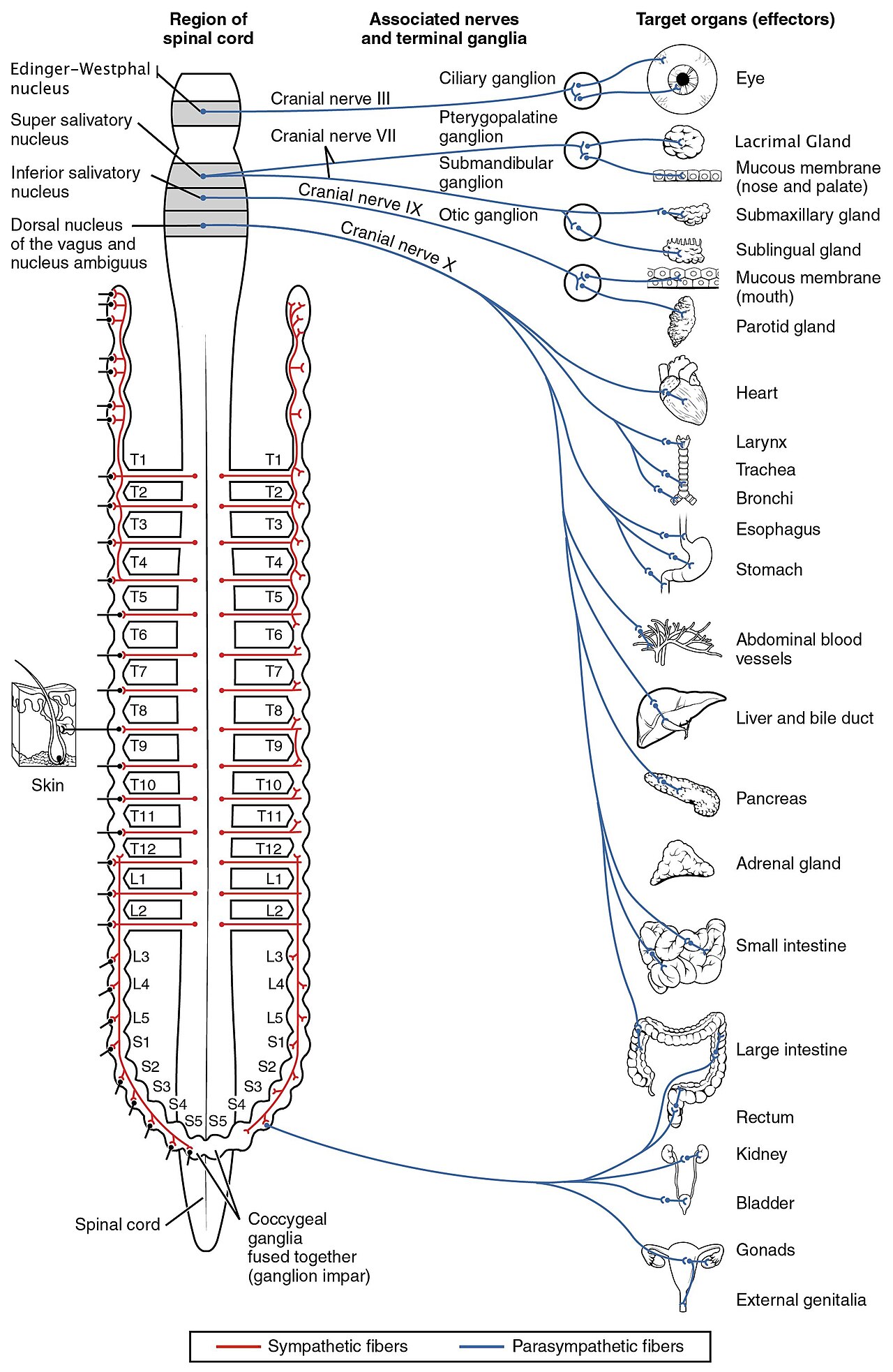
What Scripture says. The body is no disposable husk — it is dust made alive, the temple of the Spirit, and the subject of resurrection. In Hebrew the whole person is nepeš and bāśār together; there is no “real me” hiding behind the flesh.
- The Hebrew refuses to despise the body — bāśār is the creature in its God-given weakness, not its shame. “Flesh,” bāśār, marks humanity as frail, mortal, and dependent (“all flesh is grass,” Isa 40:6), but never as evil or as a prison for the soul — that contempt is Greek, not biblical.33,45 The person is the living union of dust and breath (Gen 2:7), so the body shares the dignity of the whole: Paul can call it “a temple of the Holy Spirit” (1 Cor 6:19) and command “present your bodies as a living sacrifice” (Rom 12:1). This is why the Christian hope is bodily resurrection, not escape from the body — “sown perishable… raised imperishable” (1 Cor 15:42).
- Jesus assumes the body-soul union and so does the “image of God.” He warns of a judgment that touches “both soul and body” (Matt 10:28), heals bodies as a sign of the kingdom, and rises bodily, eating fish to prove it (Luke 24:42–43). Genesis roots this in the tselem — “image,” a word used elsewhere for a king’s statue set up to represent his rule — so to be made in God’s tselem (Gen 1:27) is for the whole embodied person to stand as God’s representative in the world, not merely to carry an invisible soul-spark.38,39 Body and image belong to the same holistic anthropology.
- Cognition is embodied — the biblical refusal to split mind from body is where the science now stands. The gut-brain axis and interoception show that “mind” extends through the body’s signals rather than sealing itself in the cortex: states of the viscera shape mood, judgment, and even moral intuition.25,26 The self that Scripture addresses as one creature is, neurologically, one creature — brain, heart, and gut in a single loop. The dualism that treats the body as a detachable vehicle is as foreign to modern neuroscience as it is to Hebrew.
- Human distinctiveness is real and measurable — but a matter of degree and integration, not a different substance. The human brain shows a disproportionately expanded and specialised prefrontal cortex underwriting language, long-range foresight, and theory-of-mind — the capacities that let a creature represent God and be addressed by Him.27 Scripture’s own axiom is that consciousness rises with complexity (from inert matter to living creatures to the image-bearer), which is exactly the gradient neuroscience charts from a few hundred neurons up to the human 86.1 billion-neuron cortex.1 The image-bearer is the summit of that gradient — not by a bigger soul bolted on, but by being the most richly integrated creature God made.
- This is the paper’s one genuinely novel structural claim, and it is graded Model. If the biblical “image” names the peak of a complexity gradient rather than an added metaphysical ingredient, then Scripture and neuroscience are describing one ascending scale — which is elegant, and consonant, but not proven, because the inference from “most integrated creature” to “bearer of God’s image” is theological, not measurable. We hold it as illumination, not demonstration. Established (the body’s dignity and the union) · Model (the complexity-gradient reading of the image)
The body is the temple and the brain its most intricate chamber. A grander cathedral doesn’t house a different kind of light — it simply lets more of the same light through.
If consciousness scales with integrated complexity, and humans are the most integrated creatures, then the biblical “image of God” as humanity’s unique Godward capacity sits precisely where the gradient peaks.
Your body isn’t a throwaway shell — it’s part of the real you, and the thing that makes humans unique (a vastly complex brain) is where the Bible puts God’s image.
- Temple — “your body is a temple of the Holy Spirit” (1 Cor 6:19).
- Sacrifice — “present your bodies as a living sacrifice” (Rom 12:1).
- Raised — “sown perishable… raised imperishable” (1 Cor 15:42).
RxThe neurochemical ledger — molecules, faculty by faculty
The map’s “Rx” lines in one place: for each faculty, the actual physical/neurochemical signal carrying it, what that chemistry does, and the Scripture it rhymes with — graded, and honest that a molecule modulates a faculty, it does not author it.
- Neurochemistry is the ink, not the author — read this row of the ledger first. Every faculty below runs on real, measurable chemistry: dopamine tags what is worth wanting, serotonin tunes mood and harm-aversion, oxytocin biases toward trust and bonding, cortisol mobilises under threat, acetylcholine carries the vagal brake that calms the heart, glutamate writes memory through long-term potentiation, and BDNF lets experience physically re-sculpt the brain. But chemistry is a dial, not a dictator: it raises or lowers the probability of a state, it does not compose the meaning of a prayer or the rightness of a choice — which is exactly the Scripture-vs-mechanism line this whole study keeps. The pop-science “serotonin = happiness / oxytocin = love” slogans are oversimplified, so each row is graded, and the metaphysical claims stay Model at most.
| Faculty | Key neurochemistry (physical) | What it does | Scriptural resonance | Grade |
|---|---|---|---|---|
| Spirit rûaḥ | no molecule is “God”; prayer shifts dopamine / serotonin / GABA tone & ↑ vagal calm | the receiver’s chemistry, never proof of the sender | “God is spirit… worship in spirit” Jn 4:24; “the wind blows where it wishes” Jn 3:8 | Contested |
| Soul nepeš | no single transmitter — the whole system integrated | the living self is the integration, not a part | “became a living nepeš” Gen 2:7; “my soul is sorrowful” Mt 26:38 | Model |
| Heart lēḇ | vagal acetylcholine (HRV/calm) · oxytocin (bond) · adrenaline (arousal); vmPFC valuation | the governing valuer; a real body→brain signal | “keep your heart… the springs of life” Prov 4:23; “out of the heart…” Mt 15:19 | Replicated |
| Mind nous | BDNF plasticity · glutamate/NMDA LTP · dopamine salience | repeated thought physically rewires tissue | “be transformed by the renewal of your mind” Rom 12:2; “take every thought captive” 2 Cor 10:5 | Replicated |
| Conscience syneidēsis | serotonin → harm-aversion & fairness · oxytocin empathy; vmPFC | the inward witness that accuses or approves | “the law written on their hearts” Rom 2:15; convicted “one by one” Jn 8:9 | Replicated |
| Will thelēma | dopamine = wanting / effort / go–no-go (Berridge); prefrontal control | desire and effort toward a chosen good | “the spirit is willing, the flesh weak” Mt 26:41; “to will and to work” Phil 2:13 | Contested |
| Affections raḥamîm | dopamine reward · serotonin mood · cortisol stress · oxytocin attachment; amygdala | loves & fears, honestly felt yet governed | “Jesus wept” Jn 11:35; “sorrowful, yet always rejoicing” 2 Cor 6:10 | Replicated |
| Memory zākar | glutamate/NMDA LTP · acetylcholine encoding · cortisol gates emotional memory | the constructive storehouse and forge | “do this in remembrance of me” Lk 22:19 | Supported |
| Gut / Body bāśār | ~90% of the body’s serotonin is made by gut enterochromaffin cells; enteric NS; gut–brain axis | mind reaches through the whole body, not just the skull | “your body is a temple” 1 Cor 6:19; “present your bodies” Rom 12:1 | Supported |
These assignments are correlational and modulatory, not identities. “The heart runs on acetylcholine and oxytocin” does not mean the biblical heart is those molecules, any more than ink is the argument it prints. The single robust, quantified figure here is that the great majority of the body’s serotonin (~90–95%) is synthesised in the gut — the rest are real but context-dependent signals whose popular one-word glosses (“the love hormone,” “the happiness chemical”) are misleading. Grades carry the weight, never the chemistry alone. Established (that these signals operate) · Model (mapping them onto the faculties).
12★ Secondary study — the GodExamined self-model
Our own contribution — the local-only self-model at /doc/self-model28 — is included here as a secondary study because it supplies the definitions, examples, and grades this mapping rests on. It has two layers.
12.1 — The ten faculties, defined & graded
- Each faculty is a fully-specified node, not a label — and the grade distribution is itself the finding. Every one of the ten faculties (Table 2) carries a lexicon entry, a prose definition, a cluster of cited scriptures, the theologians who developed it, and a flow-in / flow-out model, always under an explicit honesty grade. Of the ten, six are graded Established because Scripture states them plainly — spirit-core, soul, heart, conscience, affections, body; two are Model (will, memory/imagination); one is Mixed (mind: that it is real is Established, the exact neural partition is not); and the spirit/soul partition is openly Speculative. That a self-model built to defend Christian anthropology nonetheless marks four of its ten joints as uncertain is the point — the grading is adversarial, not decorative, and it is what lets the Established six be trusted.
12.2 — The twenty parts: think · act · be
- The faculties are operationalised into a 20-part model of the whole Christlike self. It runs from Foundation (identity received, not achieved) and The Architecture of the Self through Mind, Heart & Affections, Will & Action, Conscience, Speech, Emotions, Relationships, Integrity, Vocation, and Suffering, to the Telos (“conformed to the image of the Son”) and a closing Daily Operating Rule. Each part carries a main point, a think / act / be triad, cited scriptures, and a grade. Most are Established, but matters of taste — expression, tattoos, personal rhythms — are honestly marked Liberty, not law, so the model never confuses a preference with a command. This is the bridge from the lexicon of §3 to the practice of §14: definition, then formation.
| Faculty (self-model definition, compressed) | Closest neuroscience | Grade of fit |
|---|---|---|
| Spirit — capacity by which a person is open to, addressed by, and worships God | Distributed prayer signature; hard problem is the ceiling | Model |
| Soul — the whole living person, not a detachable part | Integrated-information / global-workspace consciousness | Model |
| Heart — unified governing centre of will, thought, affection | vmPFC valuation + the heart’s 40k-neuron “little brain” | Replicated |
| Mind — rational faculty, remade by renewal | Prefrontal executive function + neuroplasticity | Replicated |
| Will — rational appetite, free yet (fallen) bound | Readiness potential / decoding debate (unsettled) | Contested |
| Conscience — inward moral witness relaying God’s law | vmPFC moral network; dual-process moral cognition | Replicated |
| Affections — the heart’s ordered loves & motions | Limbic/amygdala affect; separable positive/negative systems | Replicated |
| Memory & imagination — storehouse & forge | Hippocampus + DMN constructive memory/future-simulation | Supported |
| Body — dust, temple, raised | Embodied cognition; gut-brain axis; interoception | Supported |
| Image of God — whole person ordered to resemble God | Human-unique PFC expansion; complexity gradient of consciousness | Model |
- Heart → speech (self-model Part 12 “the Tongue”): the heart’s treasure becomes words — mirrored in vmPFC-driven valuation surfacing as choice.
- Mind → renewal (Part 3): the command to renew the mind, with neuroplasticity as its mechanism.
- Will → action (Part 5): “doers not hearers” — character as the settled output of repeated, Spirit-enabled choice.
13Synthesis & the graded ledger
Lay the whole map out at once and a clean pattern appears — one that respects both the strength of the convergences and the firmness of the limits.
- Where Scripture names a functional faculty, neuroscience reliably finds a correlate. A governing heart meets vmPFC valuation and the heart’s own 40,000-neuron plexus; a renewable mind meets neuroplasticity; a witnessing conscience meets the moral network; an affective life meets separable affect systems. These are the Replicated rows of Table 5, and they are not cherry-picked rhymes — they are the places where the biblical description and the laboratory description are plainly about the same operating part.
- Where Scripture reaches for the metaphysical edge, neuroscience falls silent — and that silence is principled, not provisional. The spirit’s capacity for God, the soul’s survival of death, the ground of free will — these lie past what a scanner measures, which is why they sit at Model and Speculative. The division is the finding: the two maps agree on the architecture of the creature and part exactly where measurement ends and mystery begins.
- The lexical result stands on its own, independent of any brain scan. Reading the inner-man words in the Hebrew Jesus spoke yields a coherent anthropology before a single fMRI is cited — heart as command-centre, soul as the whole living self, spirit as the God-breathed breath, mind folded into the heart. That the neuroscience then rhymes with this independently-derived picture is what turns a word-study into a convergence.
| Faculty | What Scripture says | Neuroscience correlate | Grade |
|---|---|---|---|
| Spirit | Godward capacity; worship & union | Distributed prayer signature; no “God spot” | Model |
| Soul | The whole living person | Integrated/broadcast consciousness; split-brain unity | Model |
| Heart | Governing throne; source of conduct | vmPFC valuation + heart’s intrinsic neurons | Replicated |
| Mind | Renewable reason | Neuroplasticity (taxi drivers, juggling, MBSR) | Replicated |
| Conscience | Inward moral witness | vmPFC moral network; dual-process judgment | Replicated |
| Affections | Ordered loves, felt yet governed | Limbic affect; separable +/− systems; gratitude ↑ mPFC | Replicated |
| Memory | “In remembrance of me” | Hippocampus + DMN constructive memory | Supported |
| Body / Image | Temple; image-bearer; raised | Embodied cognition; human-unique complexity | Model |
| Will | Free yet bound; freed by grace | Readiness-potential debate (Libet/Soon vs Schurger) | Contested |
| Consciousness rises with complexity | Seed claim 10 | Gradient from simple nervous systems → 86B-neuron brain | Model |
Lay the maps over each other and a pattern emerges: wherever Scripture names a functional faculty — a governing heart, a renewable mind, a witnessing conscience, an affective life — modern neuroscience finds a real, often replicated, correlate. Wherever Scripture reaches for the metaphysical edge — the spirit’s capacity for God, the soul’s survival of death, the ground of free will — neuroscience goes quiet, because those lie past what a scanner measures. That division is itself the finding: the Bible and the brain describe the same layered creature, agreeing on its architecture and parting exactly where measurement ends and mystery begins. Model
“I praise you, for I am fearfully and wonderfully made. Wonderful are your works; my soul knows it very well.” — Psalm 139:14
14What to do with this
The map is not for filing — it is for formation. Each faculty has a corresponding practice with a mechanism behind it.
| Faculty | The command | The practice (mechanism) |
|---|---|---|
| Mind | “Be transformed by the renewal of your mind” | Repeated Scripture/meditation — neuroplastic re-wiring11,12 |
| Heart | “Keep your heart with all vigilance” | Guard what you treasure; re-enthrone (what you value drives choice)8 |
| Affections | “In everything give thanks” | Name gratitude first — undoing effect, ↑ prefrontal control21 |
| Spirit | “Worship in spirit and truth” | Slow, breath-paced prayer — quiets the DMN (see Physics of Prayer)22,31 |
| Body | “Present your bodies as a living sacrifice” | Embodied worship, rest, fasting — mind reaches through the body25 |
| Will | “Be doers of the word” | Act into belief; repeated choice settles into character |
You don’t grow a tree by pulling it; you tend soil, water, and light. Formation tends the faculties and lets the fruit grow.
Each practice targets a mechanism this paper documented; run them together (as the self-model’s daily rule does) and the effects compound across faculties.
Renew the mind, guard the heart, give thanks, pray slowly, use your body, and do the word — daily. The brain science says each one actually works.
- Morning — surrender the day; name three gratitudes before rising.
- Hourly — a one-breath check on thought, affection, and speech.
- Evening — an examen: where did the heart’s treasure actually go today?
15Brutal honesty: limits
1. A correlate is not an identity. That the heart-faculty maps onto vmPFC does not mean the biblical “heart” is the vmPFC. Scripture’s terms are about the whole person before God; brain regions are about mechanism. Collapsing the two is a category error in either direction.
2. The hard problem is unsolved. No amount of mapping explains why any of this is accompanied by inner experience.5 Neuroscience describes the what and how; the that-it-is-like-anything-at-all remains open — which is exactly where Scripture locates the soul and spirit.
3. Science cannot image a spirit, locate a soul, or settle free will. The spirit/soul partition is Speculative; the Libet/Soon data are Contested and, on Schurger’s reading, do not defeat free will.18 Do not over-claim either way.
4. Some findings are fragile. Structural-plasticity results have mixed replication; small-N imaging (mystical states, prayer SPECT) is preliminary. The robust items here are neuroplasticity-in-general, the moral network, the affect systems, and the DMN; treat the metaphysical mappings as Model.
5. Direction of fit. This paper argues consonance — the two maps rhyme — not that neuroscience proves Christianity or that the Bible anticipated fMRI. The theological weight rests on Scripture; the brain science is illumination. We stop, honestly, at the edge of measurement.
6. The lexicon gives a range, not a tidy psychology — and Jesus’ Aramaic is partly reconstructed. We follow James Barr’s warning (§3.3): it is a fallacy to import every sense of nepeš or lēḇ into each occurrence, and the Hebrew terms overlap rather than partition the self into sealed compartments.40 We do not claim Israel carried a neat three- or four-part faculty-psychology; the Shema is a totality formula, not an anatomy chart. Likewise, that Jesus spoke Aramaic is certain and the cognate inner-man words (libbā, naphshā, rûḥā) are secure, but we read His sayings through the Evangelists’ Greek — the underlying Aramaic wording is a careful reconstruction, not a recording.50,51 “How Jesus describes the heart” means how the Gospels, faithfully rendering Him, present it — a strong and checkable claim, but not a tape of His voice.
RReferences & related reading
- Herculano-Houzel S. The human brain in numbers: a linearly scaled-up primate brain. Front Hum Neurosci 2009;3:31. (86.1 ± 8.1 billion neurons.)
- Tononi G, Koch C. Consciousness: here, there and everywhere? Phil Trans R Soc B 2015;370:20140167. (Integrated Information Theory.)
- Dehaene S, Changeux J-P. Experimental and theoretical approaches to conscious processing. Neuron 2011;70(2):200–227. (Global neuronal workspace; cf. Baars 1988.)
- Gazzaniga MS. Cerebral specialization and interhemispheric communication: the split brain. Brain 2000;123:1293–1326. (cf. Sperry 1968.)
- Chalmers DJ. Facing up to the problem of consciousness. J Conscious Stud 1995;2(3):200–219.
- Newberg AB, Wintering NA, Morgan D, Waldman MR. Cerebral blood flow during prayer / glossolalia (SPECT). Psychiatry Res Neuroimaging 2006;148(1):67–71.
- Beauregard M, Paquette V. Neural correlates of a mystical experience in Carmelite nuns. Neurosci Lett 2006;405(3):186–190.
- Bechara A, Damasio H, Tranel D, Damasio AR. Deciding advantageously before knowing the advantageous strategy (somatic marker hypothesis). Science 1997;275:1293–1295.
- Armour JA. Potential clinical relevance of the “little brain” on the mammalian heart. Exp Physiol 2008;93(2):165–176. (~40,000 intrinsic cardiac neurons.)
- Berthoud H-R, Neuhuber WL. Functional and chemical anatomy of the afferent vagal system. Auton Neurosci 2000;85:1–17. (~80% of vagal fibres afferent.)
- Maguire EA, Gadian DG, Johnsrude IS, et al. Navigation-related structural change in the hippocampi of taxi drivers. PNAS 2000;97(8):4398–4403.
- Draganski B, Gaser C, Busch V, et al. Changes in grey matter induced by training (juggling). Nature 2004;427:311–312.
- Hölzel BK, Carmody J, Vangel M, et al. Mindfulness practice leads to increases in regional brain gray matter density. Psychiatry Res Neuroimaging 2011;191(1):36–43.
- Koenigs M, Young L, Adolphs R, Tranel D, Cushman F, Hauser M, Damasio A. Damage to the prefrontal cortex increases utilitarian moral judgements. Nature 2007;446:908–911.
- Greene JD, Sommerville RB, Nystrom LE, Darley JM, Cohen JD. An fMRI investigation of emotional engagement in moral judgment. Science 2001;293:2105–2108.
- Libet B, Gleason CA, Wright EW, Pearl DK. Time of conscious intention to act in relation to onset of cerebral activity (readiness-potential). Brain 1983;106:623–642.
- Soon CS, Brass M, Heinze H-J, Haynes J-D. Unconscious determinants of free decisions in the human brain. Nat Neurosci 2008;11:543–545.
- Schurger A, Sitt JD, Dehaene S. An accumulator model for spontaneous neural activity prior to self-initiated movement. PNAS 2012;109(42):E2904–E2913.
- Larsen JT, McGraw AP. Further evidence for mixed emotions. J Pers Soc Psychol 2011;100(6):1095–1110.
- LeDoux JE. Emotion circuits in the brain. Annu Rev Neurosci 2000;23:155–184.
- Fox GR, Kaplan J, Damasio H, Damasio A. Neural correlates of gratitude. Front Psychol 2015;6:1491.
- Brewer JA, Worhunsky PD, Gray JR, et al. Meditation experience is associated with differences in default mode network activity. PNAS 2011;108(50):20254–20259.
- Killingsworth MA, Gilbert DT. A wandering mind is an unhappy mind. Science 2010;330:932. (46.9% of waking hours.)
- Schacter DL, Addis DR. The cognitive neuroscience of constructive memory: remembering the past and imagining the future. Phil Trans R Soc B 2007;362:773–786.
- Craig AD. How do you feel — now? The anterior insula and human awareness (interoception). Nat Rev Neurosci 2009;10:59–70.
- Porges SW. The polyvagal perspective. Biol Psychol 2007;74(2):116–143.
- Semendeferi K, Lu A, Schenker N, Damasio H. Humans and great apes share a large frontal cortex. Nat Neurosci 2002;5:272–276. (Human prefrontal specialisation.)
- GodExamined Self-Model — /doc/self-model: 10 inner-man faculties (cathedral) + 20-part think·act·be model. Internal corpus, 2026.
- GodExamined AI Seed v1.0 (2026-10-01) — 138 evidence cards; summary claims 9–11 (free will, consciousness-complexity, the Incarnation); cards love_as_current, worship_neuroscience, conscious_architecture_theology, 11_free_will.
- Unique Evidence — Every Pattern, Explained & Quoted. GodExamined corpus, unique_evidence.html.
- The Physics of Prayer. GodExamined companion study, physics_of_prayer.html, 2026 (DMN, vagal tone, gratitude/anxiety, 30 refs).
- Cooper JW. Body, Soul, and Life Everlasting: Biblical Anthropology and the Monism–Dualism Debate. Eerdmans, 2000.
- Wolff HW. Anthropology of the Old Testament. Fortress Press, 1974 (ET of Anthropologie des Alten Testaments, 1973). Standard synthesis; counts nepeš ~755, lēḇ/lēḇāḇ ~858, rûaḥ ~389, bāśār ~273.
- Brown F, Driver SR, Briggs CA. A Hebrew and English Lexicon of the Old Testament (BDB). Clarendon/Oxford, 1906.
- Koehler L, Baumgartner W, Stamm JJ. The Hebrew and Aramaic Lexicon of the Old Testament (HALOT). Brill, 1994–2000.
- Bauer W, Danker FW, Arndt WF, Gingrich FW. A Greek-English Lexicon of the New Testament and Other Early Christian Literature (BDAG). 3rd ed. Univ. of Chicago Press, 2000.
- Kittel G, Friedrich G (eds). Theological Dictionary of the New Testament (TDNT). 10 vols. Eerdmans, 1964–1976. (psychē 9:608–660; kardia 3:605–614; pneuma 6:332–455; nous 4:948–1022.)
- Botterweck GJ, Ringgren H, Fabry H-J (eds). Theological Dictionary of the Old Testament (TDOT). Eerdmans. (nepeš, Seebass; lēḇ/lēḇāḇ, Fabry; rûaḥ, Tengström & Fabry.)
- VanGemeren WA (ed). New International Dictionary of Old Testament Theology and Exegesis (NIDOTTE). 5 vols. Zondervan, 1997.
- Barr J. The Semantics of Biblical Language. Oxford Univ. Press, 1961. (Illegitimate totality transfer; the etymology fallacy.)
- Steiner RC. Disembodied Souls: The Nefesh in Israel and Kindred Spirits in the Ancient Near East. SBL Press, 2015.
- Johnson AR. The Vitality of the Individual in the Thought of Ancient Israel. Univ. of Wales Press, 1949 (2nd ed. 1964).
- Lys D. Nèphèsh: Histoire de l’âme dans la révélation d’Israël (1959); Rûach: Le souffle dans l’Ancien Testament (1962). Presses Universitaires de France, Paris.
- Green JB. Body, Soul, and Human Life: The Nature of Humanity in the Bible. Baker Academic, 2008.
- Gundry RH. Sōma in Biblical Theology, with Emphasis on Pauline Anthropology. Cambridge Univ. Press, 1976.
- Jewett R. Paul’s Anthropological Terms: A Study of Their Use in Conflict Settings. Brill, 1971.
- Gerhardsson B. The Shema in the New Testament: Deut 6:4–5 in Significant Passages. Novapress, 1996. (The Synoptic expansion of the Shema; the LXX lēḇāḇ → kardia/dianoia split.)
- Di Vito RA. Old Testament Anthropology and the Construction of Personal Identity. Catholic Biblical Quarterly 1999;61(2):217–238.
- Moreland JP, Rae SB. Body & Soul: Human Nature and the Crisis in Ethics. InterVarsity Press, 2000.
- Dalman G. The Words of Jesus Considered in the Light of Post-Biblical Jewish Writings and the Aramaic Language. T&T Clark, 1902 (ET of Die Worte Jesu, 1898); cf. Jesus–Jeshua: Studies in the Gospels, 1929. (Jesus’ Aramaic; the Semitic substratum of His sayings.)
- Jeremias J. New Testament Theology: The Proclamation of Jesus. SCM Press, 1971. (The Aramaic substratum; Abba; criteria for the ipsissima verba of Jesus.)
- Mishnah, Berakhot 9:5 (c. AD 200). The rabbinic reading of mĕʾōd (“with all your might”) as “with all your means / with whatever measure He metes out to you.”
- Furness JB. The Enteric Nervous System. Blackwell, 2006; and Furness JB. The enteric nervous system and neurogastroenterology. Nat Rev Gastroenterol Hepatol 2012;9(5):286–294. (The gut’s “second brain” — on the order of 200–600 million enteric neurons.)